
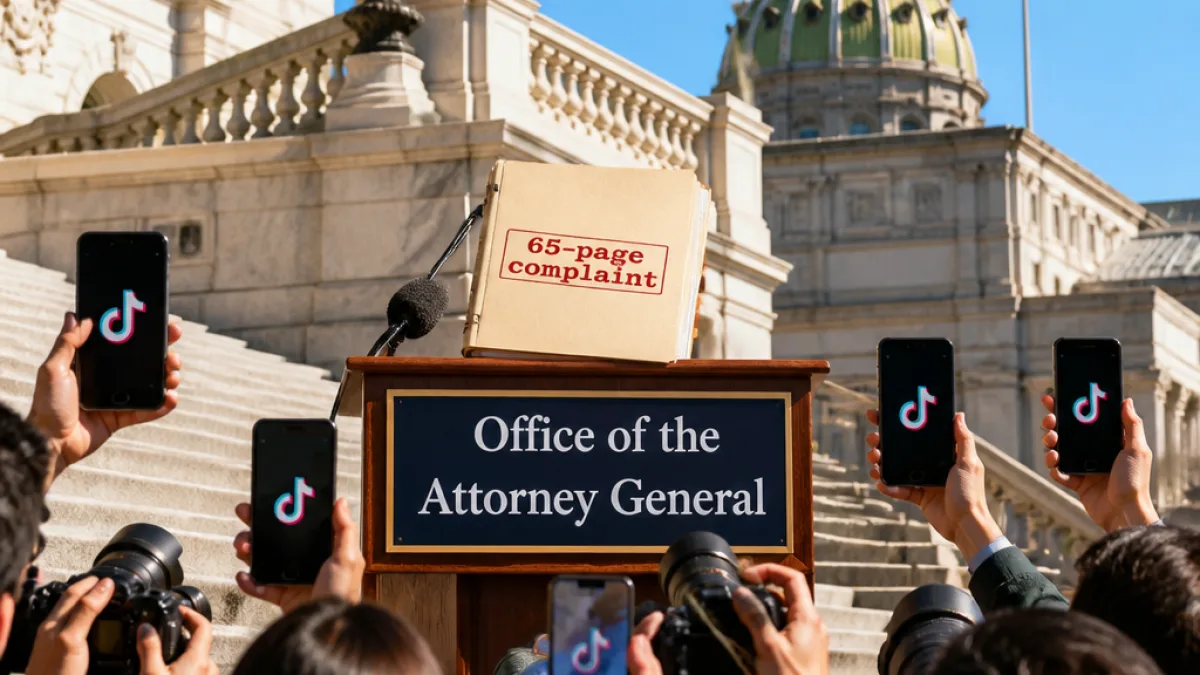
HARRISBURG — Pennsylvania Attorney General Dave Sunday on Tuesday announced a lawsuit against TikTok, accusing the social media platform of deliberately engineering its app to be “intentionally addictive” to young people while understating the presence of adult-themed content to secure a “13+” rating in app stores.
Allegations center on design and content ratings
Sunday unveiled what his office describes as a 65-page lawsuit at a news conference at the state Capitol. The complaint contends TikTok’s developers built features — including an infinite-scroll experience — intended to maximize the time children spend on the platform to increase advertising revenue.
“TikTok intentionally designed its platform to be addictive to young people, maximizing the time kids spend on their platform to grow their bottom line,” Sunday said during the announcement.
The suit further maintains that TikTok has misrepresented the frequency and intensity of mature content in representations made to app stores. According to the complaint, TikTok has said in the Apple App Store that the platform contains only “infrequent/mild” sexual content, profanity and references to alcohol and drugs — characterizations the attorney general’s office calls false.
“All of those representations are false,” the filing reads, asserting that the app actually contains “frequent and intense sexual content and nudity, profanity and crude humor, mature and suggestive themes, and alcohol, tobacco, and drug use and references.”
Evidence and examples cited by the suit
To highlight the harms it says stem from TikTok’s design choices, the attorney general’s office cited cultural phenomena such as the viral phrase “bed rotting,” which refers to prolonged periods spent in bed scrolling on phones. Sunday said such behaviors are promoted by the app’s features.
The lawsuit requests declaratory and injunctive relief, seeking orders that would require TikTok to more accurately disclose content ratings and to implement measures designed to reduce addictive engagement among minors. The complaint focuses on corporate conduct and responsibility rather than a broad critique of modern technology, Sunday said.
TikTok response
TikTok pushed back on the lawsuit in a statement, saying the complaint relies on “misleading and inaccurate claims.” The company did not elaborate in the statement provided to reporters at the time of Sunday’s announcement.
How the complaint frames the issues
The attorney general’s filing links two primary charges:
- Addictive design: The platform allegedly uses features engineered to increase time on site, such as infinite scrolling and algorithmic feeds that sustain prolonged viewing.
- Misrepresentation of content: The suit argues the company understates the prevalence of sexual, profane and substance-related material to justify lower age ratings in app marketplaces.
The complaint emphasizes that these two elements work together: by downplaying mature content and encouraging extended youth engagement, the company benefits from greater advertising revenue while exposing children to material the suit calls inappropriate for the platform’s app-store age label.
| Allegation | App Store Representation |
|---|---|
| Frequent sexual content and nudity | Described as “infrequent/mild” |
| Profanity and crude humor | Described as “infrequent/mild” |
| Alcohol, tobacco and drug use or references | Described as “infrequent/mild” |
What’s next
The suit was filed in state court and seeks remedies that could include changes to how TikTok labels and moderates content and how it presents safety and usage options to minors. The attorney general’s office said its investigation found evidence that the platform was aware of its design’s addictive qualities and of safety mechanisms that were available yet not fully implemented to protect young users.
Legal proceedings could prompt discovery that requires TikTok to produce internal documents about product design, content moderation and youth-safety policies. The company’s rebuttal indicates it will contest the claims.
As the case moves forward, parents, educators and policymakers will likely watch for any court orders or settlements that could affect app-store labeling, content moderation practices and the availability or prominence of safety tools aimed at younger users.
Gregory Halloran is the WE NEWS state correspondent covering legal and technology issues in Pennsylvania.

















