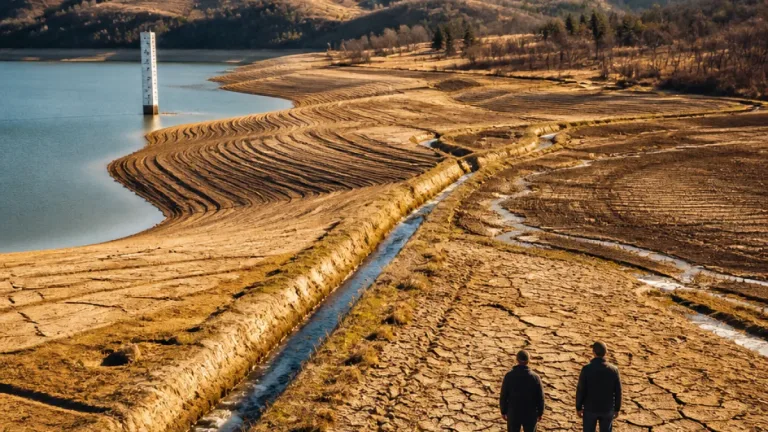
Rhode Island is expected to see a fall that is generally colder and drier than normal, according to the Old Farmer’s Almanac’s extended seasonal forecast released this month.
What the almanac projects for the state
The publication’s outlook for the Atlantic Corridor region — which includes Providence and the rest of Rhode Island — calls for below-normal temperatures and reduced precipitation through the autumn months. Because Rhode Island is geographically small, the almanac’s summary treats the state as a mostly uniform area for the purposes of the long-range estimate.
The almanac says its long-range forecasts are derived from a mix of historical climate data, solar activity and meteorological patterns. The organization has published seasonal projections for more than two centuries and continues to promote its traditional forecasting methods.
How to read a long-range forecast
Long-range seasonal outlooks differ from the short-term forecasts issued by the National Weather Service. Meteorologists caution that predictions made months in advance carry considerable uncertainty, especially at the local level.
- Almanac method: Uses solar cycles, climatology and weather patterns to generate seasonal guidance.
- Official definitions: Astronomical fall begins with the autumnal equinox, Sept. 22 this year; meteorological fall runs from Sept. 1 through Nov. 30, a period used for tracking seasonal weather statistics.
- Accuracy debate: The almanac claims a high historical accuracy rate; some weather scientists estimate long-range forecasts are substantially less certain.
Those differences matter for Rhode Islanders planning activities that depend on seasonal weather, such as farm work, leaf-peeping trips, fall festivals and heating preparations.
Local impacts to consider
A fall that trends cooler and drier than typical could have varied effects across the state. Less rainfall might ease short-term flooding concerns but could also exacerbate dry-soil conditions and stress late-season crops and gardens. Cooler-than-normal temperatures could shift energy demand earlier in the season as residents begin heating homes sooner.
Municipalities and businesses that schedule events outdoors may find the almanac’s outlook a factor in contingency planning, though organizers typically rely on nearer-term forecasts as dates approach. Farmers and landscapers often use a combination of historical averages, soil moisture data and short-term meteorological guidance for operational decisions.
Accuracy and context
The Old Farmer’s Almanac highlights its long history and asserts a strong track record for its seasonal forecasts. Independent assessments of long-range prediction accuracy are mixed: some experts say multi-month forecasts can be useful for broad trends but remain limited in precision for specific locations.
| Item | Almanac guidance |
|---|---|
| Temperature | Below normal |
| Precipitation | Drier than normal |
| Astronomical fall | Sept. 22 |
| Meteorological fall | Sept. 1–Nov. 30 |
For Rhode Islanders, the practical takeaway is to treat the almanac’s projection as one piece of information. Short-term forecasts from the National Weather Service and local observations will offer the most reliable guidance for day-to-day planning as the season unfolds.
Preparing for the season
Experts recommend several simple steps residents can take as cooler weather approaches: ensure heating systems are maintained, check insulation and weather-stripping, monitor soil moisture for gardens and newly planted trees, and stay informed through official weather advisories.
While the Old Farmer’s Almanac points toward a fall that is cooler and less wet than usual across Rhode Island, actual conditions this season will depend on evolving atmospheric patterns and shorter-term weather systems. Local forecasts will clarify timing and intensity as autumn advances.
Priya Nair is the state correspondent for WE NEWS.