
Oceanside officials say a redesigned beach-restoration project intended to arrest severe sand loss south of the municipal pier has been reshaped to address regional concerns, but the city still faces skepticism from nearby Carlsbad residents and elected bodies about potential downstream impacts.
Project redesign aims to win regional buy-in
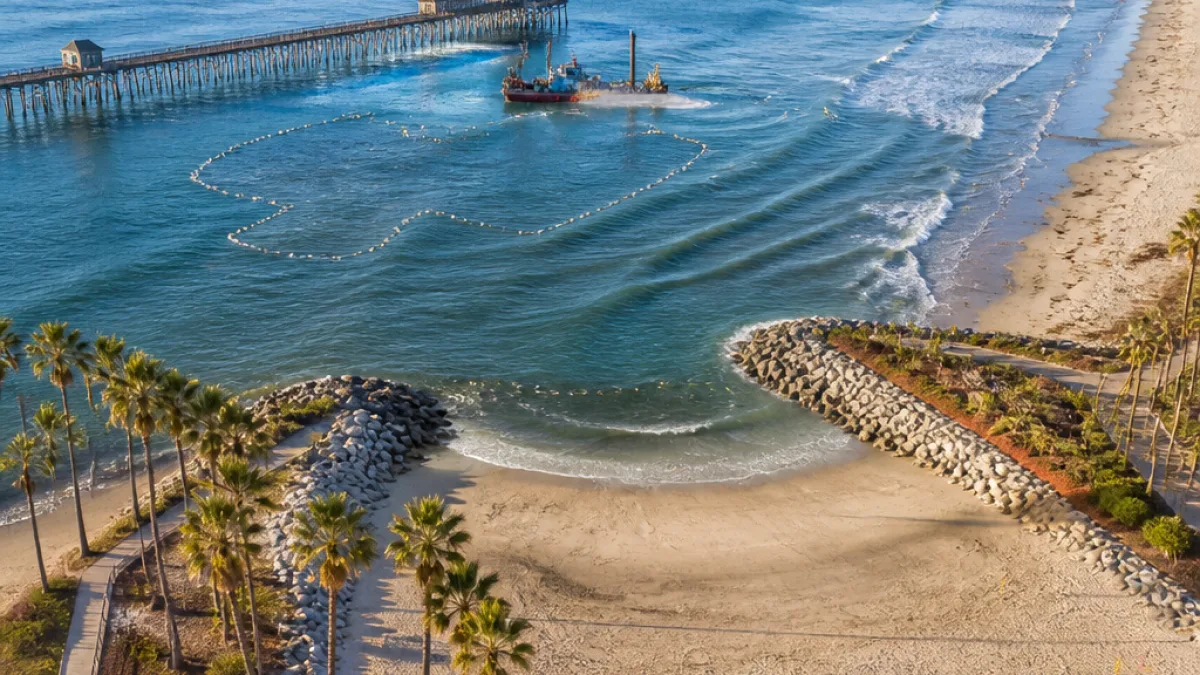
The current version of the Re:Beach pilot replaces earlier proposals for long rock groins with a combination of offshore and onshore measures: a butterfly-shaped artificial reef and two short, landscaped headlands on the beach, with the space between those headlands filled by sand dredged from just beyond the surf line. Oceanside officials say the pilot is intended to prove the approach. If it succeeds and funding becomes available, the plan calls for expanding restoration southward toward the Carlsbad border.
Concerns from Carlsbad and other coastal cities
Officials and residents in Carlsbad, Del Mar and other coastal communities have previously expressed opposition to hard structures intended to hold sand in place. Carlsbad’s City Council adopted a resolution in 2022 opposing installation of long rock groins, and skepticism persists over whether retaining sand north of those cities will prevent natural southward transport of sand by ocean currents.
“We don’t know what the recourse could be if things don’t go well,”
said Lawrence Rothman, a member of Carlsbad’s Environmental Sustainability Commission, reflecting a recurring worry among neighbors about unintended consequences and accountability should the pilot alter sediment patterns adversely.
Oceanside emphasizes shared benefits and regional study
Oceanside Coastal Program Manager Jayme Timberlake told attendees at a recent update that baseline studies already underway cover the shoreline from the Oceanside Harbor south to Carlsbad’s Tamarack Avenue beach. Timberlake noted visible sand movement at Tamarack as evidence of active sediment transport along the coast.
“If anyone has recently been to Tamarack beach, they’ve seen that the sand has left in a very dramatic fashion,” Timberlake said. “It’s actually filled in areas to the north which haven’t seen sand in a few years.”
Oceanside officials and consultants have emphasized redesign and collaboration with neighboring cities, government agencies and the public. One major change was swapping long groins for shorter headlands, a move intended to reduce the potential for long-distance interruptions to natural sand migration while still creating localized retention areas.
- Pilot elements: offshore artificial reef, two short headlands, sand nourishment between headlands.
- Study area: from Oceanside Harbor south to Carlsbad’s Tamarack Avenue beach.
- Regional stance: Carlsbad passed a resolution in 2022 opposing long hard structures; other cities such as Del Mar have recorded opposition.
| Component | Description |
|---|---|
| Artificial reef | Butterfly-shaped structure placed offshore to alter wave and sediment dynamics |
| Headlands | Two short, landscaped onshore headlands intended to trap dredged sand |
| Sand sourcing | Dredged from just outside the surf line to fill the area between headlands |
Oceanside officials have argued that adding sand to the system can ultimately benefit multiple jurisdictions because sand that remains in the regional littoral system can be redistributed over time. Opponents remain unconvinced that localized retention efforts won’t deprive downstream beaches of critical sand, or that adequate remedies exist if results differ from projections.
What’s next
Baseline monitoring and studies continue while Oceanside refines design details and pursues outreach. The city has said expansion toward the Carlsbad border would depend on pilot success and funding availability. For residents concerned about beach access, erosion and intercity impacts, the debate underscores the complexity of coastal management where engineered interventions meet natural sediment processes and multiple municipal interests.
As Oceanside moves forward, the project will likely remain a focal point for regional discussions about how to balance local shoreline stabilization with the broader coastal system’s needs — and what safeguards should be in place if engineered changes produce unexpected results.
















