
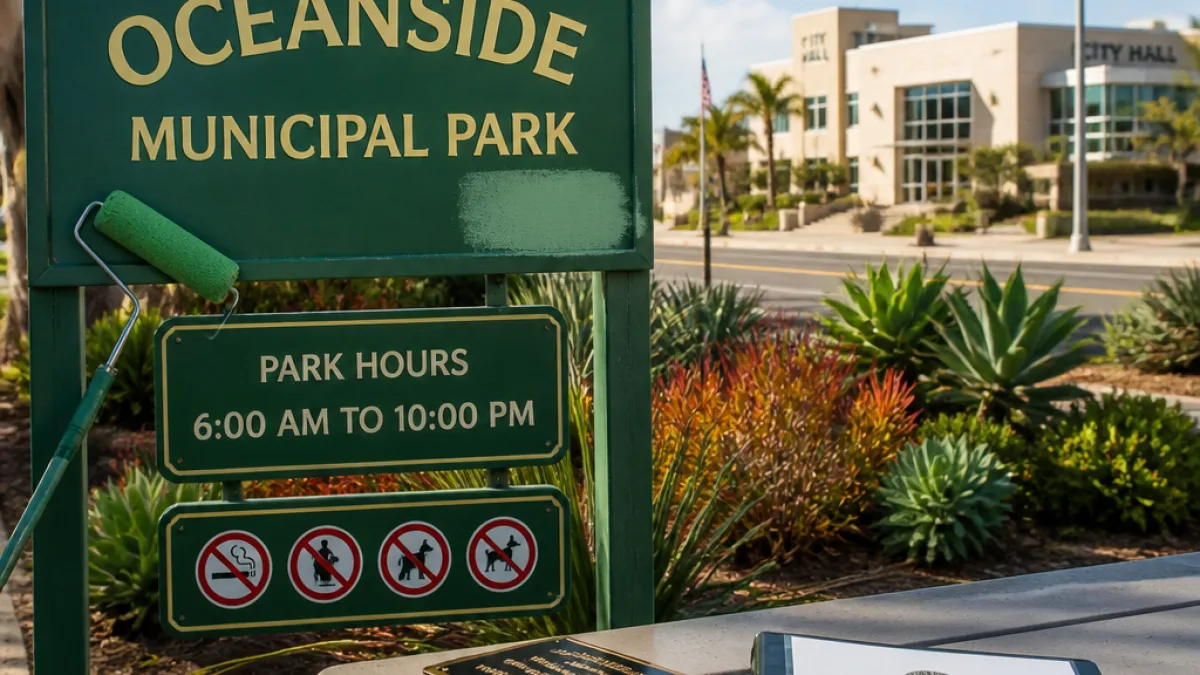
The Oceanside City Council on Sept. 2 approved a policy change that will bar naming or renaming city parks and facilities after individuals or groups, a shift city staff say will reduce requests and streamline how public spaces are identified.
Major change to naming rules
Under the update — adopted unanimously by the council — the city has removed the "extraordinary circumstances" provision from its 2003 naming policy. That provision previously allowed exceptions permitting parks and other facilities to be named for people or organizations if they met specific criteria. With the change, the council eliminated that pathway and narrowed the types of features eligible for renaming.
"Eliminating the 'extraordinary circumstances' category prohibits naming parks or city facilities after people or groups."
City staff outlined the original policy's three naming categories, prioritized by preference: geographic location; descriptive or feature-based names, such as topography, plants or cultural and historical elements; and the now-removed extraordinary-circumstances category allowing names honoring persons or groups.
Why the policy changed
The extraordinary-circumstances route had included a number of specific criteria. Facilities could be named for someone who made significant contributions to Oceanside through service or donations, for a person whose lifelong work improved the city's quality of life if the individual was at least 65, or posthumously for someone who had been deceased at least two years. Naming could also be considered when a person or group provided at least 60% of a facility's development or maintenance funding and agreed to pay for an identifying plaque.
Staff told the council that the city had never named a park or facility based on a fundraising campaign and had not sought to recover the costs of purchasing or installing plaques or monuments when existing facilities were renamed. Those factors, along with instances prompting scrutiny, contributed to the proposed change.
- City�s 2003 policy previously allowed three naming categories, with personal names as an exception.
- No parks or facilities have been named through fundraising campaigns, according to staff.
- City staff will no longer consider renaming courts, gazebos or meeting rooms when a person or group is involved.
What stays, what goes
The revision removes the ability to name or rename parks and city facilities after people or organizations. It also removes the option to rename smaller amenities such as tennis, basketball and volleyball courts, gazebos and meeting rooms in connection with personal or group names. According to staff, future renaming activity will concentrate on larger public assets like parks, recreation centers, community centers, trails, beach property, skate parks and sports complexes.
| Policy element | Before (2003) | After (Sept. 2) |
|---|---|---|
| Primary naming preference | Geographic names | Geographic names |
| Secondary naming | Topography, plants, cultural or historical features | Topography, plants, cultural or historical features |
| Extraordinary circumstances | Allowed naming for people/groups under set criteria | Eliminated — no names for people or groups |
| Smaller amenities | Could be renamed (courts, gazebos, meeting rooms) | Renaming of those amenities removed |
Local context and examples
The council's action came after staff provided a regular April list of facilities eligible for naming. Among items identified this year was Cesar Chavez Park, listed for potential renaming following national reporting that raised allegations about the late labor leader. That listing illustrates the kinds of controversies and complexities that can accompany decisions to attach individuals' names to public places.
City staff said they expect fewer renaming requests as a result of the changes. The move also clarifies that the city's preference is to use location- or feature-based names rather than honoring living or deceased people — a shift intended to minimize disputes and long-term administrative costs tied to plaques or monuments.
For Oceanside residents, the change will affect how future parks, community centers and large outdoor amenities are labeled and discussed in public meetings. It also ends a discretionary avenue that previously allowed donors or notable local figures to be publicly memorialized in city facility names under strictly defined circumstances.
City staff will continue to bring an annual list of facilities eligible for naming to the City Council, but under the new policy the options presented and considered will be limited to non-person-based names and the larger facility types identified by staff.
















