
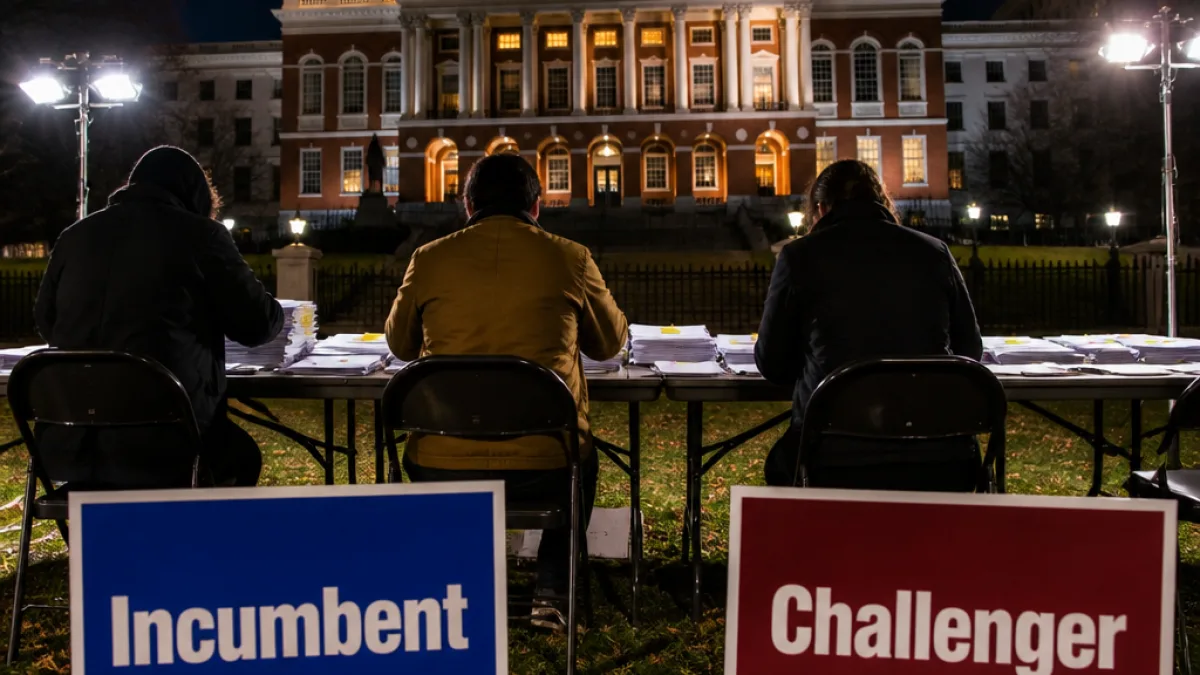
BOSTON — The Sept. 1 primary left the Boston political landscape bruised and clarified alliances across Beacon Hill after a two-day recount affirmed the narrow victory of a veteran state senator and other incumbents fended off challenges tied to Mayor Michelle Wu's efforts to advance a signature tax plan.
Recount settles one of the night’s closest contests
State Sen. William Brownsberger, the Belmont Democrat and president pro tempore of the Massachusetts Senate, held onto his seat after a recount that spanned two days and ended with a margin of just 35 votes. The result concluded a week of uncertainty after ballots initially showed a near deadlock with former senior Wu aide Daniel Lander.
The contest drew attention far beyond the district because it was widely framed as a proxy fight between the state Senate and Mayor Michelle Wu. Brownsberger, who represents parts of Boston, Cambridge and Watertown, had been criticized by Wu for joining colleagues in opposing her tax legislation in late 2024.
Incumbents largely prevailed in pitched primary battles
In South Boston, State Sen. Nick Collins rebuffed a challenge from Lucrative campaign backing tied to Mayor Wu. Collins, a South Boston Democrat who has emerged as a frequent critic of the mayor, won reelection comfortably after facing an aggressive campaign that included public rebukes and a high-profile snub when Wu declined to attend Collins’ traditional St. Patrick’s Day breakfast earlier this year.
Collins has been a central figure in the dispute over the stalled tax bill: he employed a procedural maneuver in late 2024 that effectively blocked the measure despite its passage in the House three separate times. Wu has publicly blamed him for the bill’s failure to reach final enactment in the Senate.
What the results mean for governance and policy
The primary outcomes preserve a bloc of senators who resisted the mayor’s legislative strategy, reducing the likelihood that Wu will secure quick legislative victories on the tax proposal in the near term. With incumbents like Collins and Brownsberger remaining in place, debates over tax policy and revenue choices are likely to continue inside the Senate with familiar fault lines intact.
- Brownsberger: Emerged from a recount victory by 35 votes, maintaining his leadership role in the Senate.
- Nick Collins: Won reelection comfortably despite an organized campaign backed by allies of the mayor.
- Daniel Lander: The former senior Wu aide pushed Brownsberger to a recount but ultimately fell short.
Campaign dynamics and the role of endorsements
Wu’s strategy of endorsing challengers to senators who opposed her tax plan played a central role in shaping this primary cycle. In Collins’ race, she backed Latoya Gayle, a political newcomer and lobbyist, in an attempt to unseat the incumbent — a move that underscored the depth of the rift between the mayor and certain members of the Legislature. Gayle was unable to overcome Collins’ established base.
In the Brownsberger-Lander contest, the recount drew visible support on both sides: top allies of the mayor turned up to assist Lander during the recount at Boston City Hall, while about a dozen state senators volunteered to help Brownsberger’s recount effort. That visible mobilization signaled how much both sides viewed the race as a referendum on the mayor’s relationship with the Senate.
| Race | Outcome | Notable detail |
|---|---|---|
| Senate (Brownsberger vs. Lander) | Brownsberger retained seat | Recount ended with a 35-vote margin |
| Senate (Collins vs. Gayle) | Collins reelected | Mayor backed challenger Latoya Gayle |
What to watch next
With incumbents vindicated at the ballot box, expect the Senate to remain a pivotal battleground for any future attempts to revive or revise the mayor’s tax proposals. The close margins and intensity of these primaries also suggest political relationships in Boston and on Beacon Hill will remain strained, shaping coalition-building ahead of legislative sessions and future campaigns.
Local activists, advocacy groups and municipal officials who had hoped the primaries might reshape the Senate’s approach to taxation and revenue now face a reality in which entrenched opponents keep their committee leverage. Those looking for quick policy wins tied to the mayor’s agenda will likely need to consider negotiation and compromise with current Senate leaders rather than relying on primary challenges to change the chamber's composition.
The Sept. 1 primary cycle and the weeks that followed have underscored how closely local electoral politics and larger policy fights are intertwined in Massachusetts, with narrow margins capable of preserving the status quo and extending the debates that will shape the state’s fiscal direction for months to come.

















