
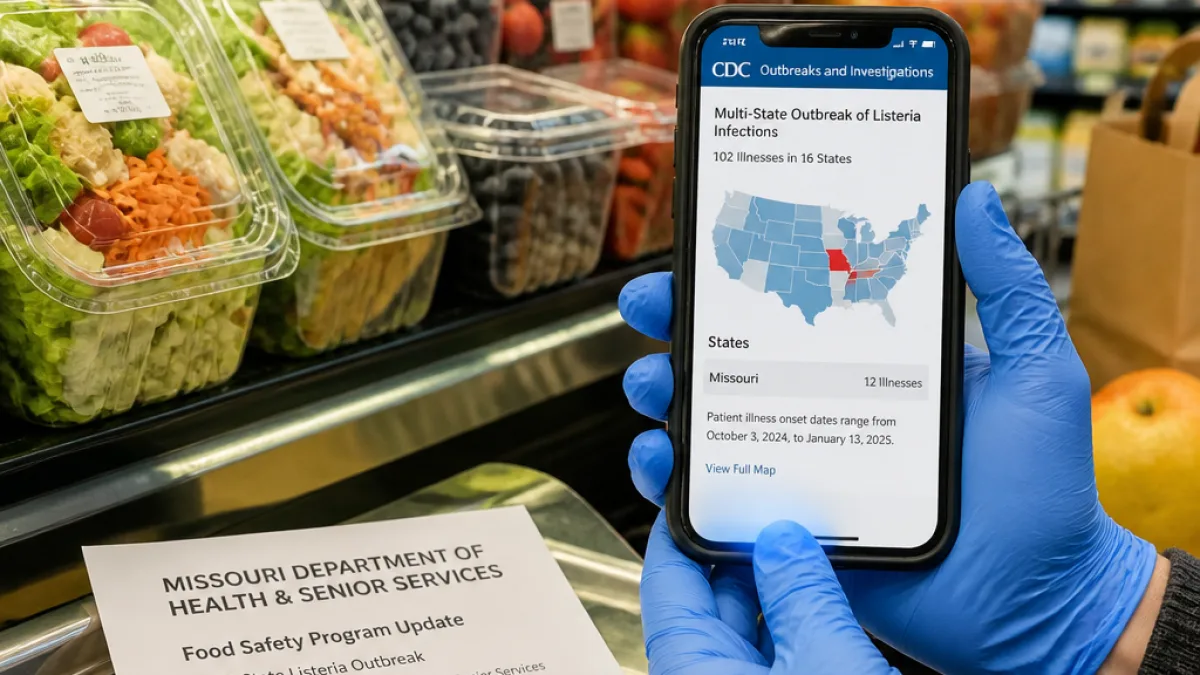
Missouri has recorded more than 2,150 cases of cyclosporiasis, the state Department of Health and Senior Services reported Sunday, as a nationwide outbreak tied to ready-to-eat produce stretches into the summer months.
State totals climb; national numbers lag
The department’s weekly communicable disease update lists 2,152 cases in Missouri. The Centers for Disease Control and Prevention has reported more than 27,500 cases across the country, a figure that combines 15,716 laboratory-confirmed infections and at least 11,841 additional probable or unconfirmed cases, according to federal data released Aug. 17.
Public-health officials say national reporting is still catching up, and CDC dashboards may show lower counts for some states because of delays in laboratory confirmations and interagency data flow. For example, Missouri’s count on the CDC site currently appears lower than the state tally.
Where Missouri stands in the outbreak
Within the group of 17 states linked to this wave of infections, Missouri ranks among the highest in reported cases. The state is tied with Indiana for third-most cases; Michigan and Ohio have reported the largest numbers.
| Jurisdiction | Reported cases (most recent) |
|---|---|
| Missouri | 2,152 |
| Nationwide (CDC) | 15,716 lab-confirmed; 11,841 additional possible |
| Hospitalizations (U.S.) | 828 |
| Deaths (U.S.) | 2 |
Symptoms, transmission and prevention
Cyclospora is a microscopic parasite that infects the intestines and is typically spread by consuming food or water contaminated with fecal matter. The illness, known as cyclosporiasis, most commonly causes prolonged watery diarrhea and other gastrointestinal symptoms.
"with frequent and sometimes explosive bowel movements"
Other reported symptoms include loss of appetite, weight loss, abdominal cramps, bloating, nausea and fatigue. Symptoms can persist for days to weeks if untreated, and the parasite often requires specific antimicrobial therapy for resolution.
Health authorities advise the public to reduce risk by treating produce carefully before eating. Recommended steps include:
- Rinsing fruits and vegetables under running water before eating, cutting or cooking.
- Using a clean produce brush to scrub firm-skinned items such as melons and cucumbers.
- Cutting away and discarding damaged or bruised portions of produce before preparation.
- Refrigerating cut, peeled or cooked produce promptly and keeping cold foods cold.
- When possible, choosing locally grown produce or growing your own to reduce unknown handling across long supply chains.
Investigation into sources continues
Federal and state investigators have been working to identify specific contaminated foods. The Food and Drug Administration at one point reported a positive finding for the parasite in an iceberg lettuce sample from Mexico produced by Taylor Farms, but that result was later described as a false positive, complicating the picture for investigators and the public.
The CDC has reported that many people with confirmed infections in the affected states also reported eating at Taco Bell, though public-health officials caution that linking individual restaurants to the overall outbreak is complex because many ready-to-eat produce items are distributed through broad supply chains and the parasite can be difficult to detect on food items.
Local impact and what to watch for
Most illnesses are not life-threatening but can lead to dehydration, weight loss and prolonged illness that interferes with work and school. Two deaths have been associated with the outbreak in Michigan; those are the first known fatalities linked to this wave of infections.
Missouri health officials update the communicable disease report weekly. Residents who develop persistent diarrhea or other symptoms after eating fresh produce should contact their health care provider. Clinicians may request laboratory testing or specific treatment when cyclosporiasis is suspected.
Public-health agencies continue to investigate supply chains, advise caution when handling produce, and urge health-care providers to report suspected cases promptly.
Gabriela Montez is the state correspondent covering health and public-safety developments.

















