
ST. LOUIS — As Missouri families finish back‑to‑school shopping and finalize schedules, state health data show a decline in routine vaccination coverage among young students, raising concern among pediatricians and public‑health officials who say now is the time to confirm children are fully immunized.
Kindergarten coverage slipping; exemptions climbing
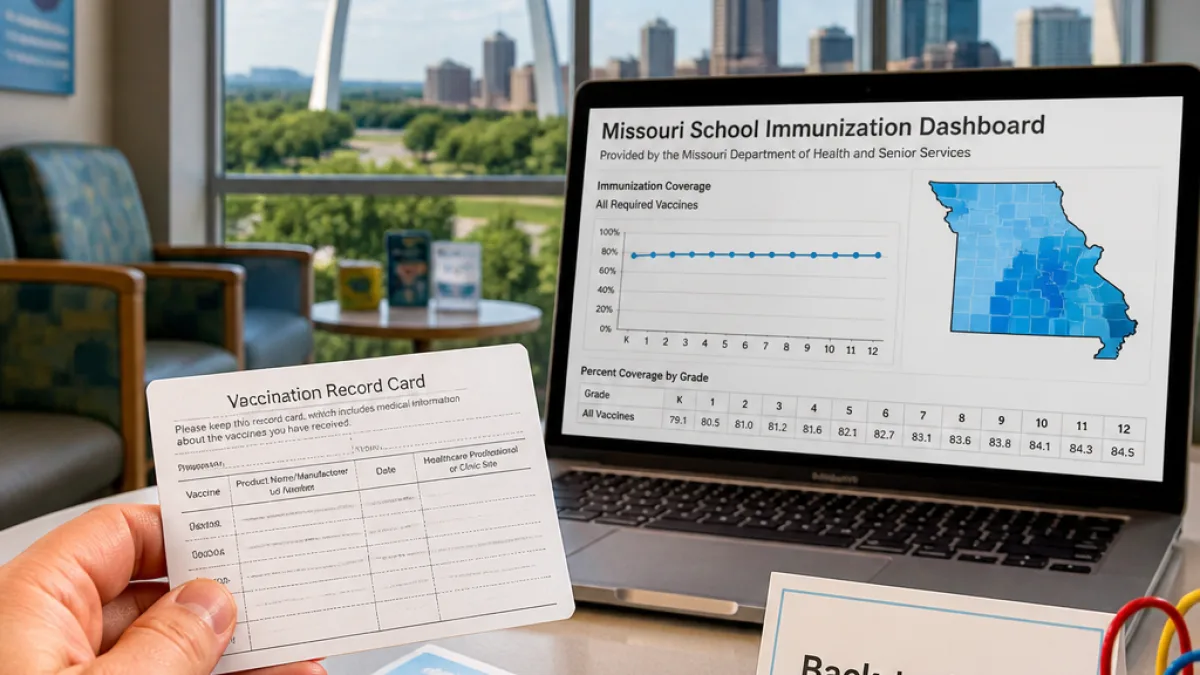
The Missouri school immunization dashboard, which displays vaccination rates by district and grade level, shows that rates for required vaccines among kindergarteners fell from generally the low‑90% range in the 2024‑25 school year to the upper‑80% range in 2025‑26. The state also reports a steady increase in nonmedical exemptions among the youngest students.
For kindergarteners, the state requires immunizations against DTaP (diphtheria, tetanus, pertussis), polio, MMR (measles, mumps and rubella), hepatitis B and varicella (chickenpox). Eighth graders are required to receive a Tdap booster and the meningococcal vaccine.
“This time of the year it’s a good idea to schedule an appointment with your child’s physician so you can review,” Graham said. “Are they ready to start the school year? Are their vaccinations up-to-date?”
Dr. LaQuita Graham, a general pediatrician with St. Luke’s, said routine checkups at the start of the school year are a practical opportunity to confirm immunizations, discuss any health concerns and catch up on missed doses.
What the numbers show
State statistics cited by health officials illustrate a gradual rise in exemption claims over recent years. The percentage of kindergarteners with religious exemptions increased from about 2.4% in the 2018‑19 school year to roughly 3.5% in 2022‑23, then to about 4.3% in 2023‑24. For 2024‑25, the state reported about 5% of kindergarteners had a nonmedical exemption and total exemptions reached about 5.2%.
| School year | Kindergarten exemption rate |
|---|---|
| 2018–19 | 2.4% (religious) |
| 2022–23 | 3.5% (religious) |
| 2023–24 | 4.3% (religious) |
| 2024–25 | 5% (nonmedical); 5.2% total |
Health implications and timing
Pediatricians warn that lower vaccination coverage increases the potential for outbreaks of vaccine‑preventable diseases, particularly measles, which spreads easily in school settings. State officials continue to monitor measles vaccination rates specifically because of the disease’s high transmissibility.
Graham noted respiratory illnesses typically rise in the first weeks after school resumes, making timely vaccination and routine wellness visits an important part of prevention.
Practical steps for parents and guardians
Health providers and school officials recommend these actions as the school year approaches:
- Review your child’s immunization record with their primary care provider.
- Schedule any needed checkups or catch‑up vaccinations before the first day of school.
- Confirm school vaccination requirements for your child’s grade and district, including kindergarten and eighth grade checkpoints.
- Ask about local clinic hours, community health centers or school‑based vaccination events if scheduling is difficult.
Where to find local data
Missouri’s school immunization dashboard provides district‑level and grade‑level breakdowns. The dashboard is intended to help parents, school officials and public‑health professionals monitor coverage and identify areas where outreach or catch‑up programs may be needed.
Officials emphasize that keeping routine vaccinations current protects not only individual children but also classmates and community members who cannot be vaccinated for medical reasons. With the school year imminent, local pediatricians say now is the practical moment for families to act.
Reporting for this story relied on state immunization data and interviews with health care providers advising Missouri families as they prepare for the new school year.

















