
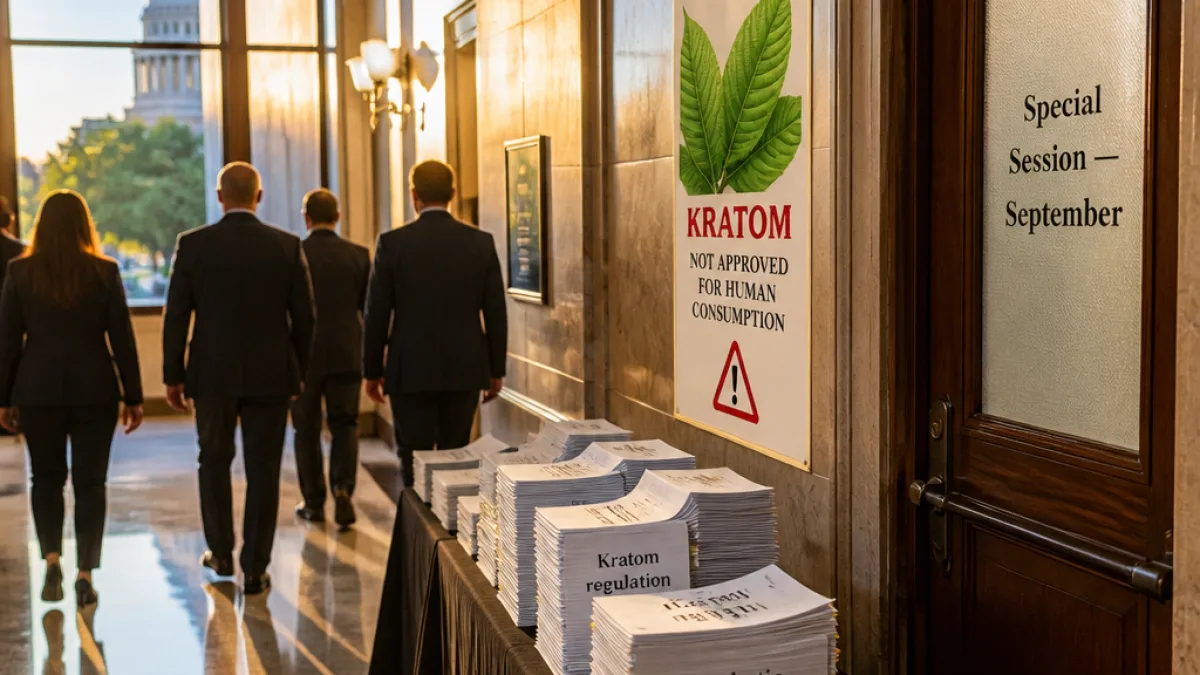
BISMARCK — North Dakota lawmakers on Monday advanced two companion bill drafts that would create a regulatory framework for natural kratom products and impose criminal penalties for synthetic kratom derivatives. The measures emerged from a Kratom Working Group and are slated for consideration in a special legislative session called by Gov. Kelly Armstrong to address the current absence of state rules governing the substance.
Two-part approach: regulation and prohibition
One bill, introduced by Rep. Pat Heinert, R-Bismarck, would treat natural kratom products similarly to existing tobacco laws. Under the draft, retailers would be prohibited from selling kratom to anyone under 21 years of age, and manufacturers and sellers would face new labeling requirements, including a warning that kratom may be addictive. The draft also would give the North Dakota attorney general the authority to oversee the sale of kratom products, and would bar packaging that imitates candy or is otherwise designed to appeal to children.
"That has become a big thing in the kratom industry. Bright colors, flashy stuff," Heinert said. "Those things are all marketed towards the underage people."
The second proposal, sponsored by Sen. Michelle Axtman, R-Bismarck, targets synthetic derivatives of kratom, including compounds such as 7-OH and any future chemical analogs that may reach the market. That draft would add synthetic kratom derivatives to the state’s Schedule I list and establish a graded penalty structure for use and possession.
"It matches the penalty structure of marijuana," Axtman said.
Penalties proposed for synthetic derivatives
Under Axtman’s draft, the first offense for use of a synthetic mitragynine derivative would be treated as an infraction, with subsequent offenses treated as misdemeanors. Possession carries escalating penalties: an infraction for a first offense, a misdemeanor for a second, and a felony for subsequent incidents. The bill was written to align state scheduling with the expected classification.
Not all lawmakers agreed on the regulatory approach. Sen. Janne Myrdal, R-Edinburg, voiced support for a full prohibition rather than regulation.
"I would prefer a total ban because I don’t see how good this is for anyone," Myrdal said.
Sen. Kathy Hogan, D-Fargo, described Heinert’s measures as a productive starting point for the debate, signaling some bipartisan willingness to pursue controls rather than an outright ban.
What the drafts would do
- Set the legal purchase age for kratom products at 21.
- Create labeling requirements that include an addiction warning.
- Prohibit marketing and packaging that appeal to children.
- Empower the state attorney general to regulate kratom sales.
- Criminalize the use and possession of synthetic kratom derivatives with escalating penalties.
The two-part plan aims to strike a balance between restricting access and protecting public health while addressing a perceived loophole: synthetic variants not covered by rules for natural products.
| Subject | Proposal |
|---|---|
| Minimum purchase age | 21 for kratom products |
| Labeling | Warning that product may be addictive |
| Packaging | Ban on candy-like, child-appealing packaging |
| Synthetic derivatives | Scheduled as Schedule I; escalating penalties for use/possession |
Next steps and context
Because the bills were advanced as drafts by the Kratom Working Group, they will be formally considered during a special session in September. The session was called specifically to address kratom’s lack of regulation in the state, according to the working group’s timeline.
Supporters of regulation argue that controls similar to tobacco laws will help keep the product away from minors and ensure consumers receive clearer information about risks. Opponents such as Myrdal say they favor a complete ban, reflecting concerns about potential harms.
The debate in North Dakota mirrors conversations in other states and at the federal level about how to handle kratom — a botanical product derived from the mitragyna speciosa plant — and its synthetic analogs. Proponents have described kratom as a natural supplement; critics point to reports of dependence and harms associated with some derivatives.
With the special session scheduled, the legislature’s final decisions will shape whether North Dakota adopts a regulated market for natural kratom, prohibits it altogether, or pursues the hybrid approach advanced this week that pairs regulation of natural products with criminal penalties for synthetic derivatives.
Lawmakers and state officials will have a focused window to refine the drafts and respond to public and stakeholder input before votes in the special session.

















