BISMARCK — North Dakota lawmakers are laying groundwork to evaluate nuclear power as part of the state’s long-term electricity mix, State Sen. Dale Patten said this week, and he plans to introduce legislation during the 2027 session to formalize that effort.
Patten, a Republican representing Watford City in District 26, chairs two interim legislative groups focused on nuclear matters: the Advanced Nuclear Energy Committee and the High-Level Radioactive Waste Advisory Council. Speaking on a regional radio program, he described nuclear energy as a potential response to growing demand for reliable, large-scale electricity.
Patten outlines advantages and next steps
Patten cited several technical and operational benefits he said are associated with nuclear generation, including a small land footprint relative to output and a high capacity factor. He noted that nuclear is carbon-free at the point of generation and can be dispatched when needed.
“Nuclear has several advantages. The footprint of a nuclear plant is relatively small for the amount of power that they put out. The capacity factor is generally speaking over 90%. It is a carbon-free energy source… and it is dispatchable, meaning you can store it, you can turn it on, and it’s readily available.”
Patten said he plans to bring bills in the 2027 legislative session that would change how the Legislature studies and coordinates nuclear policy and would address existing state statutes that now prohibit storage of nuclear waste within North Dakota.
Legislative proposals detailed
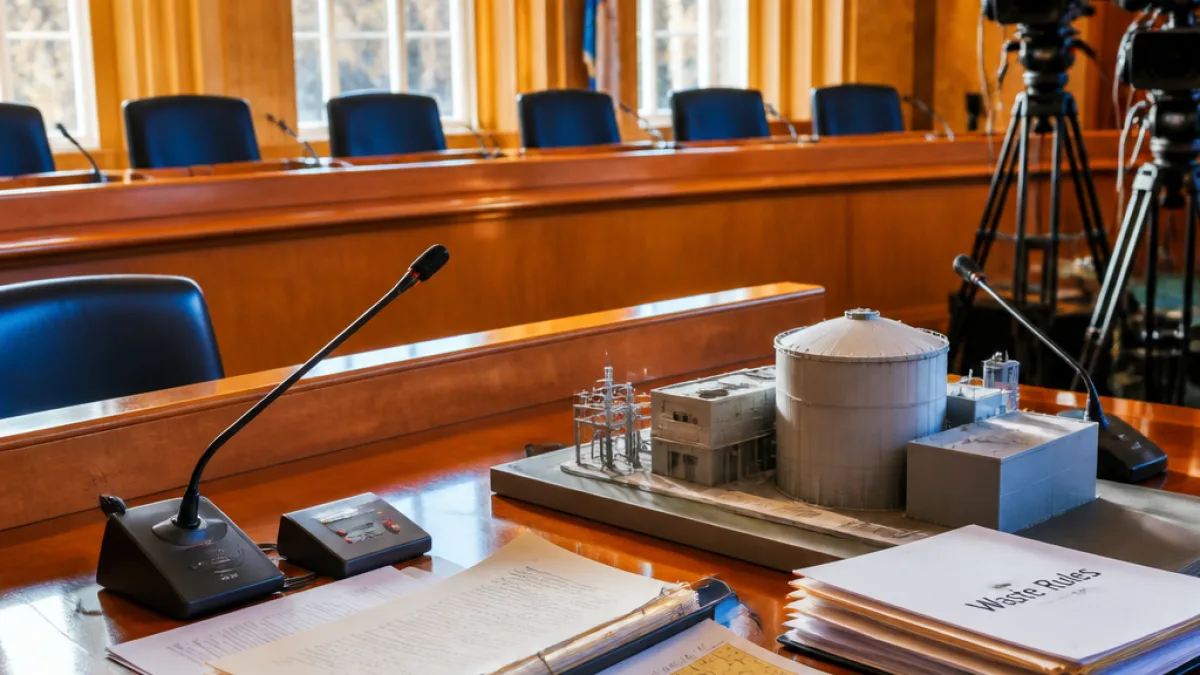
Among measures under consideration, Patten described legislation to merge the two interim bodies he currently chairs into a single statutory committee intended to preserve institutional knowledge and provide continuity between sessions. He also said the state will need to reconsider laws that bar nuclear waste storage if North Dakota intends to host nuclear facilities.
| Proposed change | Purpose |
|---|---|
| Combine interim committees | Create continuity and retain technical knowledge |
| Update waste storage laws | Remove or revise prohibition so in-state nuclear development can include storage |
Patten emphasized the need for careful, locally informed decisions. He said that while industrial growth can raise community concerns, the economic opportunities presented by energy development can be preferable to stagnation.
“The challenges that are created by economic opportunity are much better to have in front of us than challenges when you have no opportunity,”
Patten added that it will be up to North Dakotans to manage any industrial expansion responsibly: "It sits with the people of our state to make sure that we manage it the right way, make the good decisions, and build the right models as we go forward."
Small modular reactors and the wider energy debate
Patten specifically cited Small Modular Reactors (SMRs) as an advanced nuclear technology worth evaluating. SMRs are designed to be smaller and, proponents say, more flexible than traditional large reactors; Patten framed them as options to meet large-scale, reliable demand while emitting no carbon during operation.
His remarks come as states across the country assess how to balance reliability, emissions reductions and grid resilience. North Dakota’s heavy reliance on fossil fuels and growing interest in diversified generation sources have focused attention on whether the state should expand its policy toolkit to include nuclear alongside wind, solar and other resources.
- Committee consolidation: would create a permanent statutory body to maintain momentum on nuclear policy work.
- Waste law changes: would address the current prohibition on storing nuclear waste in North Dakota.
- Technology focus: includes study of SMRs and other advanced nuclear designs.
Patten did not provide detailed bill language or timelines beyond signaling his intent to file legislation in 2027. The proposals raise immediate questions for lawmakers, regulators and communities about siting, public safety, environmental review, and the long-term management of radioactive waste.
As the legislative session approaches, stakeholders across energy, agriculture, environmental and local government sectors can expect to be part of the discussion on whether and how nuclear power fits into North Dakota’s energy future.