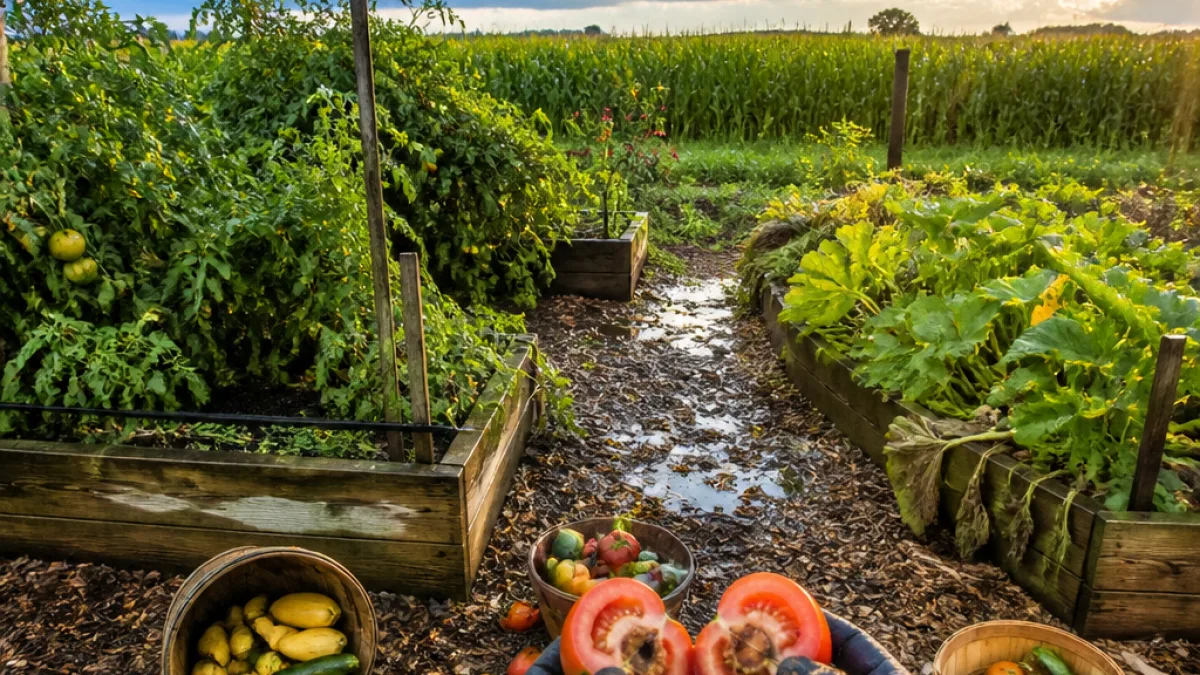
Home gardeners across Iowa are reporting unusually large vegetable harvests this year, but the same combination of warm temperatures and frequent heavy rain is also creating problems for several common crops.
Weather that helps — and harms
Iowa State University Extension horticulture specialist Aaron Steil said the state’s pattern of intense rain events followed by high heat has led to both plentiful produce and plant disorders in many yards and community gardens.
“We’ve had a lot of rain. It’s kind of come in big events across much of the state. And that can help lead to blossom end rot. And it can also lead to fruit cracking,” Steil said.
That surge of water into plants can make fruits swell faster than their skin can expand, producing splits and concentric rings of cracking, particularly on susceptible tomato varieties. Steil said some tomato types — including many paste varieties — have thicker skin and tolerate those swings in moisture better than thinner-skinned types.
What gardeners are seeing
Steil described two common symptoms gardeners are noticing:
- Fruit cracking — splits in tomato skin caused by rapid uptake of water after dry spells.
- Blossom end rot — a dark, sunken rot at the blossom end of fruit linked to insufficient calcium reaching the developing fruit even when soil calcium levels are adequate.
Blossom end rot is not caused directly by a lack of calcium in the soil, Steil explained, but rather by inconsistent soil moisture that prevents calcium from moving into the plant and into the fruit as it forms. The condition can affect not only tomatoes but also peppers, squash, cucumbers and eggplant, typically showing as decay at the end of the fruit opposite the stem.
Other diseases becoming more common
Beyond cracking and blossom end rot, gardeners should be on the lookout for several fungal and bacterial problems that thrive in the warm, wet conditions this season.
| Disease | Common crops affected |
|---|---|
| Powdery mildew | Cucumbers, squash |
| Septoria leaf spot | Tomatoes |
| Early blight | Tomatoes |
| Bacterial speck/spot | Tomatoes, peppers, eggplant |
Many of these issues have been reported more frequently this year, Steil said, with leaf spots, mildews and bacterial infections appearing on foliage and fruit in locations where conditions remain humid for extended periods after storms.
Practical steps for gardeners
Steil outlined several straightforward cultural practices gardeners can use to reduce the risk and severity of these problems — measures that do not require specialized tools or chemical treatments.
- Maintain consistent moisture: Water regularly during dry spells and consider supplemental irrigation when rainfall is sparse to prevent the large swings that stress plants.
- Use mulch: Applying mulch around plants helps retain soil moisture and moderates sudden changes after heavy rain.
- Choose resistant varieties: When possible, plant tomato varieties known for thicker skins or resistance to cracking and common diseases.
- Monitor and remove affected tissue: Prompt removal of diseased leaves and fruit can slow spread of fungal and bacterial pathogens.
Steil emphasized that cracked tomatoes remain edible when the damage is only skin-deep. Gardeners should trim away any damaged tissue and use the fruit promptly. For blossom end rot, he noted that improving irrigation practices and mulching are often more effective than adding calcium amendments because the underlying issue is movement of calcium within the plant.
When to seek additional help
Home gardeners encountering widespread or rapidly worsening disease issues may want to contact local extension offices for diagnosis and management advice. Extension services can help identify specific pathogens and recommend appropriate fungicides or bactericides when cultural controls are not enough, as well as suggest resistant varieties suited to local conditions.
For now, the message for many Iowa gardeners is one of guarded optimism: abundant produce this season, but vigilance and a few simple management steps will help protect the harvest from weather-driven disorders.