
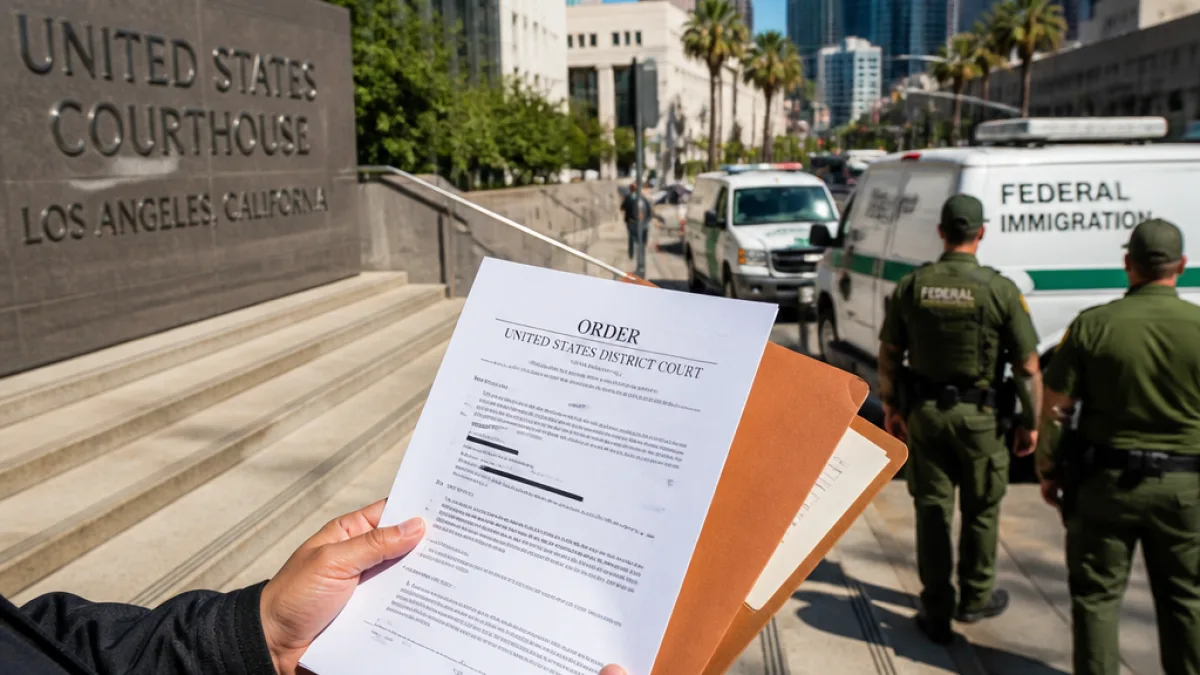
LOS ANGELES — A federal judge has temporarily halted much of the federal government's practice of making warrantless immigration arrests in Southern California, ruling that officers must consider the “totality of the circumstances” and document probable cause before detaining people without a warrant.
Judge imposes stricter standard for arrests
U.S. District Judge Maame Ewusi-Mensah Frimpong issued the preliminary injunction Sept. 2, a court order that was unsealed Wednesday. The directive applies to the Central District of California, which encompasses Los Angeles, Orange, Riverside, San Bernardino, Ventura, Santa Barbara and San Luis Obispo counties.
In her order, Frimpong said agents must determine whether a person is likely to escape before making a warrantless civil immigration arrest and must evaluate the totality of the circumstances known to the agent or officer. The judge also required the government to thoroughly document the probable cause that leads to an arrest before seeking a warrant.
“Without this, Defendants cannot show that any arrest was proper,”
Frimpong wrote, rejecting the government's argument that mere undocumented presence in the country suffices to justify warrantless detention.
Background and legal challenge
The injunction stems from a lawsuit filed last fall by the American Civil Liberties Union of Southern California, Public Counsel and several Los Angeles immigrant advocacy groups. The plaintiffs said that a recent surge in immigration enforcement included broad, warrantless arrests and roving patrols that relied on factors such as race, language and occupation.
The lawsuit sought multiple protections, including an order to stop roving patrols that make stops based solely on appearance or language and to secure access-to-counsel rights for people in detention. Frimpong had previously issued a temporary restraining order limiting those operations; that restraint was later lifted by the U.S. Supreme Court in September of last year.
Scope and immediate effects
The injunction currently restricts civil immigration arrests without a warrant within the Central District’s borders. It requires agents to weigh whether an individual is likely to flee and to document probable cause before an arrest can be made without a warrant. The government asked the judge to delay the order to pursue an appeal; Frimpong denied that request.
The Department of Homeland Security did not immediately respond to requests for comment. How quickly U.S. Immigration and Customs Enforcement and Customs and Border Protection will change field practices in response to the order remains to be seen, but the injunction creates a new procedural hurdle for warrantless civil arrests in the region.
What the order says agents must consider
- Whether the person is likely to escape based on the totality of circumstances known to the officer.
- Documented probable cause supporting the need for a warrantless arrest.
- That mere undocumented status alone is insufficient justification for detention without a warrant.
Local impact and enforcement questions
The decision will directly affect enforcement actions in Los Angeles and neighboring counties where immigration arrests have been frequent. Advocates who brought the suit said the injunction will protect civil liberties and curb practices that can lead to racial profiling and wrongful detention. Defense attorneys and immigration rights groups welcomed the ruling as a necessary check on expansive enforcement tactics.
Federal authorities have previously defended roving operations as necessary to enforce immigration laws and to apprehend people who pose public-safety risks. The new order, however, places an emphasis on individualized assessment and written documentation — a shift that could change how field agents plan and execute arrests, and could slow some operations while supervisors review probable-cause determinations.
Where the injunction applies
| Central District of California |
|---|
| Los Angeles |
| Orange |
| Riverside |
| San Bernardino |
| Ventura |
| Santa Barbara |
| San Luis Obispo |
Federal judges in other districts, including Portland, Colorado, Washington, D.C., and the Eastern District of California, have issued comparable rulings or considered similar limits on immigration enforcement tactics, underscoring an ongoing national debate over the scope of warrantless civil arrests.
The decision sets the stage for further litigation over enforcement practices in Southern California. The government may seek expedited appeal to the U.S. Court of Appeals, and how higher courts treat the question could shape immigration enforcement nationwide.
For residents and attorneys in the affected counties, the injunction underlines the importance of documenting interactions with immigration agents and of seeking legal counsel promptly if detained. Advocacy groups behind the lawsuit say they will continue to monitor enforcement and ensure the court’s protections are implemented.
Kevin Nakamura is the state correspondent at WE NEWS.
















