
Council approval follows years of debate and state pressure
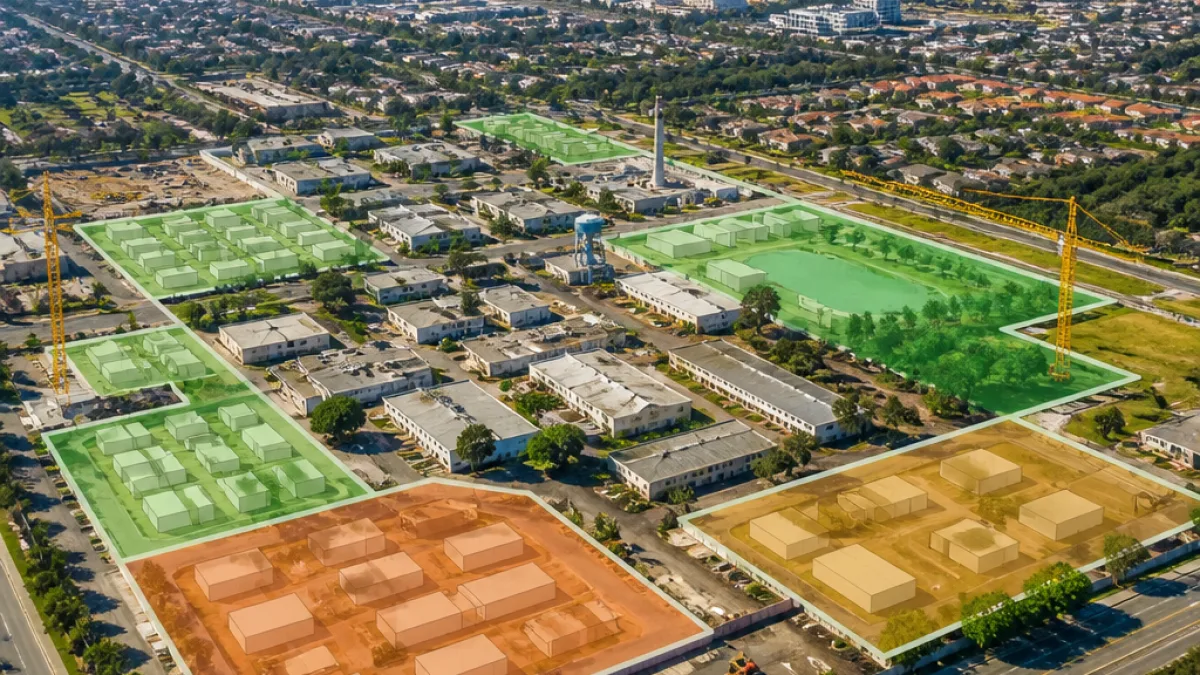
The Costa Mesa City Council last week approved a development plan that will convert the bulk of the former Fairview Development Center into housing and open space, a move that sets the 110-acre site on a path toward substantial change after years of dispute over its future use.
Under the plan, developers are expected to build approximately 2,300 housing units and create about 25 acres of green space. The project also reserves between 10,000 and 35,000 square feet for commercial uses. The state will retain two separate parcels: one roughly 15 acres to serve as an emergency response center and another 15 acres to remain with the California Department of Developmental Services for housing-related purposes.
| Item | Amount |
|---|---|
| Planned housing units | 2,300 |
| Open/green space | 25 acres |
| Commercial space | 10,000–35,000 sq ft |
| State-held parcels | Two 15-acre lots |
History and controversy shadow the redevelopment
The Fairview property, which originally opened in 1959 as a state-run care facility for people with developmental disabilities, largely closed in 2016 following reports that included six deaths attributed to abuse and neglect. Since then, local leaders and residents have sparred over the site's future—debate that widened when neighboring jurisdictions and state officials weighed in about potential uses.
San Clemente officials in 2023 argued the site should be used as a regional homeless shelter, a proposal Costa Mesa leaders repeatedly opposed. That tension has continued into the council’s recent deliberations and public meetings.
Legal dispute remains active
The redevelopment approval comes while the state has sued Costa Mesa, alleging the city lacks a “compliant” housing plan. City officials have disputed that characterization, saying they have been pursuing an approved plan while still permitting housing projects across the city.
Residents voice mixed reactions at council hearing
Public engagement was robust at the council’s Sept. 15 meeting, where more than 40 residents spoke during comment. Speakers expressed both support for new housing and concerns about impacts on adjacent properties and amenities.
- Some residents urged the city to prioritize affordable units for younger households and workers who struggle to live here.
- Others raised questions about how the development could affect nearby recreational facilities, including the golf course.
- A portion of speakers welcomed the addition of open space to the site’s plan.
“I know that my nanny has dreamed of living near here and has never been able to make that a reality, despite even the most affordable units here,” said Costa Mesa resident Laura Lyons at the meeting.
What the decision means for Costa Mesa
Approving a large-scale housing plan on the Fairview campus represents a major land-use shift for Costa Mesa. The promised blend of housing stock and open space aims to address competing priorities: increasing supply while preserving public amenities. How many of the proposed units will be priced at levels accessible to local workers and younger families remains a central point of public interest, and the city will face pressure to ensure affordable housing commitments are met as the project advances.
The existence of an ongoing lawsuit by state officials also creates uncertainty about timing and possible additional legal steps. Meanwhile, the state’s retention of the two 15-acre parcels ensures that portions of the former state facility will continue to serve emergency and developmental services functions, maintaining a degree of public control over parts of the land.
With construction and planning processes still ahead, Costa Mesa officials must now translate council approval into zoning, permits and project oversight while addressing resident concerns raised during the recent hearing.
What’s next: Project approvals at the council level clear the way for design, permitting and, eventually, construction. The timeline for building the proposed units, phasing of open space and finalization of commercial components will depend on subsequent developer proposals and any outcomes tied to the state’s lawsuit.
















