
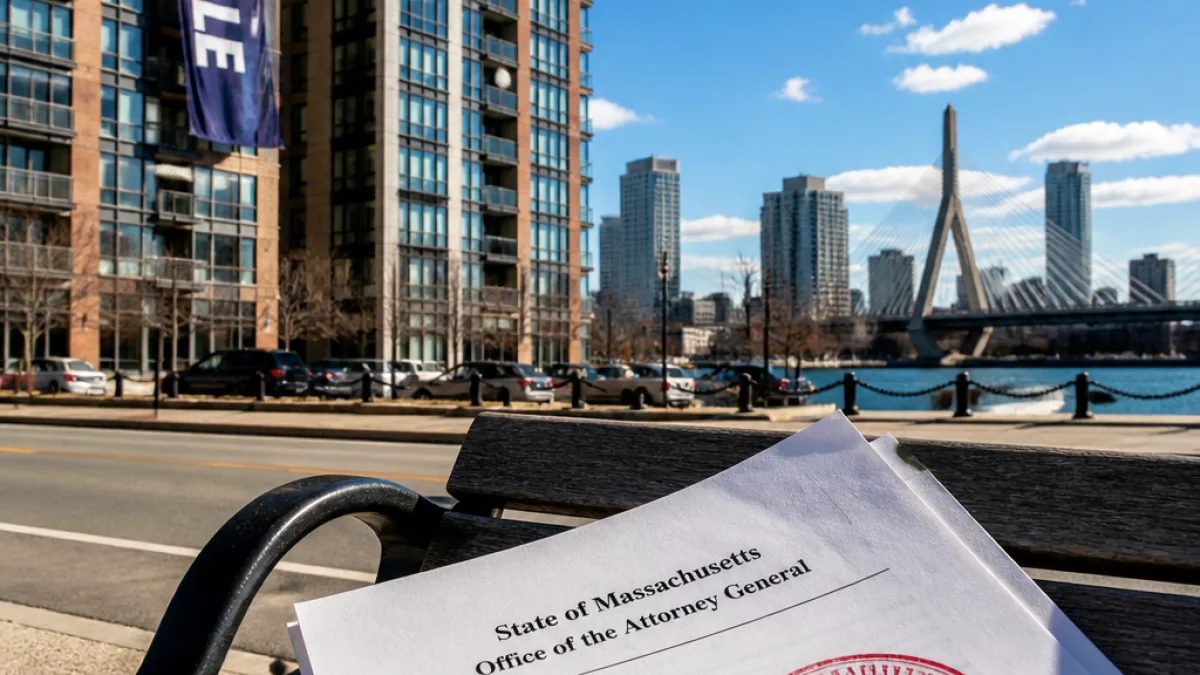
Deal requires sale of Emerson Place to protect rental competition
The two-tower Emerson Place apartment complex in Boston’s West End will be sold as part of a larger corporate merger after the companies involved reached an agreement with Attorney General Andrea Joy Campbell, officials said.
The property, which comprises a combined more than 400 units, was identified in the agreement as a unit to be divested so the merger would not lessen competition in Boston’s rental market. The sale was announced by the two national residential investment firms involved in the proposed combination and confirmed by the attorney general’s office.
State scrutiny of mergers involving residential portfolios has increased as private investment firms expand their footprint in urban rental markets. Massachusetts regulators signaled they would intervene if a consolidation threatened renters with higher prices or reduced choices.
Campbell’s office said it wanted to ensure the deal wouldn’t reduce competition in Boston’s rental market.
What is being sold and where
The Emerson Place site consists of two apartment towers located in the West End neighborhood of Boston. According to the agreement, that combined inventory of more than 400 units will be placed on the market and transferred to a different owner as part of the merger conditions. The announcement did not name a buyer or provide a timetable for the sale.
| Property | Approx. units | Neighborhood |
|---|---|---|
| Emerson Place (two towers) | More than 400 | West End, Boston |
Why the sale matters to Boston renters
The attorney general’s intervention reflects concerns that large-scale portfolio deals can concentrate market power in ways that affect rent levels, maintenance, tenant screening and overall housing supply. By requiring a divestiture in Boston, state officials aimed to maintain more owners in the city’s rental market and prevent one corporate owner from gaining outsized influence.
- Supply and choice: Selling the towers to another owner preserves multiple operators in the market.
- Regulatory oversight: The AG’s agreement establishes a precedent for review of similar transactions affecting local housing markets.
- Uncertain timeline: The sale process and buyer identity were not disclosed, leaving tenants and local stakeholders awaiting further details.
Local housing advocates and city officials have in recent years raised alarms about the role of large investment firms in the region’s housing market. While the Emerson Place divestiture does not resolve broader housing supply challenges, it represents a targeted use of antitrust and consumer-protection authority to preserve competition.
The companies involved in the merger released a joint statement saying they had reached the agreement with the attorney general’s office; the Boston Business Journal first reported the development. The AG’s office framed its action as a consumer-protection step aimed at ensuring that the proposed corporate combination would not reduce competition in Boston’s rental marketplace.
Tenants at Emerson Place and nearby properties may face questions about changes in management or ownership, but until a buyer is named and a sale completes, day-to-day operations are expected to continue under current management. City housing officials did not announce any immediate policy changes in response to the agreement.
As consolidation among residential investment firms continues nationally, this case underlines the role state regulators can play in shaping outcomes at the local level. Boston renters and community leaders will be watching closely for who purchases the West End towers and whether the sale produces the competitive outcomes the attorney general sought.
















