
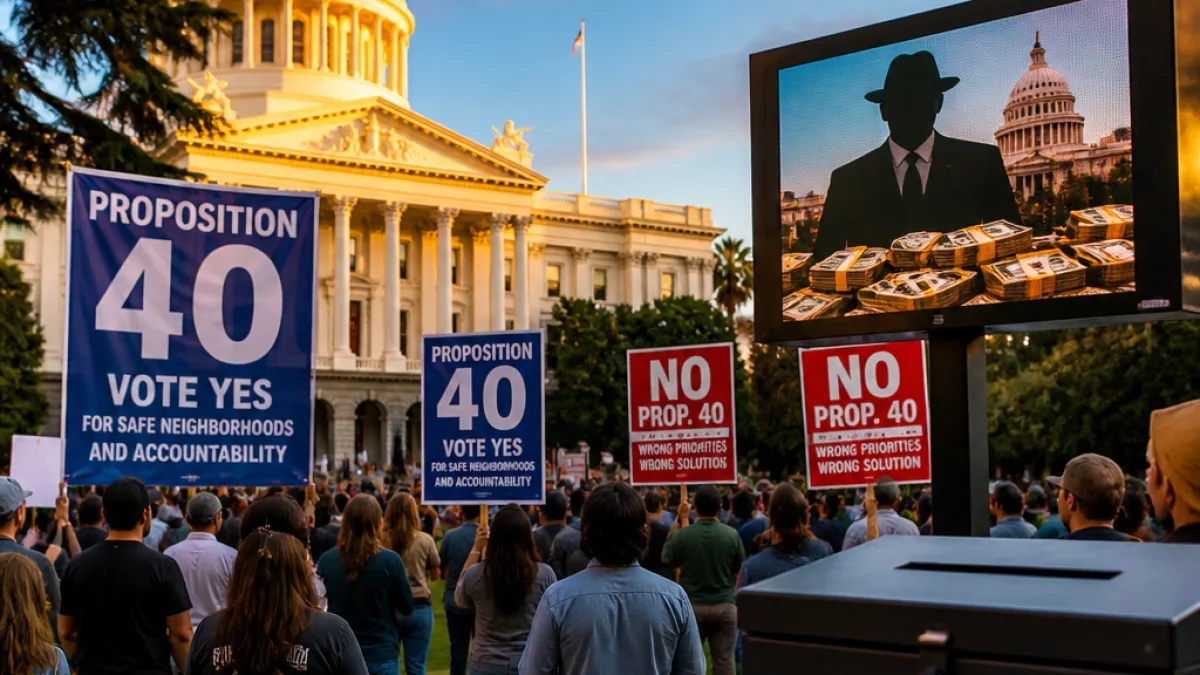
SACRAMENTO — The organizer behind California’s contested proposal to levy a one-time tax on the state’s wealthiest residents said Tuesday that the effort has outgrown state boundaries and is being positioned as a national campaign.
Dave Regan, president of the Service Employees International Union–United Healthcare Workers West (SEIU-UHW), told Politico the plan — widely referred to as Proposition 40 — has drawn more attention than he expected and will be deployed beyond California if it succeeds here.
"I think this is now a national campaign," Regan told Politico. "We knew this was provocative, we knew it would touch a nerve, but we completely underestimated how much interest and attention it would generate."
What the proposal would do
Proposition 40 would impose a one-time 5% tax on the net wealth of the state’s wealthiest residents. Backers say the measure would target about 200 billionaires and generate billions of dollars in revenue that would be allocated to California’s health-care programs.
Labor groups and backers argue the levy would capture wealth "hoarded outside of the tax system" and funnel funds into services for Californians. Opponents — including some labor and health-care organizations and Gov. Gavin Newsom — say the measure is poorly targeted, legally risky and could destabilize the state’s economy.
High-profile opposition and spending
The proposal has ignited massive spending by wealthy critics. Tech leaders have poured tens of millions into opposing the measure; one of the most prominent donors is Google co‑founder Sergey Brin, who has contributed more than $100 million to the campaign against Proposition 40.
Brin’s personal fortune was cited in reporting as roughly $267 billion, a figure used to estimate the impact a 5% one-time levy could have on individual fortunes. Under that math, Brin’s contribution to the opposition is dwarfed by what he could owe under the proposal: an estimated $13.3 billion one‑time payment if his wealth were taxed at that rate.
- Tax rate: 5% one-time on net wealth
- Targets: Roughly 200 billionaires in California
- Purpose: Fund state health-care programs
- Notable opposition spending: Sergey Brin > $100 million
| Item | Figure |
|---|---|
| Proposed tax rate | 5% (one-time) |
| Approximate number targeted | 200 billionaires |
| Notable opposing donation | >$100 million (Sergey Brin) |
| Estimated hit for Brin (5%) | $13.3 billion (based on reported $267 billion fortune) |
Political implications and legal questions
Supporters view Proposition 40 as a means to expand health-care funding without raising payroll or general-income taxes. Critics warn the ballot measure could face legal challenges, both on constitutional grounds and on practical enforceability — particularly when it comes to valuing complex assets and addressing wealth held through trusts or businesses.
Gov. Newsom and a coalition that has included some labor and health-care entities opposed the measure earlier in the campaign, creating an unusual political alignment in which a measure proposed to raise money for health programs met resistance from organizations that frequently support progressive tax measures.
What comes next
Proposition 40 is slated for a November ballot. Organizers on both sides have signaled they will continue heavy advertising and outreach in the weeks leading up to the election. Regan’s comment that the fight could move beyond California suggests supporters plan to market the concept of one-time wealth levies to other states, potentially reshaping national conversations about taxation and wealth inequality.
For California voters, the coming months will involve close scrutiny of campaign spending, legal analyses of the proposal’s viability, and debates over the policy trade-offs between new revenue for health services and the economic effects of taxing the state’s wealthiest residents.
Kevin Nakamura is the WE NEWS state correspondent covering California politics and policy.
















