
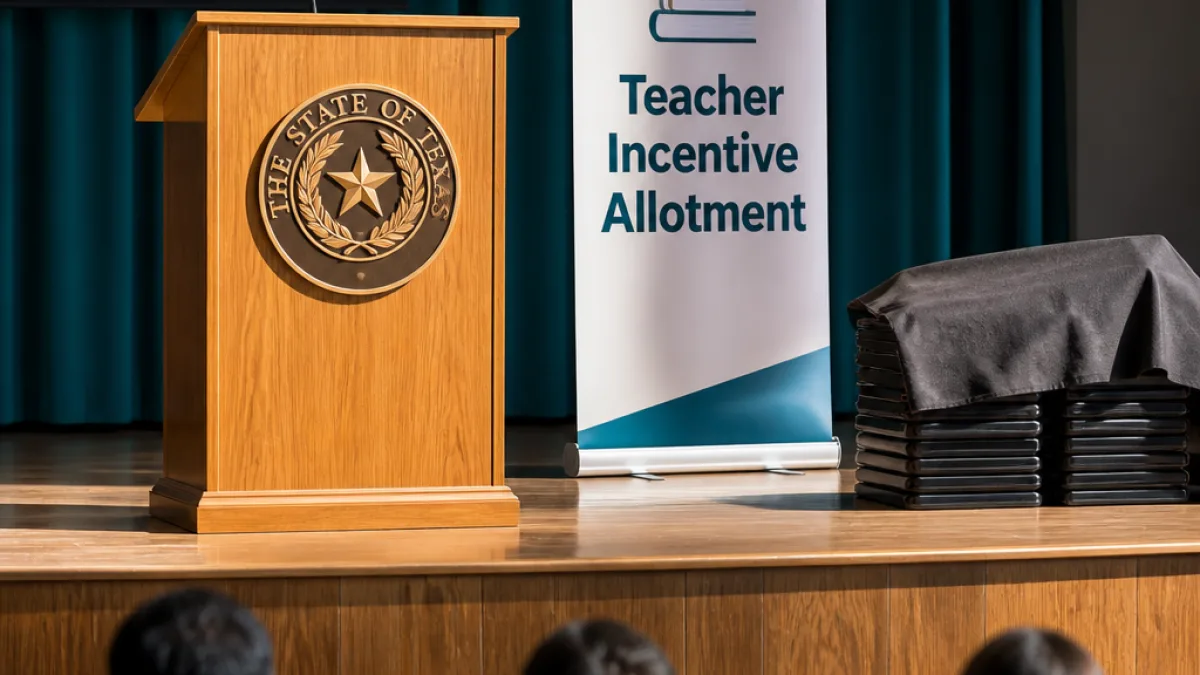
Gov. Greg Abbott visited Del Mar College in Corpus Christi on Thursday to present a slate of education proposals aimed at increasing teacher pay, steering high-performing teachers to struggling campuses and curbing the use of screens in classrooms.
Incentives, funding and a push for strategic pay
At the roundtable, Abbott emphasized the state’s ongoing effort to reward stronger classroom performance through the Teacher Incentive Allotment, a program created in 2019 that pays designated teachers additional funds. Abbott said the allotment can serve both as a reward for excellence and as a recruitment tool to place effective educators in schools that have difficulty attracting them.
State officials and local leaders in attendance included State Reps. Denise Villalobos and Todd Hunter, superintendents, school board members and other education administrators. Abbott also highlighted recent funding milestones for the program:
- $750 million in TIA funds awarded during the 2025-26 school year
- More than 65,000 Texas teachers received awards across over 800 school systems in 2025-26
- Total TIA funding since 2019 now exceeds $1.8 billion
| Measure | Figure |
|---|---|
| TIA funds awarded (2025-26) | $750 million |
| Teachers awarded (2025-26) | 65,000+ |
| School systems receiving awards (2025-26) | 800+ |
| Total TIA funding since 2019 | $1.8 billion+ |
Legislative changes and local reactions
Abbott pointed to changes made by the Legislature to expand the allotment beginning with the 2026-27 school year. House Bill 2, passed in the most recent session, increased teacher-generated allotments and added supports for districts adopting strategic compensation systems designed to pay educators based on local criteria.
While some local leaders welcomed the focus on compensation, not everyone at the event embraced the approach of tying pay in part to student performance measures. Several educators expressed reservations about linking incentives to standardized testing and the pressure those measures place on teachers during high-stakes parts of the school year.
“It’s really important that ... we have our parents and educators as part of this conversation,”
Corpus Christi Independent School District Board of Trustees President Dolly Gonzales Trolley used those words to thank the governor for including local stakeholders in the discussion about screentime and classroom policy.
Screen time limits and a new advisory commission
Abbott also proposed restricting routine classroom use of laptops, tablets and other devices, saying technology should supplement instruction, not substitute for teacher-led learning. He announced the launch of a Texas Classroom Commission intended to advise the state on education policy and said he expects lawmakers to consider related legislation during the next legislative session.
Supporters of the proposal say tighter limits on classroom devices would emphasize physical materials, handwriting and direct instruction. Opponents and some educators warned that limiting technology could have unintended consequences in programs that currently rely on digital tools for differentiated instruction, remediation and preparation for workplace skills.
Local implications
For Corpus Christi school leaders, the expanded Teacher Incentive Allotment funding and new legislative tools could provide more flexibility to recruit and retain teachers, especially in campuses that struggle to compete for experienced staff. At the same time, proposed restrictions on classroom technology will require districts to weigh instructional trade-offs and consider input from parents, teachers and curriculum experts before changing daily practice.
As lawmakers prepare to convene for the next 90-day legislative session in January, local districts will be watching how state policy proposals translate into final bills and how funding and accountability changes will affect staffing and classroom decisions in Corpus Christi.















