President Volodymyr Zelensky appears to have contained a month-long political crisis triggered by the abrupt dismissal of his defence minister, yet he has left office politically weakened, according to reports from Kyiv. The unrest, which began after the removal of Mykhailo Fedorov on 15 July, has subsided but remains a live issue for the president’s standing and for governance during wartime.
How the crisis unfolded
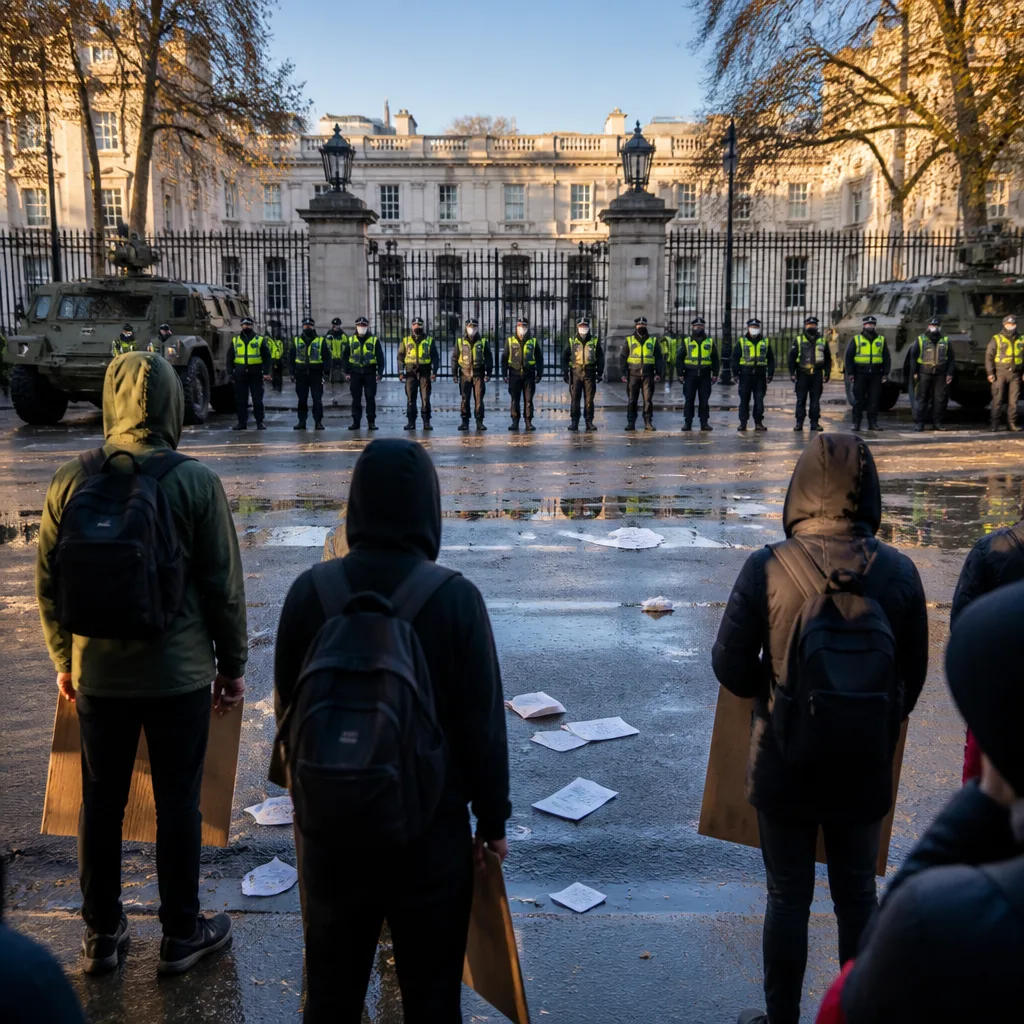
Public anger coalesced quickly around Mr Fedorov’s dismissal. Demonstrators gathered in the capital and chanted his name, keeping a visible presence near presidential offices. Early demonstrations were energetic enough to prompt organisers to call a further rally on the evening of 14 August, although turnout that night was smaller.
“Fedorov! Fedorov! Fedorov!”
The movement initially carried the momentum of a substantial popular reaction, driven principally by young urban voters, but observers now judge that its energy has diminished. Officials in Kyiv moved to blunt the crisis by making further personnel changes in the security and defence apparatus.
Reshuffle and replacements
In an effort to restore order and confidence, Mr Zelensky dismissed the former commander-in-chief of the armed forces, Oleksandr Syrsky, and on 21 July appointed General Mykhailo Drapaty as his successor. Reports say General Drapaty’s lower public profile and lack of controversy helped to steady opinion in the armed services and among political actors.
Meanwhile, Mr Fedorov remains without a governmental post. Mr Zelensky has proposed an interim replacement, Yevhen Khmara, a figure noted for his service in the special forces of the SBU (Ukraine’s security service). Parliament is scheduled to vote on Mr Khmara’s appointment starting on 18 August.
Political consequences and questions
The immediate consequence is that the most heated street mobilisation has lost momentum. Yet the episode raises broader questions about presidential decision-making, ministerial accountability and the management of political risk amid an ongoing war.
- The sacking of a high-profile and popular minister produced an energetic initial response in the streets.
- Subsequent dismissals and a low-profile military appointment appear to have calmed the situation.
- A parliamentary vote on the proposed interim defence minister will test whether the president’s choices secure legislative backing.
Analysts and political figures in Kyiv will be watching the parliamentary proceedings closely. The vote on Mr Khmara offers a formal measure of elite support for the president’s handling of the crisis. It will also be a barometer of whether the presidency can reassert authority without further eroding public confidence.
Context for governance during war
The crisis has unfolded against the background of an ongoing and severe security situation. Changes at senior levels of defence and security leadership are therefore consequential not only for internal politics but for operational command and reform within the armed services.
Mr Fedorov, who had been in post for six months, had been credited by supporters with advances in Ukraine’s approach to drone warfare and with efforts to tackle long-standing problems in the ministry. His dismissal, therefore, was judged by many to be consequential for both political and military reasons.
For Mr Zelensky, the episode illustrates the narrow margin for political manoeuvre in wartime. The combination of public expectation, the prominence of individual ministers and the necessity of stable military command make personnel decisions particularly fraught.
| Key date | Event |
|---|---|
| 15 July | President Zelensky dismisses Defence Minister Mykhailo Fedorov |
| 21 July | Oleksandr Syrsky dismissed as commander-in-chief; General Mykhailo Drapaty appointed |
| From 18 August | Parliament to vote on Yevhen Khmara as interim defence minister |
Whether the president’s adjustments will prove sufficient to restore authority and confidence is an open question. The reduced turnout at late-August rallies suggests the immediate public pressure has eased. But the political cost to Mr Zelensky’s reputation — at home and before international partners watching Kyiv’s governance during war — is likely to endure.