
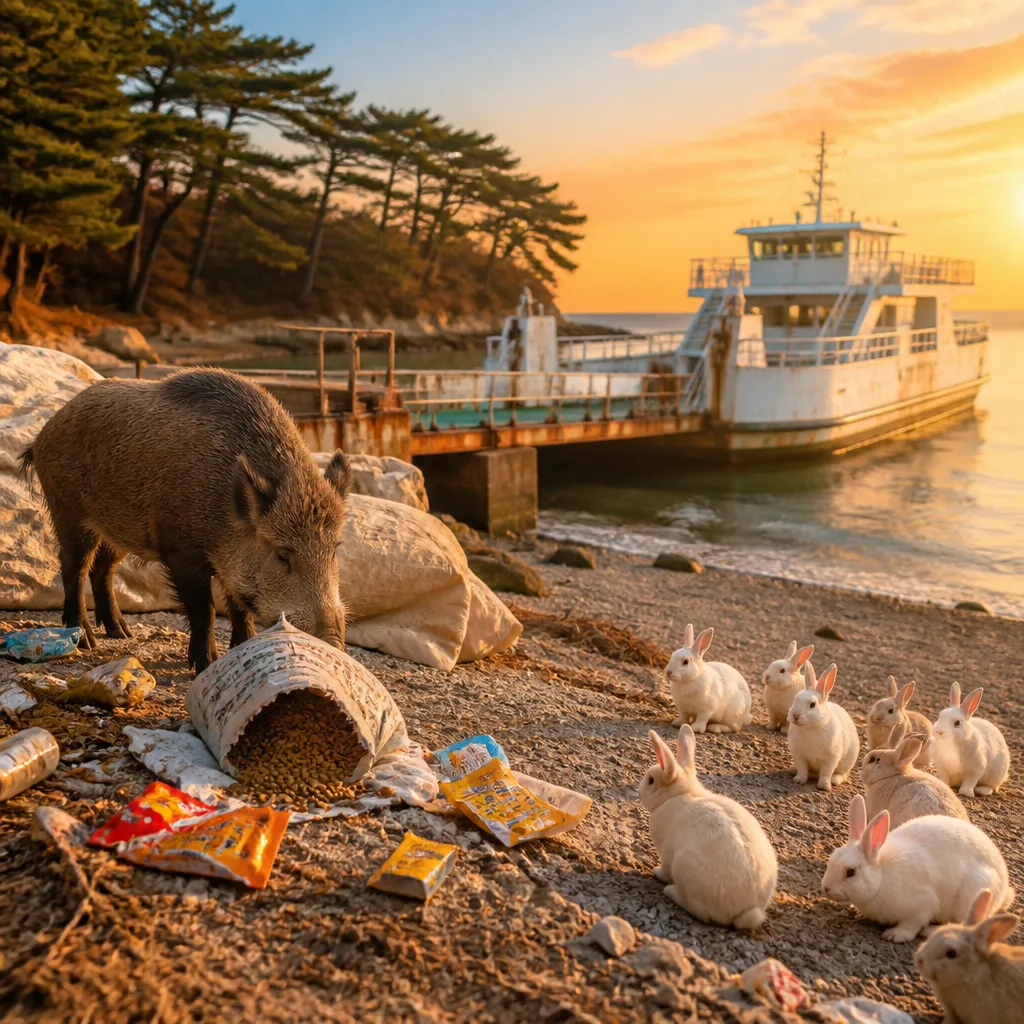
Okunoshima, the small Japanese isle better known to visitors as Rabbit Island, is facing an unexpected and worrying ecological development: native wild boar are increasingly exploiting the abundant rabbit population and the food left by people, according to research published this month.
Study links tourist feeding to changed boar behaviour
The study, published on 29 July in the Journal of Ecotourism, reports that wild boar on the island have been observed eating leftover rabbit feed, scavenging rabbit carcasses and, in some instances, preying on live rabbits. Okunoshima lies about 60km east of Hiroshima city and has become an international tourist draw because of the large number of rabbits that roam the shorelines.
"When we first heard that a wild boar had preyed on a live rabbit, we were surprised," said Shingo Kaneko, a Fukushima University ecologist and a co-author of the study.
Kaneko and colleagues suggest that the behaviour represents a change in the island’s predator–prey dynamics, likely driven by the availability of human-provided food. The rabbits themselves are not native to Okunoshima; they are domestic European animals introduced after the Second World War.
Historical context and current risks
Okunoshima has an unusual history. After the war the island became home to a large rabbit population and, in recent decades, to tourism oriented around those animals. It remains largely uninhabited apart from staff running a single hotel and their guests, but the influx of visitors has created repeated opportunities for people to feed the animals.
Researchers warn that such interactions can relax natural behaviours and unintentionally subsidise other wildlife such as wild boar. The study’s observations — from scavenging of carcasses to active predation — are being read as signs that the ecological balance on the island is under strain.
Concerns and potential consequences
- Biodiversity impact: Increased predation could reduce rabbit numbers and destabilise the population structure.
- Human-wildlife conflict: Feeding wildlife often draws other species closer to human activity, raising safety and management issues.
- Conservation dilemma: The rabbits are non-native; measures to protect them may conflict with broader ecological restoration objectives.
Those concerns are heightened by Okunoshima’s history: between 1929 and August 1945 the island hosted chemical weapons research and production facilities run by the Japanese imperial army, and its past secrecy and later repurposing shape how the site is managed today.
| Fact | Detail |
|---|---|
| Approximate rabbit population | ~500 |
| Distance from Hiroshima | 60 km east |
| Study publication date | 29 July (Journal of Ecotourism) |
| Years of wartime research | 1929–August 1945 |
Researchers emphasise uncertainty: while boar scavenging of carcasses is expected for omnivores, the recorded instances of live predation were unexpected and require further monitoring to determine whether they represent isolated events or a stable behavioural shift.
What comes next
Authorities, conservationists and tourism operators will need to weigh several options. Measures could include stricter controls on feeding visitors, active management of wild boar populations, habitat modifications to reduce encounters, or a re-evaluation of the long-term role of non-native rabbits on the island.
For now, the study acts as a warning that human behaviour — even well-meaning feeding of animals — can ripple through an ecosystem in unforeseen ways. As Okunoshima continues to draw tourists, managers face the delicate task of protecting both visitors and wildlife while confronting the legacy of the island’s unusual past.









