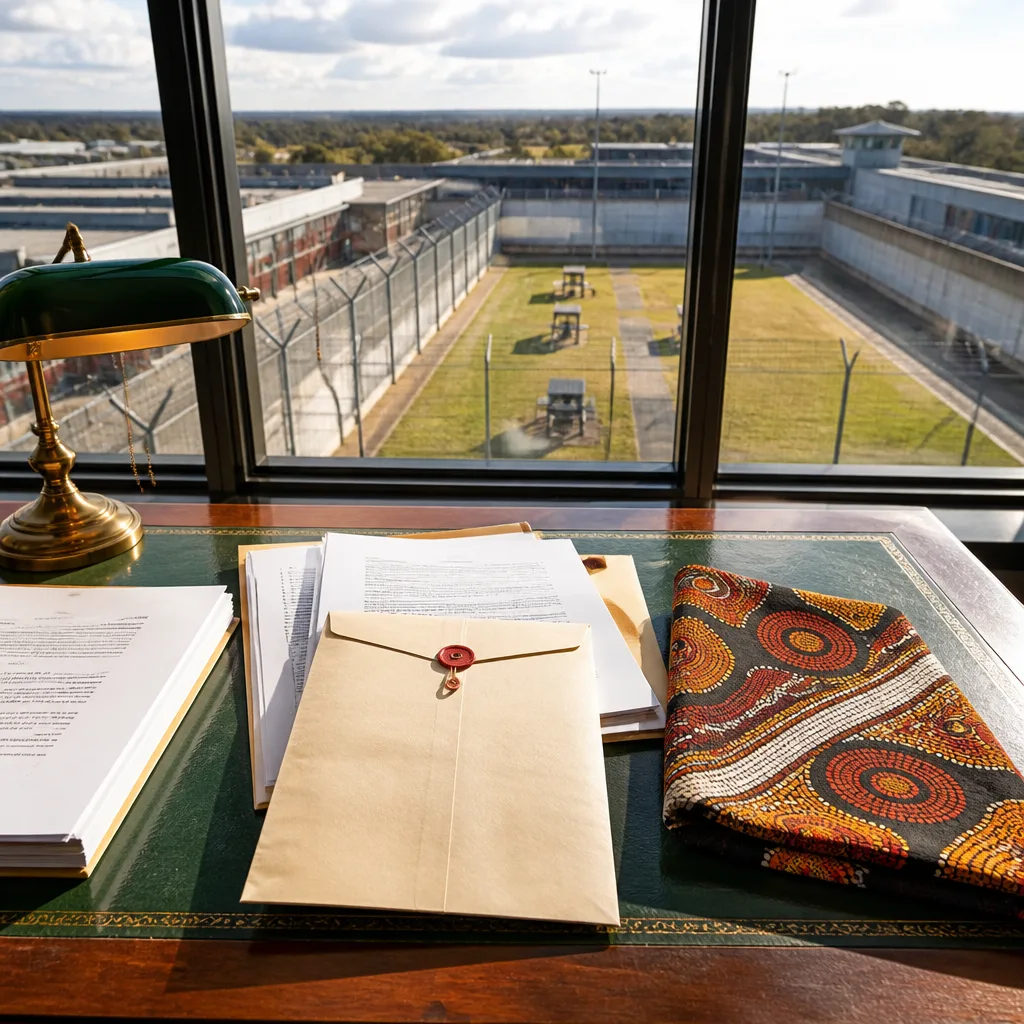
Victoria’s First Peoples representative body has formally asked the state government to withdraw a corrections bill that would permit authorities to prevent prisoners from spending at least one hour each day in the open air. The intervention, made under powers created by the state’s new treaty legislation, marks the first time the body has stepped directly into government policy.
First Peoples body invokes treaty powers
Gellung Warl, established under Victoria’s treaty process, wrote to the minister for corrections, the attorney general and the deputy premier and minister for First Peoples to demand the bill be scrapped. The letter, from co-chairs Meriki Onus and Djaran Murray-Jackson, said the proposed law was “inconsistent with the spirit and intent of Statewide Treaty”.
“This Bill seeks to deny the right of people in prison to spend one hour each day outside in the open air and sunlight. The vague excuse of ‘operational considerations’ should not be relied upon to erode the basic rights and conditions of all people in prison,”
The corrections amendment bill 2026 would allow prison authorities to deny a prisoner their daily outdoor hour “subject to operational considerations”. The Victorian government has acknowledged, during debate in the Legislative Assembly last month, that the bill is incompatible with the state’s Charter of Human Rights and Responsibilities and is partly inconsistent with the new treaty with First Nations people.
Human rights standards and local objections
Legal and human rights groups, First Nations organisations and the Victorian ombudsman have all expressed concern about the measure. The bill also does not align with the United Nations’ Nelson Mandela rules, which set minimum standards for the treatment of prisoners, including the provision of one hour outside each day, weather permitting.
Despite the objections, the government planned to continue debate in the Legislative Council this week and expects the bill to pass with support from the Coalition.
- Gellung Warl: exercised treaty powers to call for withdrawal.
- Victorian government: admits incompatibility with state Charter and treaty.
- Ombudsman and rights groups: have written to party leaders expressing concern.
Disproportionate impact on First Peoples, say co-chairs
In their letter, the co-chairs warned the measures would have a “disproportionate impact” on First Peoples. They argued the latitude given to authorities by the phrase “operational considerations” risked eroding basic standards for those in custody.
The letter was addressed to three senior ministers: Ros Spence, the minister for corrections; Sonya Kilkenny, the attorney general; and Gabrielle Williams, the deputy premier and minister for First Peoples. It represents a novel use of the statutory powers afforded by the Statewide Treaty Act, under which the representative body can make formal interventions on matters it judges to affect treaty objectives.
| Actor | Position |
|---|---|
| Gellung Warl | Calls for bill to be withdrawn; cites treaty inconsistency |
| Victorian government | Proposes corrections amendment bill 2026; admits partial incompatibility with Charter and treaty |
| Victorian ombudsman & rights groups | Have raised concerns with party leaders |
The debate exposes a tension between the government’s stated corrections objectives and its obligations under both domestic human rights instruments and the international standards to which Victoria has committed. The Nelson Mandela rules are non-binding internationally but set widely accepted minima for the treatment of prisoners; the state’s Charter, by contrast, has legal effect at the state level and was acknowledged by the government as being at odds with the bill.
The matter will now proceed to the upper house, where the government anticipates parliamentary debate this week. If passed with Coalition support, the bill would become law despite the objections from First Peoples representatives and human rights bodies. The use of treaty powers by Gellung Warl to call publicly for the withdrawal of legislation is likely to sharpen scrutiny of how the Statewide Treaty Act will influence policy and governmental decision-making going forward.
How the government responds to this intervention will be watched closely by legal advocates and First Nations organisations across Australia. The episode also poses questions about the balance between operational discretion in corrections and enforceable human rights protections for people in custody.