
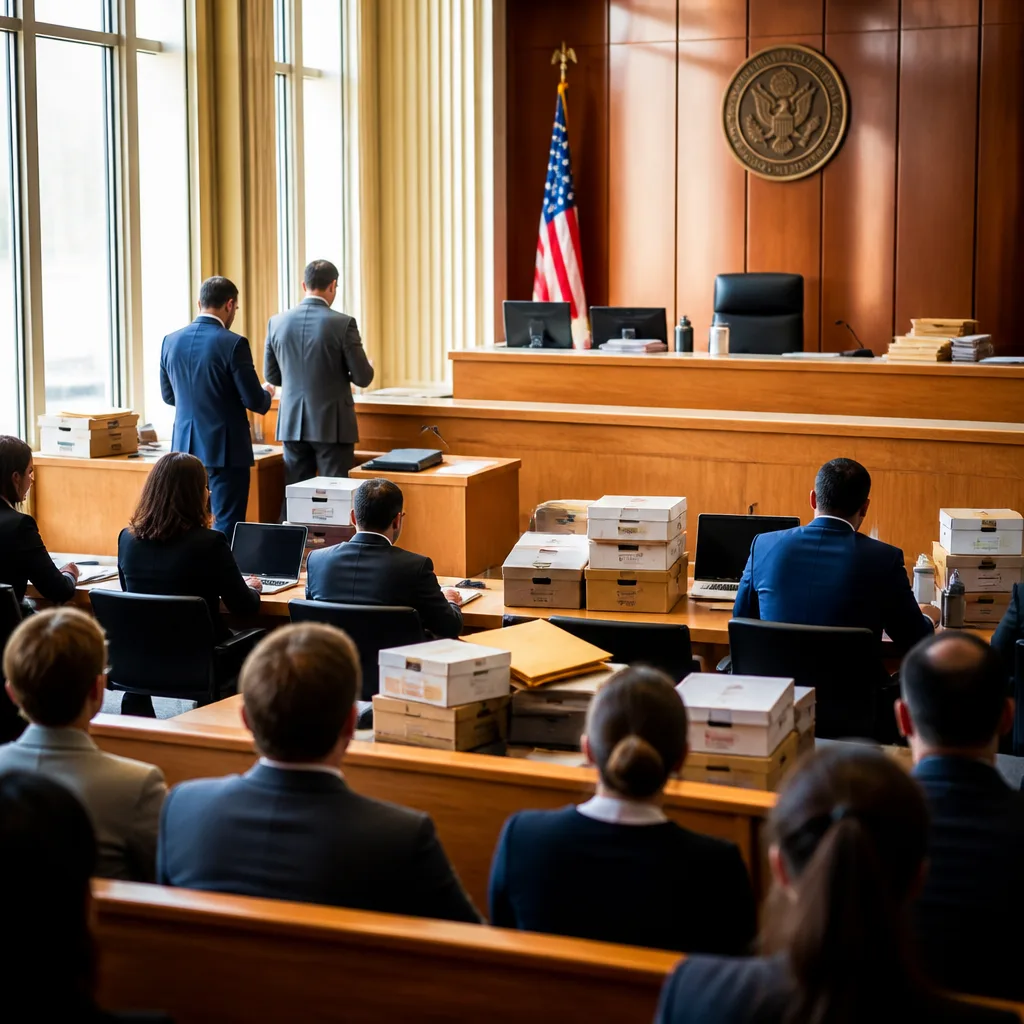
The United States Department of Justice has opened a high-profile criminal trial in Brooklyn accusing Chinese technology firm Huawei of operating as a criminal enterprise for roughly two decades. Prosecutors say the company engaged in racketeering, money laundering, bank and wire fraud, sanctions violations, obstruction and a conspiracy to steal trade secrets from five US technology firms. Huawei has pleaded not guilty and contests the government’s characterisation of routine commercial conduct as company-wide criminality.
Court brief and core allegations
The trial began in federal court in Brooklyn on 9 September and is expected to last about three months. The case overlaps with Chinese president Xi Jinping’s trip to Washington from 23 to 25 September, where discussions on trade, artificial intelligence, tariffs and access to critical technologies are on the agenda.
In his opening remarks, Justice Department lawyer Taylor Stout summed up the prosecution’s account with a terse charge:
“Theft, lies, cover-up,”
Prosecutors say alleged misconduct stretches from around 1999 until 2020. Specific accusations include the theft of internet-router source code from Cisco and of a robotic arm used by T‑Mobile for phone testing. The government also alleges that Huawei concealed details of its operations in Iran in order to move US dollars through the financial system despite American sanctions, and that equipment supplied by Huawei could have helped Iranian authorities monitor protesters in 2009.
How Huawei has answered
Huawei, a leading manufacturer of telecommunications equipment, denies the allegations. The company’s defence maintains that the trial is an attempt to recast ordinary commercial disputes and the actions of individual employees as evidence of an enterprise‑wide conspiracy. During opening statements, Huawei’s lawyer Brian Heberlig said the case was ultimately about competition.
The contrast between the two narratives — a decades‑long criminal conspiracy versus competitive business practices and isolated employee wrongdoing — will be central to the jury’s task over the coming months.
What the indictment alleges
The government’s case groups charges and alleged acts across several themes:
- Intellectual property theft — alleged theft of source code and testing equipment from US companies.
- Financial and sanctions offences — claims Huawei concealed the nature of Iranian operations to process US dollar transactions in violation of sanctions.
- Fraud and obstruction — bank and wire fraud, money laundering, and actions to conceal or impede investigations.
| Allegation | Detail / Example |
|---|---|
| Time period | Alleged misconduct from c.1999 to 2020 |
| Intellectual property | Source code from Cisco; T‑Mobile robotic arm |
| Sanctions | Concealing operations in Iran to move US dollars |
| Human‑rights concern | Equipment allegedly enabling Iranian monitoring of 2009 protesters |
Wider implications
The trial comes at a juncture where technology, national security and trade policy intersect. Outcomes could influence how governments approach procurement of network equipment, set limits on Chinese suppliers in sensitive sectors, and shape the legal precedent for prosecuting multinational corporations for alleged systemic misconduct. The case also feeds into broader tensions between Washington and Beijing over access to advanced technologies, export controls and the role of state‑linked companies in global supply chains.
For Huawei, a conviction on multiple counts would be damaging both financially and reputationally, potentially accelerating efforts by governments to curb the company’s access to markets and critical components. For the US government, a successful prosecution would be a high‑profile demonstration of its willingness to pursue complex corporate cases tied to national security and foreign policy objectives.
As the trial proceeds, key questions will include whether the evidence supports the government’s contention of an orchestrated, company‑wide criminal strategy and whether jurors see the alleged actions as distinct from hard commercial competition. The proceedings are expected to unfold over several months, with close attention from policymakers and industry watchers on both sides of the Pacific.









