
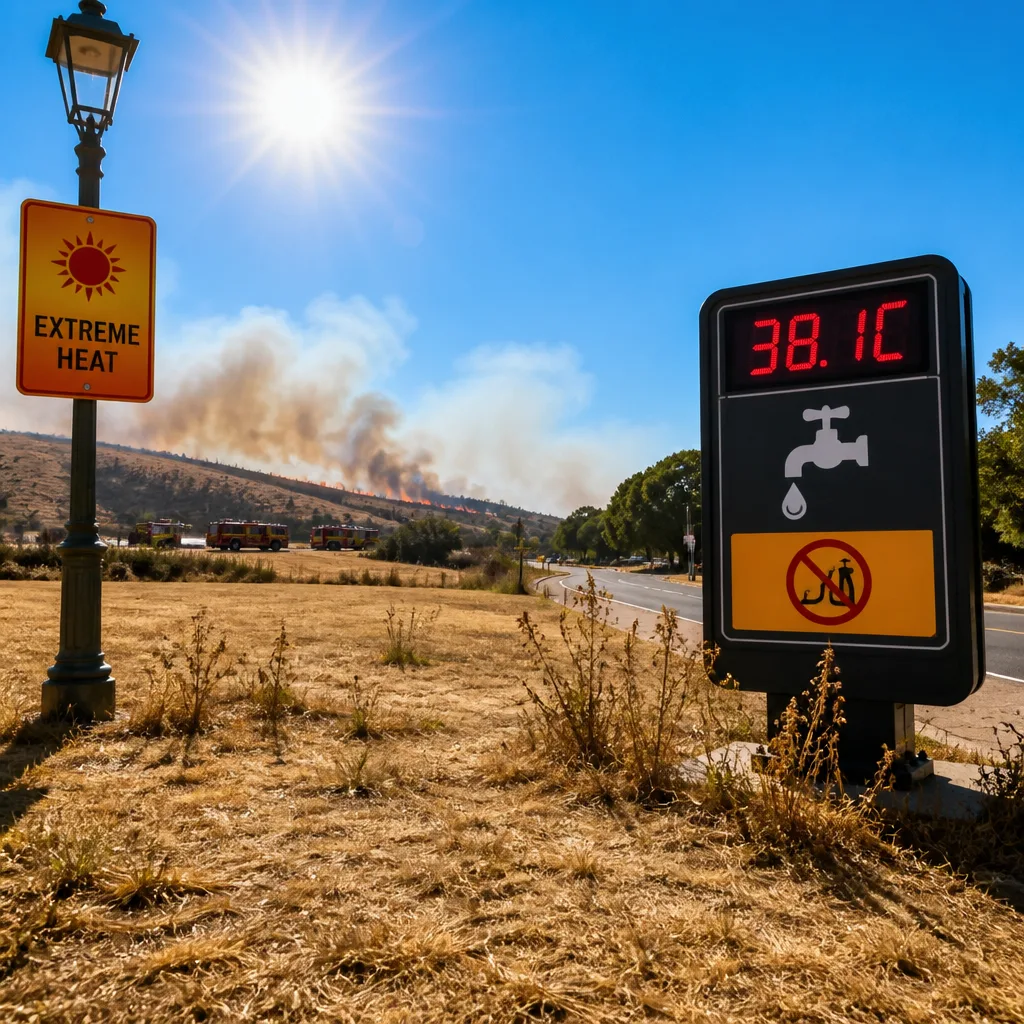
The UK recorded one of its hottest days on record as a fifth heatwave peaked at 38.1C, triggering amber warnings for extreme heat across a broad swathe of England and intensifying pressure on emergency services and public services.
Heat, warnings and immediate impacts
Amber alerts for "extreme heat" were in force from London northwards to Sheffield, covering parts of Cheshire and Greater Manchester, and extending west into Gloucestershire, Wiltshire, Shropshire and Herefordshire. Forecasts suggested temperatures would remain high through the day before easing, with most of southern England expected to cool to low 30s by Friday and around 26C by Sunday.
Wales, where a drought has been declared across the whole country, was expected to see temperatures near 35C. Northern Ireland faced a separate yellow thunderstorm warning into Friday morning, while Scotland was forecast to see rain in many areas.
Wildfires, local damage and firefighting strain
Emergency services reported hundreds of wildfire incidents. The National Fire Chiefs Council confirmed a total of 1,017 wildfires in England and Wales so far this year, matching last year’s record. In Hampshire’s New Forest, crews battled a blaze affecting an area described as roughly the size of 230 football pitches.
In the West Midlands, multiple large fires were reported. Around 100 firefighters fought a substantial grass fire near Stourbridge Golf Course where flames spread across roads and six homes were affected; two people were injured. Elsewhere in the region, houses have been badly damaged and local authorities declared major incidents as crews worked to control fast-moving blazes.
- National Fire Chiefs Council: 1,017 wildfires recorded this year in England and Wales (matching last year).
- New Forest wildfire size: area roughly equivalent to 230 football pitches.
- West Midlands grass fire: around 100 firefighters deployed; six homes affected, two people injured.
Water restrictions and health system pressures
More than 27 million people are facing water-use restrictions, including hosepipe bans, as supplies come under strain during prolonged dry conditions. The drought in Wales covers the whole country and remains a concern for farmers, businesses and household water availability.
Health officials warned of increased demands on the NHS during extreme heat, stressing the need for summer planning comparable to winter preparations.
"How much of an additional burden is placed on the NHS during periods of extreme heat," said Health Secretary Yvette Cooper, urging services to plan for summer pressures.
Where this sits in the historical record
Temperature readings on this day place it among the warmest in the UK since nationwide records began. Only four previous UK days have been hotter, including the only occasion above 40C in July 2022.
| Date | Location | Temperature |
|---|---|---|
| 19 July 2022 | Coningsby, Lincolnshire | 40.3C |
| 25 July 2019 | Cambridge Botanic Gardens | 38.7C |
| 10 August 2003 | Faversham, Kent | 38.5C |
| 18 July 2022 | Pitsford, Northamptonshire | 38.2C |
Outlook and consequences
Meteorologists expect the most intense heat to ease across England over the next few days, though pockets of high temperatures and thunderstorms will continue to affect parts of the UK. The heatwave has sharpened focus on infrastructure resilience — from water supplies to health services — and on the capacity of fire services to respond as incidents cluster across regions.
Authorities have urged the public to follow local guidance on water use, fire safety and staying cool. The combination of record-level wildfires, extensive water restrictions and increased strain on emergency services underlines the multifaceted challenge the country faces during successive heatwaves.















