
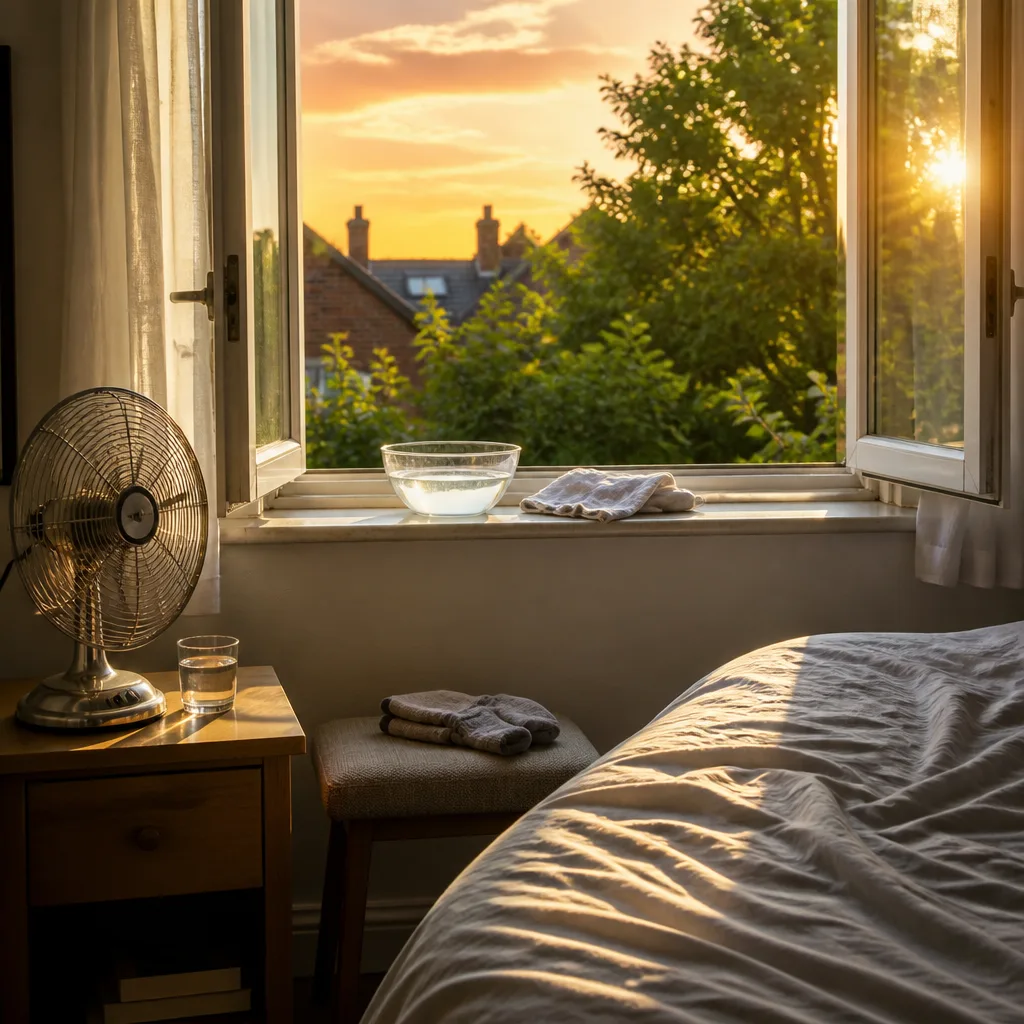
Hot nights are not just uncomfortable — they can prevent proper recovery from daytime heat, the Met Office warns. With high overnight temperatures increasingly common during summer heatwaves, simple adjustments to your routine and environment can make a meaningful difference to sleep quality.
Practical measures to cool your bedroom and body
Keeping your sleeping space and your own temperature down need not involve expensive air conditioning. The following approaches aim to reduce heat gain, encourage airflow and help your body shed heat naturally.
- Block the sun by day: Close curtains and windows on rooms that face direct sunlight to stop them heating up.
- Air out at night: When temperatures drop in the evening, open windows to create a cross-breeze and replace warm indoor air.
- Move rooms if needed: If one part of the house stays cooler, consider sleeping there temporarily.
- Cool your extremities: Rinsing feet with cool water or keeping chilled socks for a short while before bed can help reduce overall body temperature.
- Prefer a lukewarm shower: Very cold showers may cause a rebound warming effect; a tepid rinse will cool you without triggering that response.
- Choose light sleepwear and bedding: Breathable fabrics such as thin cotton and minimal covers help sweat evaporate and heat to escape.
- Mind fluids: Stay hydrated during the day, but avoid drinking large amounts immediately before bed to reduce night-time awakenings.
- Sleep position: Sleeping on your side and keeping head, hands and feet outside covers can allow heat to dissipate more freely.
- Consider a cold pack strategically: Short-term cooling of feet or pulse points can be effective; avoid staying with ice directly on skin for too long.
- Use cooling bedding accessories: Thin cotton sheets or moisture-wicking materials can make nights more tolerable without specialist equipment.
Quick-reference table of tips
| Problem | Easy solution |
|---|---|
| Room overheats during day | Close curtains; keep sun-facing windows shut |
| Stuffy at night | Open windows to create airflow; change sleeping room |
| Body feels too warm | Cool feet/pulse points; take a lukewarm shower |
| Waking thirsty/sweaty | Hydrate during day; choose breathable bedding |
Why these steps help
Core body temperature naturally falls as you fall asleep. Anything that prevents that drop — from a hot mattress to trapped air — can fragment sleep or stop you reaching deeper restorative stages. Reducing heat gain during the day, improving night-time ventilation, and making it easier for heat to escape from the body are simple ways to support that normal cooling process.
Some commonly suggested approaches are counterintuitive. For example, plunging into an icy shower can briefly raise your metabolic heat as your body responds, making you feel warmer once you step out. A milder shower will remove surface sweat and lower skin temperature without triggering that rebound.
Practicality matters: low-cost, sustainable adjustments such as using thinner bedding, changing where you sleep, or timing window opening to cooler evening hours are accessible to most people and avoid the need for air conditioning.
When to seek help
If you, or someone you care for, develops signs of heat illness — such as confusion, fainting, rapid breathing, or a very high body temperature — seek medical advice promptly. While most sleep disturbance from warm nights can be managed at home, persistent sleep loss or symptoms of heat-related illness should be assessed by a health professional.
Adapting routines during hot spells can protect sleep and wellbeing. Small changes to how you cool your environment and your body are often the most effective and sustainable ways to get some proper rest when the thermometer stays high after dark.














