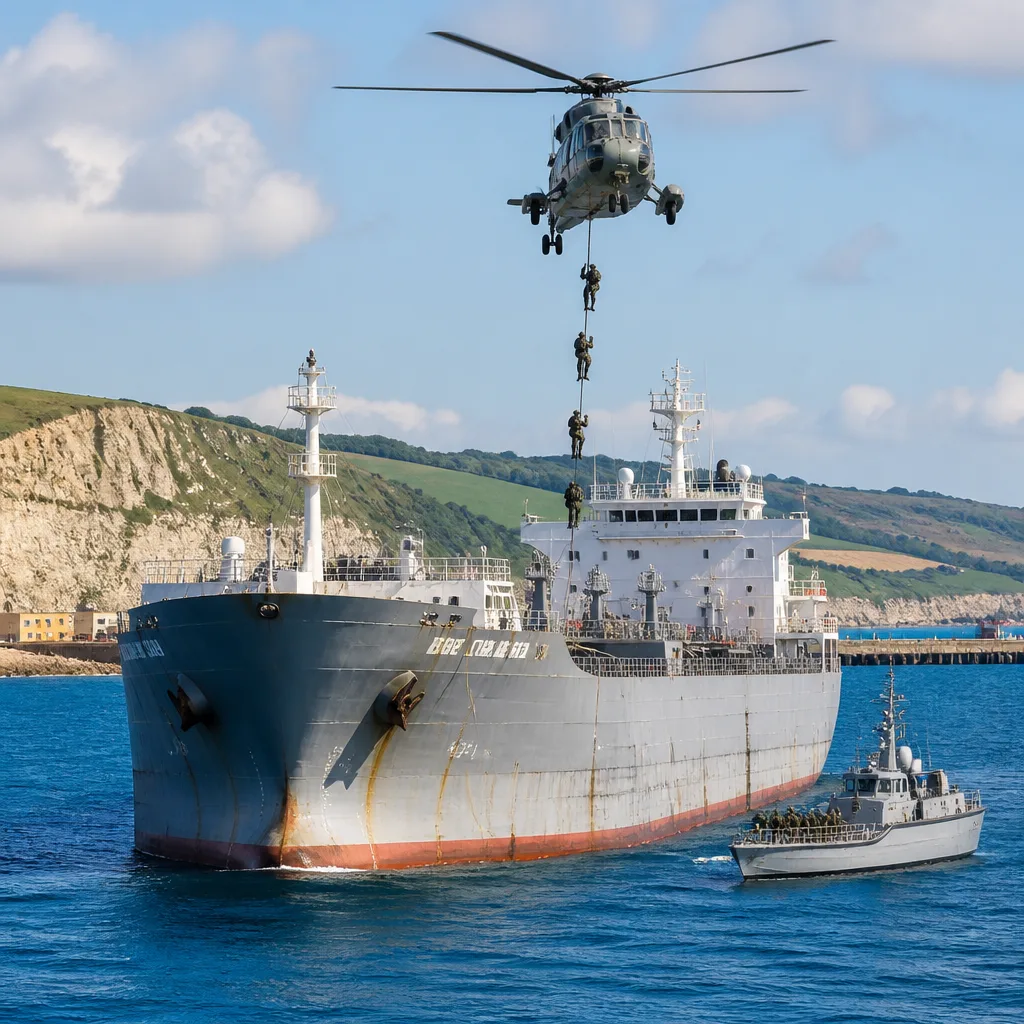
The UK government has defended a Royal Marines operation that intercepted and boarded the oil tanker Smyrtos in the English Channel, after Russian President Vladimir Putin warned Moscow could retaliate for seizures of its vessels.
Operation, charges and Moscow's response
The vessel was boarded while anchored off Weymouth in June in an operation described by ministers as a first for disrupting a so-called "shadow fleet" used to move sanctioned Russian oil. The ship's captain, Ajay Pant, has been charged with breaching UK sanctions by allegedly supplying or delivering prohibited Russian crude.
"If these plans are put into practice, we will have to respond in kind," President Vladimir Putin said, warning that action could take place "wherever we deem it necessary and appropriate, anywhere."
Overseeing naval exercises in the Pacific, Mr Putin accused Western states of seizing Russian vessels and labelled such moves "nothing other than piracy and banditry," while senior Russian naval officers suggested Moscow has the means to inspect and detain ships they deem unfriendly.
UK rebuttal and legal position
A government spokesperson insisted the boarding was carried out "in full accordance with international law" and stressed UK forces and law-enforcement personnel act within legal frameworks. Ministers said disrupting shadow fleet activity is part of the UK effort to deprive Russia of revenue that, they argue, props up its war against Ukraine.
The Ministry of Defence has previously estimated that Russia controls a fleet of more than 700 vessels implicated in sanctions avoidance, and that around 75% of sanctioned oil exports are carried by that fleet. The UK says those shipments represent a "critical lifeline for the Kremlin."
| Metric | Estimate |
|---|---|
| Vessels in Russia's so-called shadow fleet | More than 700 |
| Share of sanctioned oil carried by that fleet | 75% |
Officials emphasise the distinction they say exists between UK and Russian practices: British armed forces and commercial carriers, they contend, operate firmly within international maritime law, whereas the shadow fleet is alleged to be used to circumvent sanctions.
Wider implications and risks
The incident marks a high-profile point in ongoing efforts by Western governments to curb Russia's ability to monetise oil exports amid the conflict in Ukraine. It also raises the prospect of an escalation in maritime confrontations if Moscow chooses to act on threats to "respond in kind."
- UK officials frame the boarding as lawful disruption of sanction-evasion activity.
- Russia's leadership describes such seizures as unlawful and suggests reciprocal measures could follow.
- Defence and diplomatic channels will be under pressure to manage escalation risks in busy international waters.
Analysts say the dispute underscores how sanctions enforcement increasingly intersects with naval operations and commercial shipping, creating fresh challenges for allies seeking to maintain pressure on Moscow without prompting direct confrontation. Any further moves by Russia to detain or inspect foreign vessels, whether in the English Channel or elsewhere, would test international legal norms and the capacity of coastal states to protect maritime trade routes.
Ministers will face questions in Parliament about the legal basis for future interventions, the intelligence underpinning such actions, and the measures being taken to mitigate the risk of hostile responses at sea. For now, the government has reiterated that actions to disrupt ships carrying illicitly traded oil are part of a broader campaign to cut off finance for Russia's military operations.