
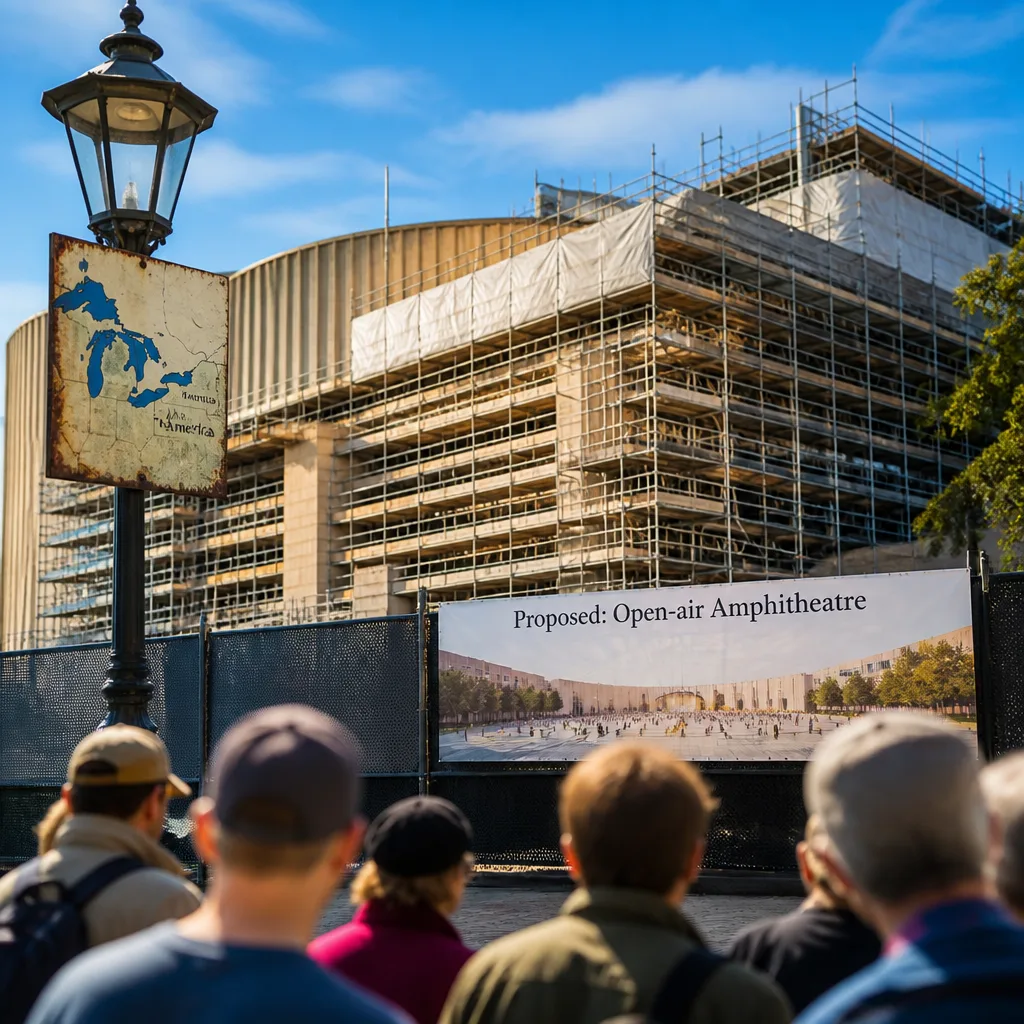
President Donald Trump has issued two headline‑grabbing threats that underscore a combative approach to institutions at home and a willingness to provoke abroad. On Tuesday, legal filings and public comments linked to the White House suggested the Kennedy Centre might be demolished if planned renovations do not proceed, while the president also proposed renaming Lake Ontario — a body of water shared by the United States and Canada — as “Lake America.”
Threats framed around perceived obstruction
The pair of moves came as part of a broader pattern in which the president appears to react to setbacks with theatrical gestures. According to the material made public on Tuesday, his team warned that, absent renovation and likely control of the Kennedy Centre, the building could be replaced by an open‑air amphitheatre. The threat was made in the context of litigation and efforts to block the president’s bid to secure influence over the project.
At the same time, the president floated renaming Lake Ontario. The proposal is widely seen as a symbolic response to a trade dispute with Canada — a move that cannot be enacted unilaterally by a US president and would be largely symbolic even if pursued administratively.
Politics of spectacle
Analysts note these episodes fit a familiar political playbook in which dramatic gestures are used to rally supporters and dominate the news agenda. The twin threats do not appear to be tactical responses to immediate governance needs; rather they read as attempts to reassert personal control and to manufacture political momentum.
They also highlight tensions between the presidency and other institutions. The Kennedy Centre is a national cultural institution whose renovation plans have become entangled in litigation. The president’s legal team framed the demolition suggestion in terms of frustration with court rulings that have impeded his preferred course of action.
- Kennedy Centre: Legal filings warned of replacement by an open‑air amphitheatre if renovation and control plans are blocked.
- Lake Ontario: The president suggested renaming the lake in the wake of a trade dispute with Canada.
- Political context: The incidents were presented as emblematic of a presidency willing to disrupt institutions and norms.
Such gestures can amplify political divisions. Supporters may view them as evidence of decisive leadership; critics argue they erode long‑standing institutions and international comity. The suggestion to alter the name of a transborder lake risks diplomatic irritation, even if the proposal is largely rhetorical.
Implications and consequences
The practical consequences of the Kennedy Centre threat depend on the outcome of ongoing court proceedings and the logistics of any reconstruction project. Replacing a national performing‑arts venue with an outdoor alternative would carry cultural, financial and procedural implications. The prospect of renaming an international water body raises legal and diplomatic hurdles that the United States could not clear unilaterally.
Observers say the episodes also expose a wider tension in the administration’s priorities. They come amid continuing foreign‑policy crises and domestic economic pressures that have been central to public concern. For critics, such publicity moves are distractions; for allies and institutions they represent a novel strain on customary norms.
The actions on Tuesday underline a presidency that frequently resorts to dramatic public acts when confronted with setbacks. Whether those acts translate into lasting policy change, institutional reform, or diplomatic consequence will depend on courts, Congress, and international partners — the very actors that the president’s critics say are being challenged by these moves.
| Action | Context |
|---|---|
| Threat to demolish Kennedy Centre | Legal filings following court challenges to renovation and control plans |
| Proposal to rename Lake Ontario | Response to a trade dispute with Canada; largely symbolic and diplomatically sensitive |
The longer‑term effect of such tactics on public institutions and foreign relations remains unclear. What is evident is that the president continues to use dramatic gestures as a central tool of governance and political communication.












