
The US president said he would “love” to see a united Ireland and suggested unification “may as well happen now” during the opening of a two-day trip to the Republic of Ireland, remarks that jolted hosts and drew rapid pushback from the UK and Northern Ireland unionists.
Trump’s remarks and immediate reaction
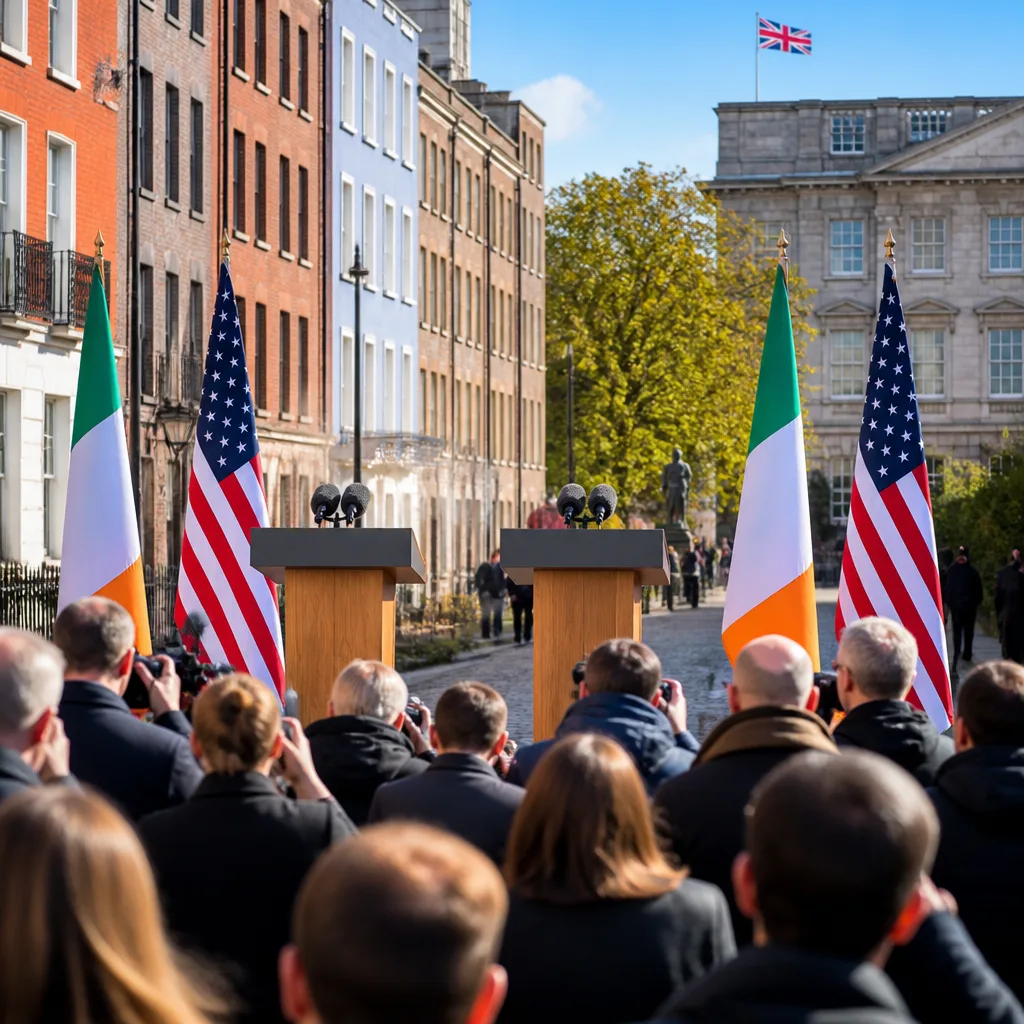
Speaking at a joint press conference in Dublin alongside the taoiseach, Micheál Martin, the president said unification would be “a great feather in everybody’s cap” and described it as “fantastic”. He added he thought the change would happen “eventually” and said:
“I don’t want to cause any problems, but I will tell you, I’d love to see it unified… It may as well happen now.”
He later acknowledged the comment would be controversial and told reporters: “No matter what you say or how you say it, there’s no good answer… I gave a nice answer, I think. We’ll worry about it tomorrow.”
UK government and unionist stance
A Downing Street spokesperson made clear the prime minister still considers there is not the necessary support to trigger a referendum under the terms of the Good Friday Agreement, emphasising that the legal test for a vote has not been met.
Gavin Robinson, leader of the Democratic Unionist party (DUP), rejected the notion that the constitutional future of Northern Ireland could be settled by commentary from abroad, stressing the decision rests with the people of Northern Ireland. He said he was confident the province would continue to choose to remain part of the United Kingdom and cited the security that status provides.
Context inside Ireland
The intervention came at a sensitive moment. Two weeks earlier Andy Burnham had said a referendum on unification was “off the table”, a position that had angered Sinn Féin and other Irish nationalists. The US president’s remarks therefore intersect with existing domestic debate in the Republic and across the border in Northern Ireland.
At the Dublin press conference, Mr Martin hosted the US president at Farmleigh House, where the visit began. The tone of the encounter was punctuated by the president’s off-the-cuff response to a reporter’s question about Irish unity.
Repercussions and what to watch
While a sitting US president speaking on such a sensitive constitutional issue is extraordinary, the Downing Street response underlined the UK’s position that any change must comply with the Good Friday Agreement, which sets the legal mechanism for a border poll.
Immediate consequences are political rather than legal: the comments have intensified public discussion, drawn condemnation from unionist leaders and highlighted sensitivities in diplomatic relations between London, Dublin and Washington. Officials and politicians on all sides will be watching for further clarifications from the White House, and for how Irish parties respond domestically.
- What was said: The president expressed personal support for unification, saying it would be “fantastic” and “a great feather in everybody’s cap”.
- UK reaction: Downing Street insisted there is not currently sufficient support to trigger a referendum under the Good Friday Agreement.
- Unionist response: DUP leader Gavin Robinson said Northern Ireland’s future is for its people to decide and voiced confidence the province will remain part of the UK.
| Actor | Response / Position |
|---|---|
| US president | Expressed personal support for Irish unification and said it could happen now. |
| Downing Street | Stated the prime minister believes the test for a referendum under the Good Friday Agreement has not been met. |
| Gavin Robinson (DUP) | Insisted Northern Ireland’s future will be decided by its people; confident it will remain in the UK. |
The intervention is likely to reverberate beyond immediate headlines. Any sustained diplomatic or political fallout will depend on follow-up statements from the White House, the UK government and Northern Ireland’s parties, as well as reactions from the Irish Government, where nationalist and unionist positions continue to be deeply contested.















