
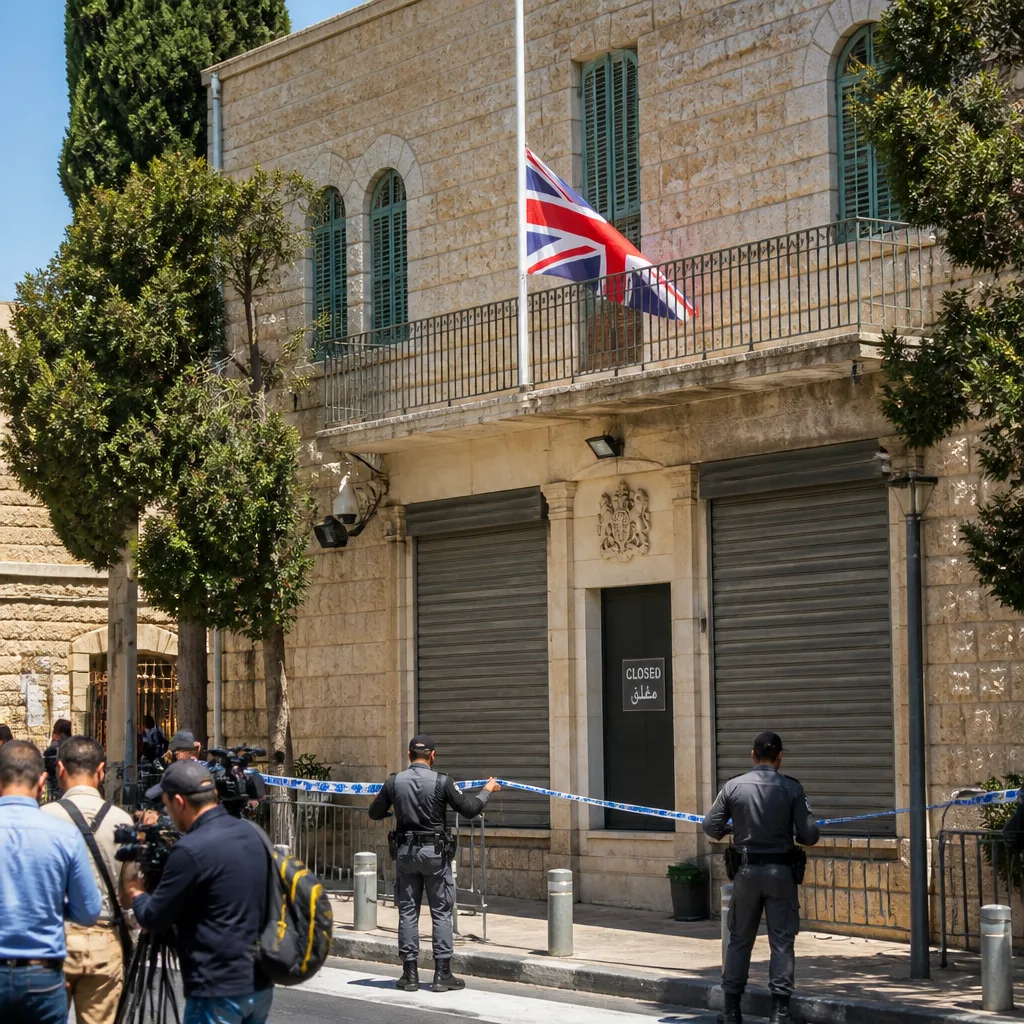
Israel has ordered the closure of the British consulate in East Jerusalem and imposed entry bans on a number of UK politicians after the British government announced a new sanctions regime targeting Israeli settlements in the occupied West Bank.
Diplomatic rupture follows coordinated sanctions
The sanctions were announced by the UK alongside France and Canada, which in a joint statement described the move as a further turning point in efforts "to protect the two‑state solution". The measures follow a UK assessment that settlements are illegal under international law and a recent rise in violence by settlers against Palestinians in the West Bank.
In a statement to MPs, the foreign secretary said the UK government regarded there to be "ethnic cleansing of Palestinians in areas of the West Bank, perpetrated by settler terrorists", and blamed the Israeli government for frequently turning a blind eye. He told MPs the UK's position — aligned with a 2024 advisory opinion of the International Court of Justice — was that Israel's occupation of the West Bank was unlawful, owing to its entrenchment, expansion via illegal settlements and apparent intention to extend permanent sovereignty.
"The British government agrees that there is ethnic cleansing of Palestinians in areas of the West Bank, perpetrated by settler terrorists."
The foreign secretary said the new measures would be phased in over the next six to nine months. They will include a comprehensive sanctions regime aimed at illegal settlements and their expansion, and a ban on advertising illegal West Bank settlements in the UK. The government stressed the measures were targeted at settlements, not at Israel as a whole.
Israeli response and immediate consequences
Announcing the closure of the consulate, which represents the UK government in Jerusalem, the West Bank and Gaza, Israel's foreign minister said the British move was morally distorted and an interference in Israel's affairs. He characterised the current UK government as hostile to Israel.
Downing Street has also been told that the Israeli measures will include entry bans on several mostly left‑wing UK MPs and cutbacks to longstanding cooperation, including British involvement in training Palestinian security forces on the West Bank. Britain will also be excluded from a US‑led Gaza coordination mission based in Israel.
- Sanctions announced jointly with France and Canada.
- Measures to be introduced over six to nine months.
- Includes a ban on advertising illegal settlements in the UK.
- Israel ordered closure of the British consulate in East Jerusalem and imposed entry bans on UK politicians.
Prime Minister Andy Burnham said the targeted measures were "aimed not at the Israeli people, but in support of the two‑state solution".
Who is affected
Israel has announced entry restrictions on a number of UK parliamentarians. The diplomatic friction also threatens established areas of cooperation between the UK and Israel on security and regional coordination. The closure of the consulate in Jerusalem — a mission focused on Palestinian issues including Gaza and the West Bank — marks a significant escalation in bilateral relations.
| Measure | Effect |
|---|---|
| Sanctions regime | Targets illegal settlements and expansion; phased implementation over 6–9 months |
| Ban on advertising | Prohibits promotion of settlements in the UK |
| Consulate closure | UK representation in East Jerusalem, West Bank and Gaza affected |
| Security cooperation | British training of Palestinian forces to be terminated; UK excluded from Gaza coordination mission |
The government in London has argued the measures are consistent with international law and necessary to uphold the two‑state framework. Critics warn the moves will deepen a diplomatic rift with Israel and could complicate UK engagement in the region, including humanitarian coordination in Gaza. Supporters say targeted action is needed to deter settlement expansion and protect Palestinian rights.
The coming weeks are likely to see intense diplomatic activity as ministers in London and officials in Jerusalem weigh the immediate and longer‑term consequences of the new measures for security cooperation, consular services and bilateral ties.















