
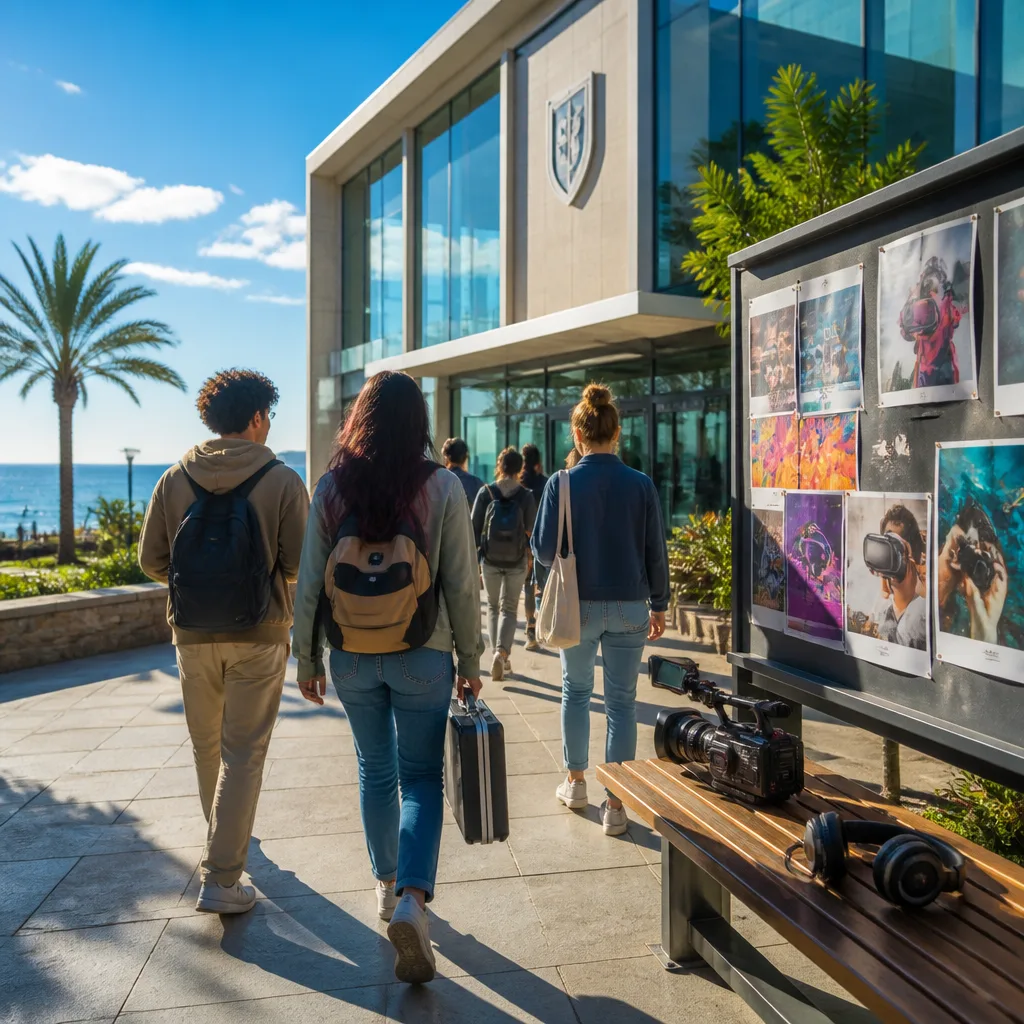
Teesside University has announced plans to broaden its partnership with Portuguese creative technology school ETIC_Algarve, with a proposal to deliver four further Teesside-approved top-up degrees from October 2026. The move builds on an alliance that began in 2019 and aims to expand opportunities for students in Portugal to gain UK qualifications while supporting the creative and digital labour market.
More UK degrees, more mobility and more routes into industry
Subject to final sign-off, the extension will add BA (Hons) top-up courses in Digital Media and Communications, TV & Film Production, Music Production and Photography to the two Teesside qualifications already delivered at the Faro-based institution — BA (Hons) Games Design and BSc (Hons) Games Development, which have been running there since September 2024.
Teesside’s School of Arts & Creative Industries will oversee the expanded portfolio. The collaboration also includes a growing mobility strand intended to offer placements and internships across both Portugal and the UK, creating cross-border work experience for students and graduates.
“Our partnership with ETIC_Algarve is an excellent example of how we work with leading international organisations to create transformative opportunities for students and strengthen our global educational community.”
The university says the arrangement will allow more Portuguese students to access recognised UK degrees while acquiring practical skills for “fast-growing creative and digital sectors”. The announcement highlights a longer-term strategy among UK universities to export qualifications, diversify recruitment and strengthen international pipelines into key industries.
What this means for jobs, pay and institutional finance
For students, the immediate implication is clearer pathways into careers in creative industries that are, in many cases, experiencing strong demand for digitally skilled workers. For the university sector, international partnerships like this serve multiple commercial and strategic purposes: they generate fee income, raise an institution’s profile overseas and can be a more cost-effective route into global markets than establishing full overseas campuses.
However, the benefits are not automatic. Programmes remain subject to regulatory approval and must demonstrate employer-relevant outcomes to justify expansion. For students, the quality and recognition of top-up degrees — and the availability of internships and placements — will determine whether the new routes translate into higher starting salaries or faster access to employment in countries where creative sector pay varies widely.
- Timeline: partnership in place since 2019; two Teesside programmes delivered since September 2024; four further top-ups proposed from October 2026.
- New subject areas: Digital Media & Communications; TV & Film Production; Music Production; Photography.
- Strategic aims: increase international student routes, provide placements and internships, support creative sector skills.
Policymakers monitoring higher education will watch whether such offshore delivery broadens access equitably or primarily serves institutional income goals. For UK employers seeking talent, the extended partnership could enlarge the pool of graduates trained to UK standards without requiring them to study in Britain — a potential win for firms needing creative and technical expertise at scale.
| Programme status | Delivered at ETIC_Algarve |
|---|---|
| Games Design (BA Hons) | Yes (since Sept 2024) |
| Games Development (BSc Hons) | Yes (since Sept 2024) |
| Digital Media & Communications (Top-up) | Planned (from Oct 2026, subject to approval) |
| TV & Film Production (Top-up) | Planned (from Oct 2026, subject to approval) |
| Music Production (Top-up) | Planned (from Oct 2026, subject to approval) |
| Photography (Top-up) | Planned (from Oct 2026, subject to approval) |
Expansion of overseas delivery is a familiar model for UK universities seeking growth after the pandemic and amid fluctuating domestic student numbers. To deliver on the promises of employability and mobility, Teesside and its Portuguese partner will need to secure employer links, ensure quality assurance is airtight and make internships genuinely accessible across borders.
For prospective students and employers, the headline is straightforward: more UK-approved creative degrees will be available in Portugal from late 2026 if final approvals are granted, offering another route into the skills demanded by the contemporary creative economy.














