By Aisha Rahman
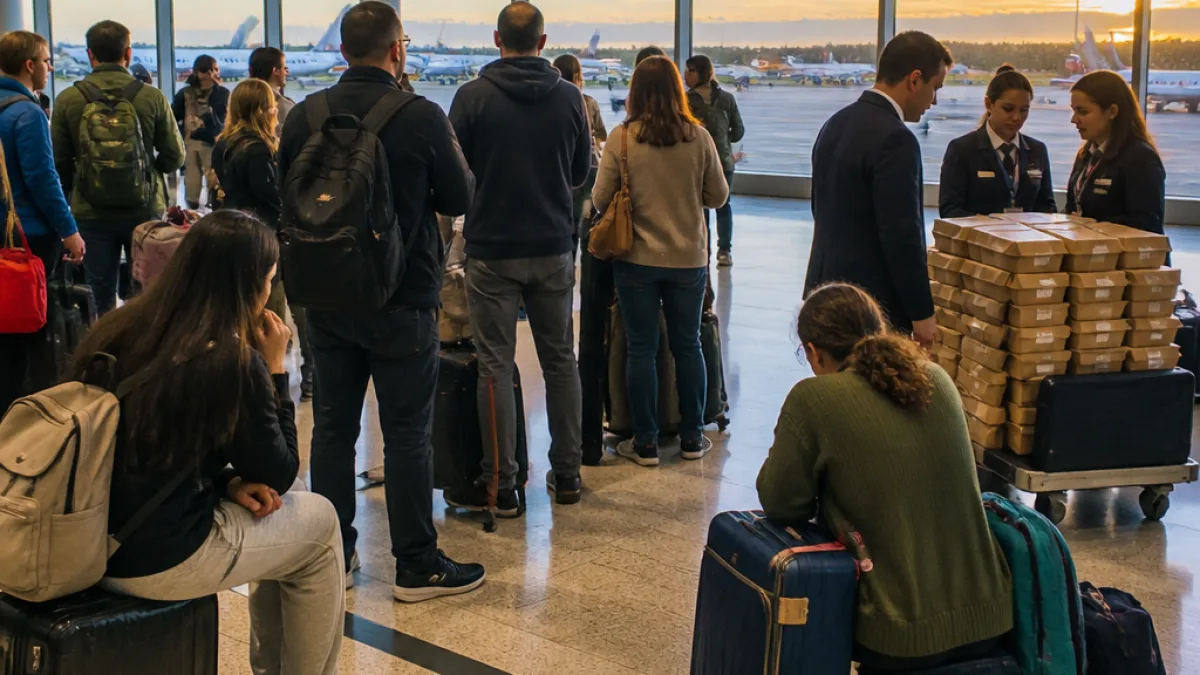
Passengers at London Stansted Airport described scenes of confusion and long delays after an air traffic control technical failure caused widespread disruption across the network. The incident resulted in roughly 1,750 cancelled flights and an estimated 250,000 passengers affected, according to industry figures released on Wednesday.
Chaos on board and at the terminal
Travellers spoke of long periods without clear information and limited provisions. Katie Haines, 20, from Bury St Edmunds, told reporters she spent six hours on her aircraft before the flight was cancelled and that passengers had received only a small glass of water during the wait.
"I've never seen anything like it, everybody just stood around. Nobody knowing where to go, what to do. Even the staff of most airlines didn't have a clue what to do,"
Haines said the lack of communication left passengers, including elderly people and children, frustrated and hungry. She also described difficulties for her mother, who requires a gluten-free diet due to coeliac disease, in obtaining appropriate food while stranded.
Operator response and apology
Air traffic control provider Nats blamed a technical issue for the disruption. Its chief executive, Martin Rolfe, issued an apology and acknowledged that resolving the fault had taken "longer than hoped".
Airport staff and airline teams were reported to be stretched as operations tried to cope with the sudden cancellation of large numbers of flights. One passenger, travelling on business, said his trip had been delayed and that there appeared to be little immediate contingency in place to deal with the scale of the problem.
Scale of the disruption
The following table summarises the headline figures released in the immediate aftermath of the incident:
| Metric | Figure |
|---|---|
| Estimated passengers affected | 250,000 |
| Flights cancelled | 1,750 |
Immediate impact on travellers
Passengers described widely varying experiences — some able to disembark and rebook quickly, others left waiting on aircraft for extended periods. Reports suggested that information flow to passengers was inconsistent, compounding frustration during lengthy delays.
Those travelling with specific medical or dietary requirements said the situation was particularly difficult. Few details were available from airlines at the time about compensation, rebooking procedures or assistance for those on cancelled services.
What passengers should do now
With disruption continuing into the day, travellers affected should consider the following steps:
- Check flight status directly with your airline and the airport website before travelling to the terminal.
- Keep boarding passes and receipts for any out-of-pocket expenses incurred as airlines may offer refunds or compensation where applicable.
- If you have medical or dietary needs, contact your airline in advance to confirm assistance and provision options.
Wider implications and next steps
The scale of cancellations underlines the vulnerability of the air network to technical faults at control providers. Nats said it would investigate the incident; the operator’s apology suggested the fault was complex and took time to rectify.
Stansted handled a large volume of departing flights, and the ripple effects of cancellations are expected to continue to affect schedules and passenger itineraries in the coming days. Local services, ground transport and hotels around the airport also felt the immediate pressure as people sought alternatives.
I spoke to travellers in the departures area who said the scene had been one of confusion rather than calm co-ordination. As one passenger put it: "There was literally no news from the airline on what was happening, they just kept saying every hour there's going to be increased delays."
Authorities and the airport operator will be under pressure to explain what happened, how the technical fault occurred and what measures will be put in place to prevent a repeat. For now, thousands of passengers are left rearranging plans and waiting for clarity.