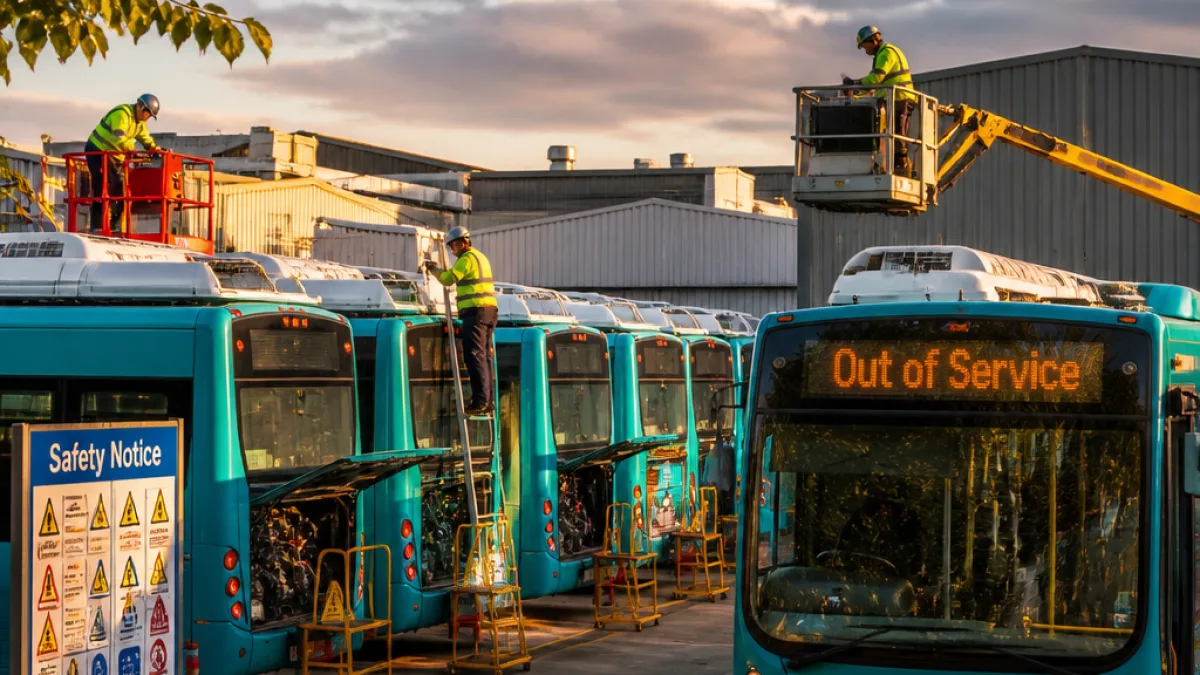
Arriva North London and Transport for London have reached a deal with the Unite union that has seen planned bus strikes called off after a pledge to install proper air conditioning across the operator’s fleet by May 2027.
What the agreement covers
The deal, announced after Unite members threatened 26 days of strike action in August, affects some 1,500 drivers based across North and East London and Grays in Essex. The action had been triggered by drivers being forced to work in sweltering conditions during heatwaves while many buses had only rudimentary air-cooling systems.
Under the agreement:
- Arriva will fit its buses in North London with full air conditioning by May 2027.
- Drivers operating hybrid or diesel buses with faulty air conditioning will only be expected to drive for a maximum of 35 minutes before the vehicle is stopped and returned to the garage.
- The 35‑minute safeguard will also apply to heating during cold weather.
- Electric buses are exempt from the 35‑minute limit on the basis that their heating and cooling systems should reach effective temperature within a few minutes.
Union reaction and remaining concerns
Unite said it had secured a “landmark” outcome for members. The union will, however, retain its strike mandate in North London for 11 months, meaning routes affected by the earlier dispute could be subject to further action if compliance isn’t delivered.
"Unite will leave no stone unturned to fight for workers. Thank you to all our members at Arriva North who stood together to achieve this landmark win,"
The union emphasised it expects broader improvements in drivers’ working conditions, including tackling fatigue and safety concerns. Campaigners and representatives have called for the requirement for air conditioning to be written explicitly into contracts for all operators serving the capital.
TfL’s role and the wider operator picture
While TfL was a party to the agreement with Arriva, the transport authority has not yet committed to a city‑wide requirement forcing all 16 privately owned bus operators in London to fit full air conditioning. That leaves scope for inconsistency across routes and operators and has prompted calls for tighter contractual standards.
Most buses currently have air‑cooling equipment that can only reduce temperatures by two to three degrees during heatwaves, a shortfall that drivers said made conditions “inhumane” during prolonged hot spells.
Routes, numbers and next steps
The dispute originally affected 42 routes when strikes were announced in August. Under the new arrangements, the 35‑minute rule will apply immediately where air conditioning is defective on hybrid or diesel buses until the May 2027 deadline is met.
| Item | Figure |
|---|---|
| Drivers covered | 1,500 |
| Affected routes (initially) | 42 |
| Privately owned operators in London | 16 |
| Deadline for full AC installation (Arriva North) | May 2027 |
| Union strike mandate retention | 11 months |
Local impact and implications
For commuters and residents the deal should avert immediate disruption to services over the autumn, but it stops short of a systemic change to procurement standards across the capital’s bus network. That leaves open the possibility of patchy passenger experience and continuing workplace risk for drivers on services run by other companies.
The agreement also sets a precedent for unions seeking environmental and comfort upgrades on public transport fleets rather than simple pay demands. It demonstrates that sustained industrial pressure can extract capital investment or contractual commitments where regulators and operators had previously resisted change.
What to watch next
- Whether TfL introduces a binding requirement for all operators to install full air conditioning as part of future contracts.
- How quickly Arriva meets the May 2027 deadline and whether the 35‑minute safeguard is applied consistently.
- Whether other unions or operators follow suit on climate resilience and worker safety measures.
As the capital heads into the autumn, commuters will be watching closely. The practical effect of the agreement will depend on delivery of the promised upgrades and whether TfL uses its contracting power to prevent a two‑tier network where comfort and safety depend on the bus operator you travel with.
Reporting from London, Aisha Rahman.