
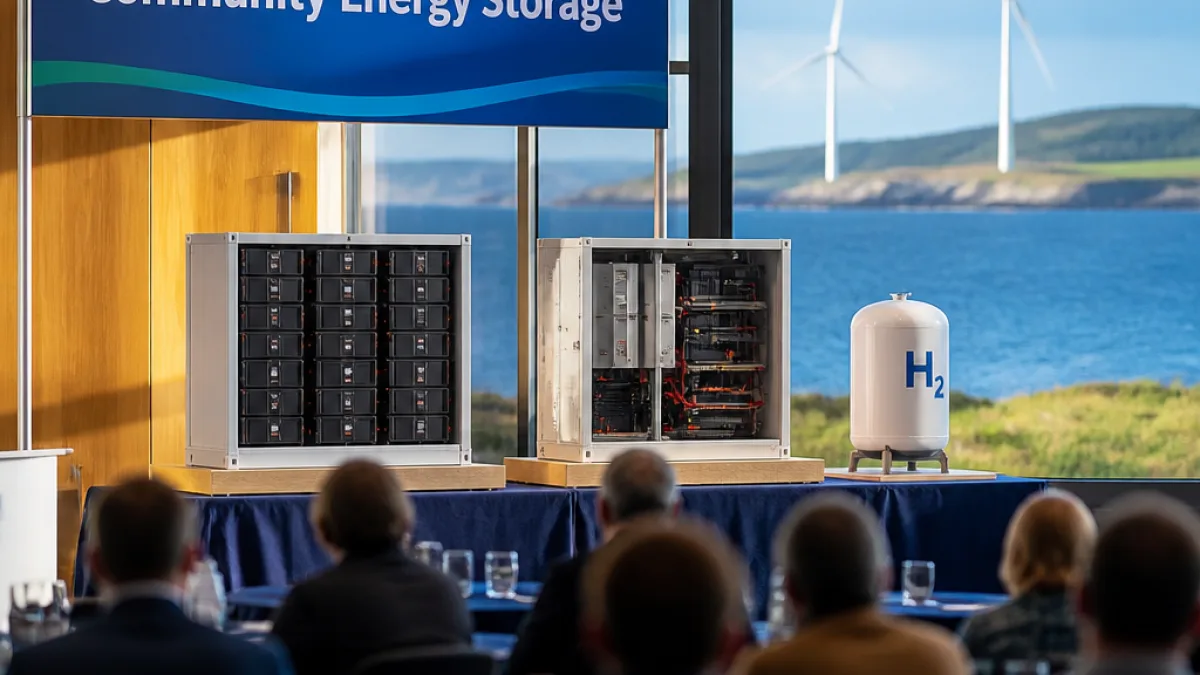
The University of the Highlands and Islands (UHI) North, West and Hebrides campus will convene international experts in Stornoway on 26 August to explore how communities can store and make better use of locally generated renewable electricity. The public conference is sponsored by Point and Sandwick Trust and aims to address practical solutions for island and rural energy systems.
Focus on batteries, hydrogen and locally controlled systems
Delegates will examine the role of battery and hydrogen energy storage systems in supporting resilient, community-scale renewable projects. UHI said the timing reflects growing public concern over energy security and the potential for shortages, as well as interest in ensuring that renewables deliver tangible local benefits.
The event will feature presentations from academics and industry specialists on a range of topics, including:
- community energy storage and the operation of battery systems;
- hydrogen technologies for local energy use;
- integration of renewables into local networks;
- planning and delivery of community-scale projects;
- opportunities to use surplus generation to reduce fuel poverty.
UHI described the conference as particularly pertinent to the Western Isles because of the islands’ remote geography, grid constraints and high energy costs — factors that both complicate and create opportunity for community-led energy systems.
University and funder perspectives
Joe Macphee, head of strategic projects at UHI North, West and Hebrides, said the university’s aspiration was to enable small community groups to have greater control over how the renewable electricity they generate is used. He said:
“At UHI North, West, and Hebrides, the aspiration is to enable small community groups to exercise greater control over how the renewable energy they generate is utilised, including its distribution within the local community to help reduce fuel poverty.”
He underlined that while the conference focuses on the Western Isles, the issues being addressed have wider relevance for other island and rural areas. The meeting aims to “bring together leading academics to present state-of-the-art technologies that could enable small-scale producers to store energy more effectively and develop innovative applications for surplus generation,” UHI said. The university added that fostering collaboration between researchers, community organisations and other stakeholders would help identify practical pathways to more resilient, affordable and locally controlled energy systems.
Point and Sandwick Trust is listed as a sponsor. The trust has previously supported community energy and infrastructure initiatives in the islands; its backing signals interest from local funders in solutions that can deliver community benefit.
Practical outcomes and local consequences
For Stornoway and the surrounding islands, the conference is likely to be judged on whether it produces tangible, deliverable options for communities. The principal issues for local residents include:
| Local challenge | What the conference will address |
|---|---|
| High domestic and business energy costs | Using storage to shift and localise supply, potentially reducing reliance on external markets |
| Grid constraints and intermittency | Battery and hydrogen storage options to smooth supply and increase resilience |
| Community benefit from renewables | Models for local ownership, distribution and use of surplus generation |
Attendees will include academics, community energy groups and other stakeholders. Because the conference is open to the public, it also offers an opportunity for householders and local businesses to hear directly about emerging technologies and project pathways they might engage with.
As local authorities and communities across Scotland seek to decarbonise while protecting consumers from price volatility, events such as this in Stornoway could shape how island communities deploy storage technologies and structure local ownership. The meeting will also provide a barometer of how academic research and local philanthropy can combine to support community-led energy transitions in remote settings.









