Concentrated growth on the Trading Estate
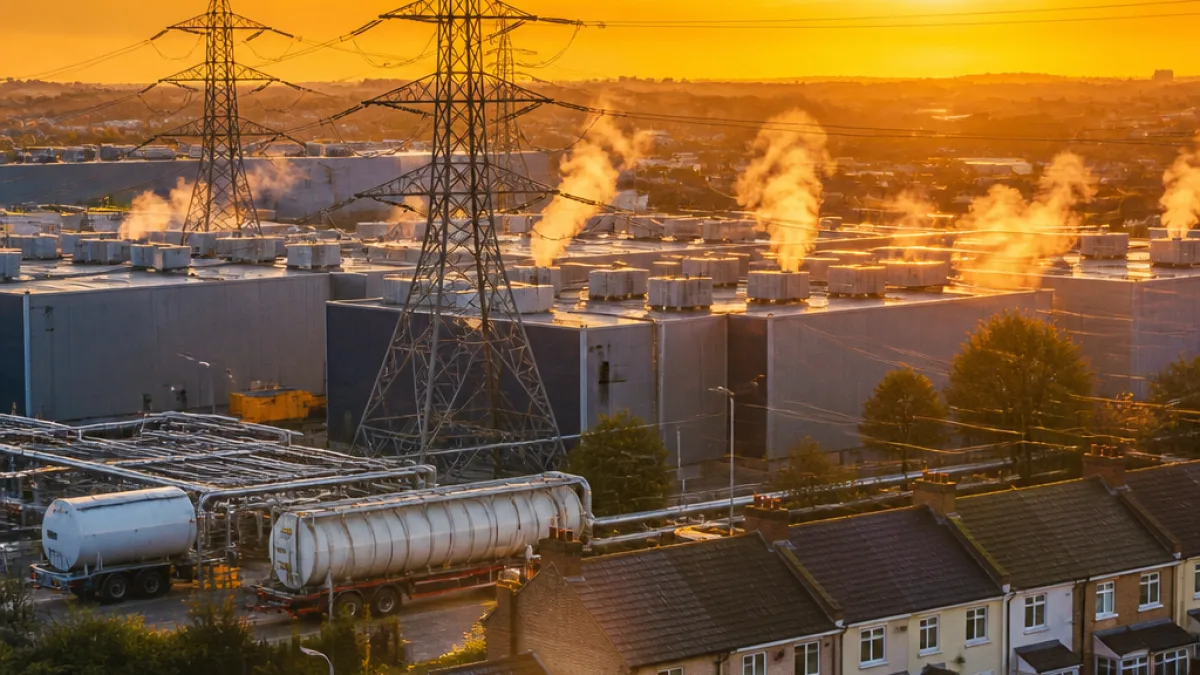
The Trading Estate in Slough has become a major hub for datacentre development as demand for computing power — including services for artificial intelligence — rises. The area now hosts as many as 40 datacentres, a concentration described in recent reporting as the densest in western Europe, with additional facilities planned.
Local residents and campaigners have begun to question how that expansion lands in everyday life. The Trading Estate’s appeal to operators has been linked to its post-war planning status as a partly deregulated “simplified planning zone”, its proximity to central London and its siting above the high-capacity cables that connect the UK to the United States and Ireland. Global companies including Equinix, Digital Realty and Iron Mountain operate facilities on the estate that serve large technology customers such as Amazon, Google, Oracle and Microsoft.
Heat, noise and the neighbourhood impact
People living close to parts of the estate, including Britwell, have reported noticing increased noise and, in at least one instance, what they felt was raised local heat. Early academic work is beginning to quantify such effects: a Cambridge University preprint published earlier this year suggests datacentres can create a local “heat island” effect, raising temperatures nearby by an average of 2°C and in some measurements by as much as 9°C.
“Datacentres can create a ‘heat island’ effect, raising nearby temperatures by an average of 2°C and by as much as 9°C.”
Operators and the corporate owners of the Trading Estate have said they have not seen conclusive evidence that datacentre operations are increasing local temperatures. The disagreement between early academic findings and industry statements underlines a gap between research, operational data and local experience that will need to be resolved if planning tensions are to be eased.
Pressure on water and power supplies
Beyond local climate effects, resource use is a central concern. Water UK has warned that government water forecasts “explicitly exclude” datacentres. Individual facilities can use substantial volumes: the reporting notes a figure of up to 5 million gallons a day for datacentre water use in aggregate terms — described as equivalent to the consumption of up to 50,000 people.
Electricity demand is also significant. Datacentres require large, constant supplies of power; regulators and planners are watching the sector’s proposed responses. Ofgem officials say about 100 planned UK centres aim to use dedicated gas turbines, a point that raises both emissions and local pollution considerations. Whitehall’s stated policy is to triple the UK’s number of datacentres by 2030 and the sector has been designated critical national infrastructure.
Planning trade-offs and housing
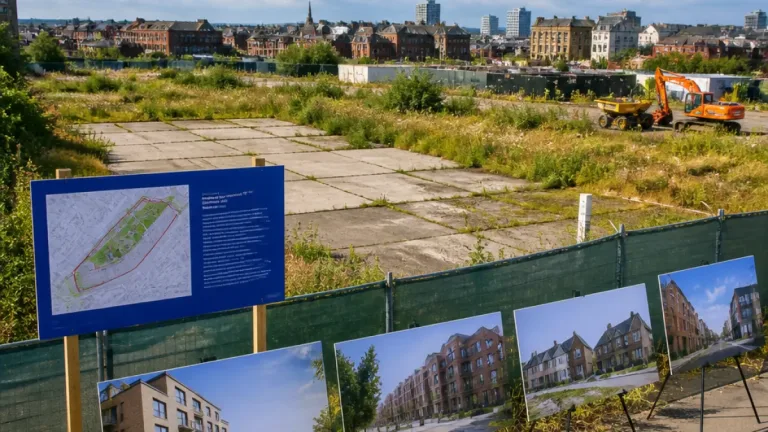
The rise of datacentres has already had knock-on effects for housebuilding in the capital region, according to a London Assembly report cited in the reporting. In one east London redevelopment recently approved, a planning balance left space for a datacentre, offices and 44 homes rather than the local council-backed plans for 350 dwellings. The example illustrates the way land use and utility capacity can make datacentres a competing priority with residential development.
- Number of datacentres on Slough Trading Estate: up to 40
- Reported potential temperature increase near datacentres: average 2°C, up to 9°C
- Estimated potential daily water use cited for datacentre operations: up to 5 million gallons
| Issue | Impact highlighted |
|---|---|
| Heat | Local temperature rise averaging 2°C, up to 9°C in early research |
| Water | Potential use up to 5m gallons/day (equivalent noted as 50,000 people) |
| Electricity | High demand; 100 planned UK centres may use gas turbines, per Ofgem |
For Slough residents the immediate questions are practical: can local water and energy systems cope with further datacentre growth, and how will councils balance the economic benefits of hosting critical digital infrastructure against local housing needs, noise, and environmental effects? National planning priorities and the designation of datacentres as critical infrastructure complicate the usual local levers available to planners and communities.
Resolving those tensions will require clearer data and better engagement between operators, regulators, local authorities and communities. For now, the Trading Estate’s patchwork of facility owners and long-standing planning arrangements means Slough is likely to remain at the sharp end of the UK’s datacentre expansion — with consequences for services, development and daily life in nearby neighbourhoods.