
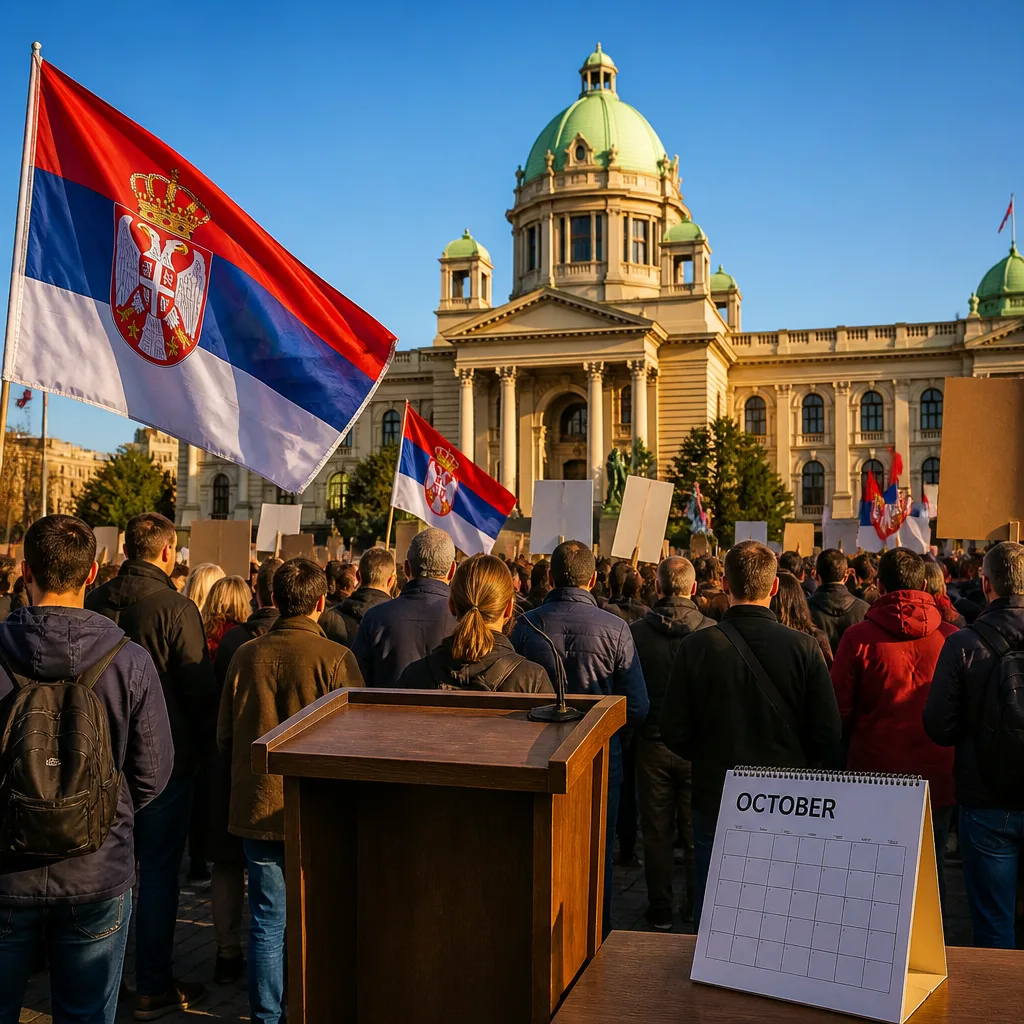
Aleksandar Vučić has resigned as president of Serbia, bringing forward a period of political uncertainty that will see Serbians go to the polls twice before the end of the year.
Resignation follows sustained protests
Vučić announced his resignation outside the presidential building in Belgrade after a nine-year tenure in which, he said, his administration had preserved peace and stability. His departure comes after more than a year of student-led protests and wider public discontent over allegations of government corruption and concerns about corner-cutting by the Progressive Party-led government.
Demonstrations involving students, teachers, workers and farmers gathered pace following widely publicised controversies and a summer in which protesters continued to demand accountability. A series of resignations by officials close to the president failed to appease protesters, who also expressed outrage at alleged incidents of police brutality.
Two elections to be held within months
Under Serbia's constitution, presidential elections must be held no more than three months after a president steps down. Vučić has already called a snap parliamentary election for late October and said the presidential vote will take place more than a month after that ballot.
The timetable means Serbia will hold:
- a parliamentary election in late October; and
- a presidential election within three months of Vučić's resignation — scheduled by his own announcement to follow the parliamentary poll.
| Event | Timing |
|---|---|
| Snap parliamentary election | Late October (called by Vučić) |
| Presidential election | More than a month after the parliamentary vote; within three months of resignation |
Political manoeuvring and succession
Vučić had previously indicated in June that he would resign. He is standing as his Progressive Party's candidate for prime minister in the forthcoming parliamentary contest. Serbia's constitution prevents him from seeking a third presidential term, but his move to contest the parliamentary election leaves open the possibility of retaining a dominant role in Serbian politics.
Parliamentary speaker Ana Brnabić, also a member of the Progressive Party, will assume the duties of interim president until a successor is chosen.
The resignation follows a period in which the president cultivated a pro-Russian, populist image and associated himself with high-profile projects that supporters described as symbols of national progress. Critics argued those projects and governance decisions reflected a decade of Progressive Party control and contributed to the protests that intensified over the last year.
Domestic consequences and international context
The immediate effect is a compressed electoral calendar and a test of the Progressive Party's capacity to retain its position while Vučić seeks to convert his authority into a parliamentary leadership role. For citizens, the dual polls represent repeated opportunities to express dissatisfaction or to endorse the existing leadership.
Internationally, observers will watch how the ballots affect Serbia's foreign alignments and domestic rule of law concerns that protesters have raised. The administration's claim that it preserved stability will be measured against the depth of domestic unrest and the conduct of the upcoming elections.
He told supporters his administration had preserved peace and stability during his nine-year tenure.
The coming weeks are likely to be politically charged as campaign activity ramps up and as institutions manage the practicalities of holding two national votes in quick succession.












