
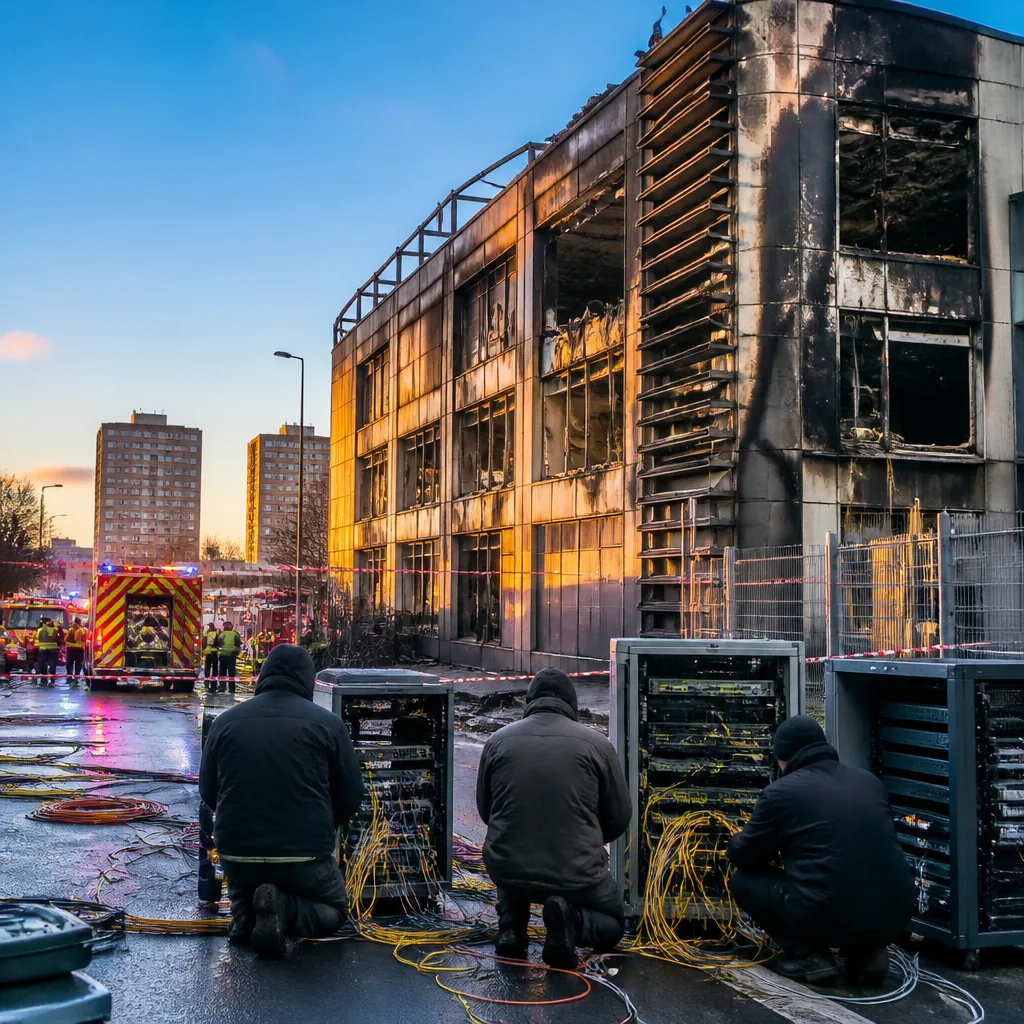
Russia has intensified attacks on Ukrainian data centres, cutting internet access for as many as 100,000 households in Kyiv and prompting warnings that Moscow is seeking to disrupt vital civilian communications.
Targeting of critical civilian systems
Ukrainian officials and international observers say the recent strikes, carried out on Wednesday and Thursday, were aimed at degrading the flow of information that civilians and authorities rely on for safety alerts and everyday services. The attacks have raised alarm in Kyiv over the deliberate disruption of non-military infrastructure.
“Russia has targeted major Ukrainian data centers, seeking to disrupt the flow of information,”
Foreign minister Andrii Sybiha stressed on X that rapid warnings about missile and drone threats are lifesaving and that the data centres affected are not legitimate military targets. He warned that disrupting such systems endangers civilians by hampering access to emergency notices and other essential services.
Broader regional tensions
The strikes come at a time of increased volatility across Europe. In a related development this week, Swedish and Finnish fighter jets scrambled to intercept Russian aircraft over the Gulf of Finland in a coordinated response — the first time the two Nordic air forces have carried out such an operation together. The Russian aircraft were operating in international airspace, according to reports.
There are wider signs of the conflict spilling beyond Ukraine’s borders, with incidents such as gas pipeline outages, drone detections and airspace violations contributing to concerns among neighbouring states and NATO members.
Consequences for civilians and infrastructure
Ukrainian authorities and analysts warn that disabling data centre capacity can have cascading effects: emergency messaging systems, banking and public services, and civilian communication channels can all be affected. Officials say the assaults represent a deliberate escalation designed to sow disruption in daily life and limit the population’s ability to receive warnings.
Officials also highlighted efforts to keep grain shipments moving from the Black Sea, where attacks on shipping have intensified. Ukrainian president Volodymyr Zelenskiy has said discussions are under way with countries including India, Turkey and Egypt about reopening a grain corridor — even as strikes on maritime traffic continue to pose risks.
- Scale of outages: Up to 100,000 households in Kyiv affected.
- Timing: Attacks reported on Wednesday and Thursday this week.
- Regional impact: Interceptions of Russian aircraft by Sweden and Finland over the Gulf of Finland.
| Item | Detail |
|---|---|
| Households offline | Up to 100,000 |
| Days of recent attacks | Wednesday and Thursday |
| Countries involved in related air intercepts | Sweden, Finland |
Analysts say targeting civilian digital infrastructure not only disrupts everyday life but also undermines public confidence and the functioning of services essential for safety during wartime. Kyiv has repeatedly called on international partners to bolster resilience measures and provide support to protect and quickly restore critical communications.
Diplomatic activity continues in parallel. Kremlin spokesman Dmitry Peskov said Turkey had submitted proposals to Moscow about the security of shipping in the Black Sea, but that substantive negotiations had not yet started, according to Interfax. The security of sea lanes remains a pressing concern as attacks on both shipping and port infrastructure threaten global food supplies and commerce.
Officials in Kyiv have emphasised the civilian nature of the targeted data centres and urged international bodies to condemn attacks on infrastructure that supplies life-saving information. For now, Ukrainians face the immediate challenge of restoring connectivity and maintaining vital warning systems while the security situation remains highly unstable.















