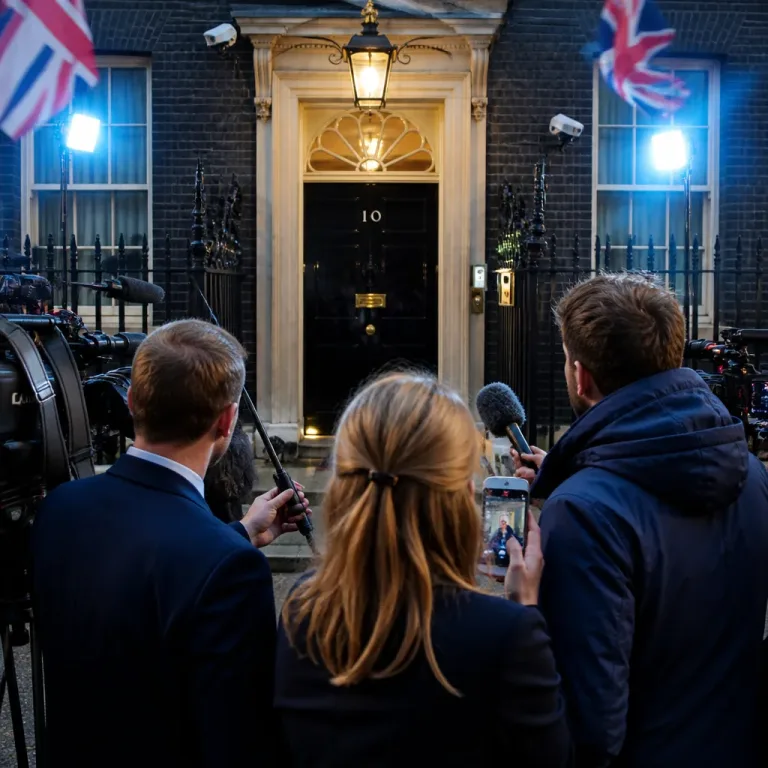
A mobile game developed in Manchester has climbed to the top of Apple’s global paid games chart, offering users a turn at steering No 10 amid crises, factional politics and farcical incidents. The title, which places the player in the prime minister’s role, has drawn attention for its depiction of Westminster strife and its popularity despite — or because of — its political subject matter.
Game mechanics mirror political pressures
No 10: Full Confidence, created by independent developer Benjamin Brewis, presents more than 300 scripted scenarios. Players must manage four competing groups — the cabinet, backbenchers, the media and the public — selecting from three responses to each situation, with support eroding if a faction is repeatedly alienated.
Scenarios range from routine policy headaches to deliberately comic episodes. Brewis said some of the material draws on real Westminster stories. He cited anecdotes that have circulated around Parliament as part of his inspiration.
"I'd remember that MP who had a spider that he'd threaten MPs with, or when Boris Johnson walked into a fridge. I'm frantically writing them all down," Brewis said.
Why a political simulator now?
The game's rise, overtaking long-established titles on Apple’s chart, suggests a market appetite for interactive experiences rooted in political decision-making. The developer and early players have described the title as a sim that rewards balancing competing interests rather than pursuing a single ideological line.
Its success follows a period of high-profile turnover and theatrical episodes in UK politics. Commentators point to the recent prominence of Westminster events in national conversation as one reason why a political simulator might capture attention.
- Developer: Benjamin Brewis, based in Manchester.
- Content: Over 300 scenarios, four factional trackers.
- Platform achievement: Number one on Apple’s paid games chart globally.
Reception and wider significance
Early reviews and player accounts describe the game as both entertaining and instructive. The format forces players to confront trade-offs familiar to anyone who watches politics: pleasing one group often angers another, and a single misstep can end a premiership. That dynamic echoes conventional accounts of coalition-building and party management in the Commons.
Observers in the technology and political communication fields note that interactive formats can shape public understanding of complex institutions. Simulations that foreground strategy, constraint and unintended consequences may foster a more nuanced appreciation of political decision-making than passive news consumption.
At the same time, the presence of deliberately absurd narratives — including animal-related disruptions — underlines the game's entertainment priorities. Those elements may broaden its appeal beyond politically engaged users, attracting gamers drawn to humour and surprise.
Commercial and cultural implications
For the developer, chart success will increase visibility and revenue prospects. For the political sphere, the popularity of such a title demonstrates continuing public fascination with the workings of government. Whether it leads to sustained civic engagement, better-informed voters or simply a new sub-genre of games remains an open question.
| Feature | Detail |
|---|---|
| Scenarios | More than 300 |
| Factions to manage | Cabinet, backbenchers, media, public |
| Developer location | Manchester |
| Chart position | Top of Apple paid games chart |
Political journalists and educators will watch to see if this kind of interactive product shapes discourse about government and accountability. For now, the game's success is a reminder that British politics remains a fertile source of stories — and, increasingly, of gameplay.