
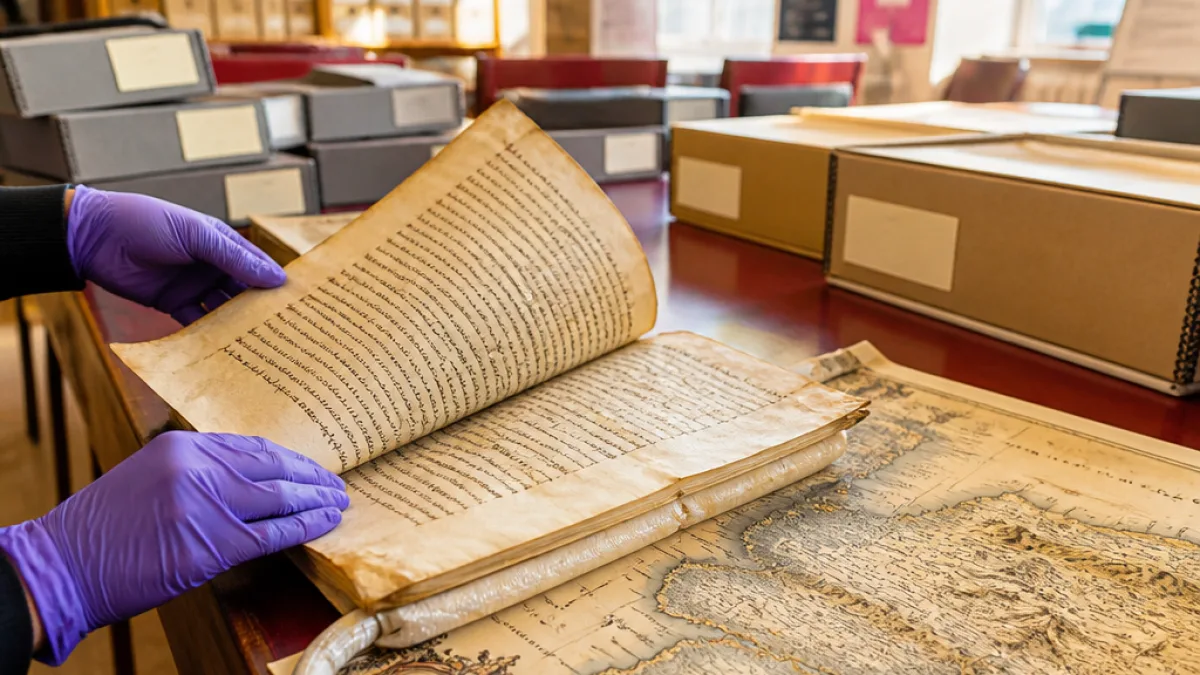
The Lancashire past is not buried — it is catalogued, boxed and preserved. A collection of documents stretching back more than 900 years, with items dating as far back as 1115, is kept at the Lancashire Archives, offering researchers and residents a rare, primary window on the county’s history.
What’s in the stacks
The archive holds thousands of documents, photographs, maps and manuscripts that record almost every strand of life in Lancashire over centuries. Material ranges from family papers and parish registers to local government records, historic maps, business documents and photographic collections that illustrate industry and daily life.
- Family history: deeds, wills and parish registers are available to people tracing ancestors.
- Local government and civic records: documentation for researchers studying the development of towns and services.
- Business and industry: records and photographs that chart trade, mills and workplaces.
- Exhibitions and outreach: themed displays use archive material to tell social histories, such as the lives of Lancashire women from 1950–1980.
The archives are not merely store rooms of old paper. Preservation is active: documents are kept in controlled conditions designed to protect them for future generations. On occasion the archive offers behind-the-scenes access to parts of the collection that are normally closed to casual visitors.
Why it matters locally
For Preston residents and others across the North West, the holdings provide more than curiosity. Family historians use parish registers and wills to stitch together family trees and life stories. Local groups and historians draw on council records and maps to better understand how places developed and how events shaped communities. Photographs and business records can bring the region’s industrial and social past into sharper focus for schools and community projects.
“Heritage Open Days are a fantastic opportunity to discover the stories, people, and places that have shaped Lancashire over the centuries,” said Councillor Ella Worthington, Lancashire County Council’s cabinet member for civic pride.
The archive also stages exhibitions that connect past and present. One recent display explored the lives of Lancashire women between 1950 and 1980, drawing on interviews, photos and records to show how social change and work patterns affected everyday life.
Access and use
Researchers, students and members of the public regularly consult the collections. Typical reasons for visits include:
- family-history research using parish and probate records;
- local-history projects and academic research;
- schools and community groups seeking source material for exhibitions or teaching;
- temporary public displays and events such as Heritage Open Days that make otherwise hidden material available.
Careful conservation and cataloguing mean much of the archive remains safely stored until required. Controlled conditions and specialist handling are central to long-term preservation, ensuring documents survive for future study rather than decaying in basements or being lost to private hands.
| Type of record | Typical use |
|---|---|
| Parish registers | Family-history research and demographic studies |
| Deeds and wills | Legal history, property research, genealogical context |
| Business documents & photos | Industrial and social history, exhibitions |
For anyone in Preston curious about their roots or the county’s story, the Lancashire Archives offer primary evidence that can change understanding of local places and people. Events that allow public access to otherwise hidden parts of the collection give residents a practical way to engage with that evidence, whether they are tracing a family line, researching a local building or simply keen to see the county’s history up close.
While the documents themselves speak across centuries, the work to keep them accessible depends on ongoing conservation, cataloguing and public engagement — activities that make the past useable in the present and preserve it for the future.











