
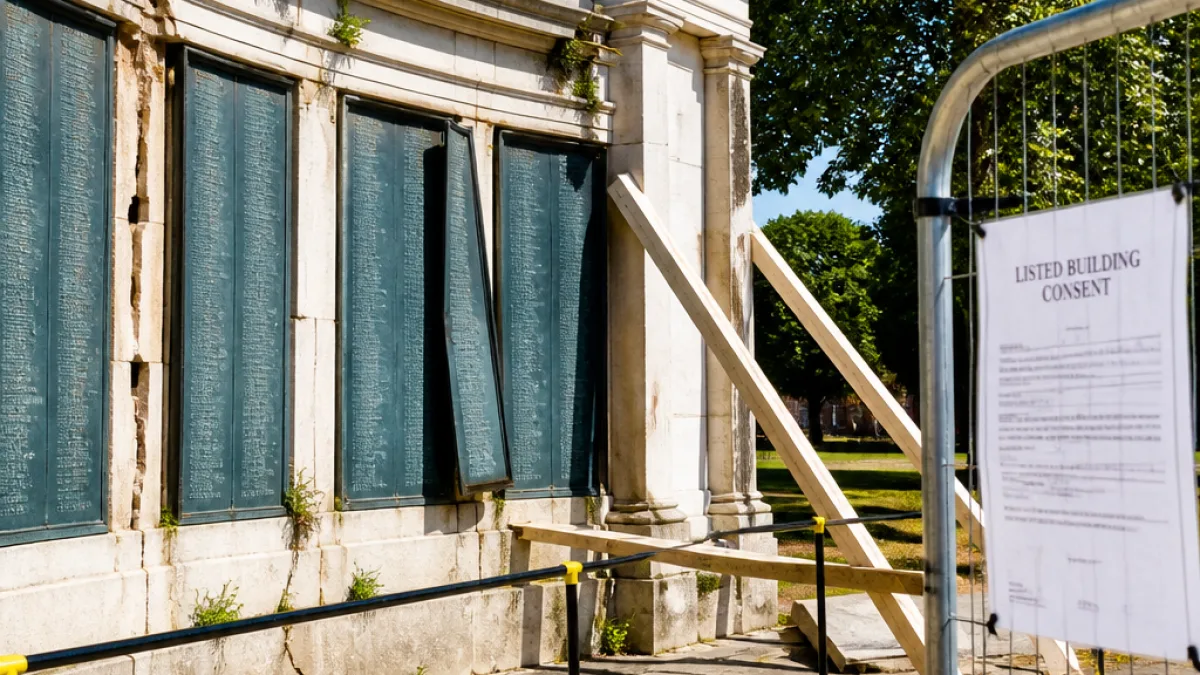
The Grade II* Birkenhead War Memorial in Hamilton Square Garden is set for emergency repairs after a recent survey identified structural failings and public safety risks. Wirral Council has submitted an application for listed building consent, and councillors will be asked to approve work to stabilise and restore the memorial, which was unveiled in 1925 and commemorates the 1,293 men from Birkenhead who died in the First World War.
What the survey found
Ainsley Gommon Architects, based in Birkenhead, prepared the design and heritage statement supporting the application and reported a number of critical issues following their inspection. The most pressing problem is extensive vertical cracking in the stonework immediately behind the green slate name panels, a defect that the report says poses a real risk of the panels becoming detached.
"Repairs to the affected stonework will be necessary to prevent further deterioration and to reduce the risk of the panels becoming detached," the report states.
The survey also recorded defects at higher levels of the structure, including the roof and cornices. Vegetation growth and evidence of bird activity have accelerated decay of the stonework, and the west cornice — engraved with the words ALL THESE WERE HONOURED IN THEIR GENERATIONS / AND WERE THE GLORY OF THEIR TIMES — shows significant cracking. Outside the monument, the surrounding landscaping presents safety concerns: cracked and displaced paving could cause trips and falls for visitors, while the flagpole plinths and steps have visible damage where low-quality temporary repairs have previously been made.
Scope and aims of the work
If councillors grant listed building consent, the proposed programme will prioritise safety and the long-term preservation of the memorial's historic character. The architects stress that all repair work should be carried out in consultation with a qualified stonemason, using appropriate materials and techniques designed to conserve the memorial's appearance and significance.
- Immediate stabilisation of cracked stonework behind the slate name panels.
- Repair and consolidation of roof and cornice defects.
- Removal of damaging vegetation and measures to deter bird activity.
- Replacement or repair of displaced paving to remove trip hazards.
- Proper restoration of flagpole plinths and steps to replace temporary fixes.
Why this matters locally
The Birkenhead War Memorial is more than stone and lettering; it is the focus for civic ceremonies and acts of remembrance across the borough. Ensuring the structure is safe and rightly conserved means future Remembrance Sunday services and commemorative events will continue without risk to attendees or further loss of historic fabric. The memorial's Grade II* status recognises its particular architectural and historic interest, which places constraints on how repairs are carried out and underlines the need for specialist conservation skills.
| Issue | Risk |
|---|---|
| Vertical cracking behind slate name panels | Detachment of panels; accelerated deterioration |
| Cracked roof and cornices (including west cornice) | Water ingress and structural loss of carved detail |
| Vegetation and bird activity | Stone decay from roots, droppings and moisture retention |
| Cracked/displaced paving, damaged steps and plinths | Trip hazards and degraded access for visitors |
Decision on the listed building consent will be made by Wirral councillors. Any agreed works will need to balance public safety, access during repairs and conservation best practice to preserve the memorial for future generations.
For Birkenhead residents, the prospect of restoration comes with a straightforward ask: that the town's principal war memorial be treated with the care its history deserves and that the people who use Hamilton Square Garden for remembrance can do so without risk. The conservation plan, if carried through as recommended, aims to deliver precisely that — stabilising the structure now and protecting it for decades to come.















