
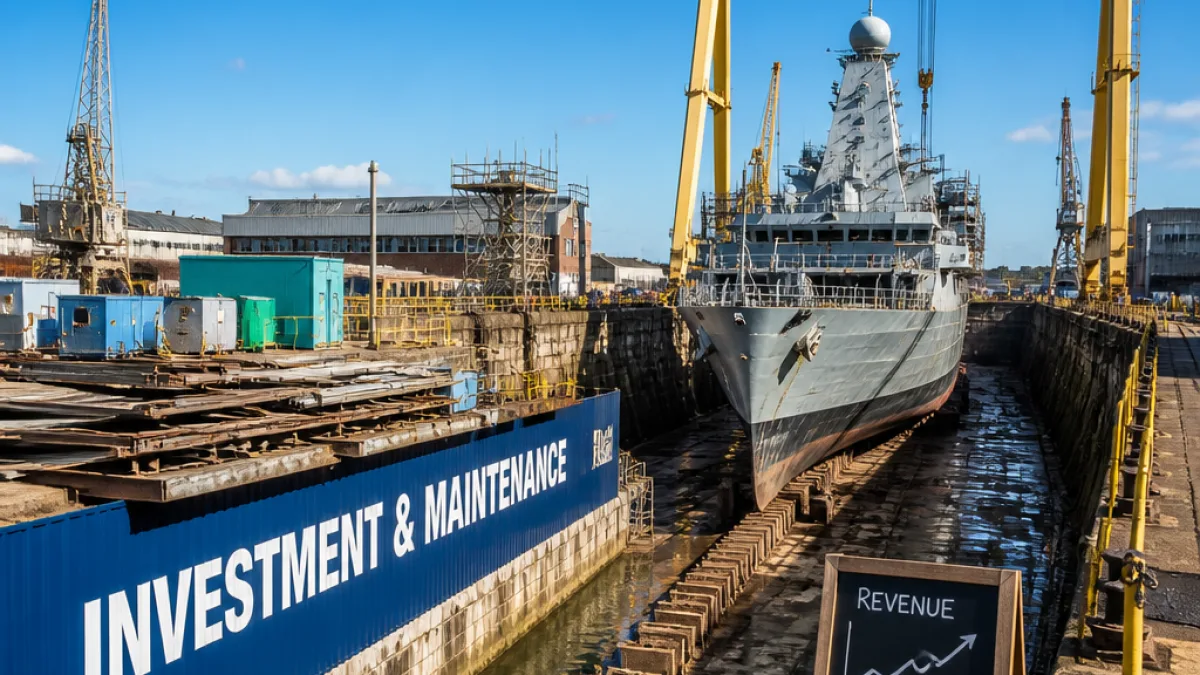
The company that maintains and refits Royal Navy vessels at Devonport has reported a substantial rise in profits and revenues in the year to 31 March 2026, according to newly filed accounts. The figures underline the continued importance of Devonport Royal Dockyard Ltd (DRDL) to Plymouth’s economy, while highlighting ongoing negotiations with the Ministry of Defence over future support arrangements.
Surge in profit and rising revenue
DRDL posted an operating profit of £131,875,000 for the year, an increase of £55,959,000 on the previous year. Revenue rose to £1.867 billion from £1.749 billion in 2024/25 and £1.522 billion in 2023/24, the accounts show.
- Operating profit: £131,875,000 (up £55,959,000)
- Revenue: £1.867bn (2025/26); £1.749bn (2024/25); £1.522bn (2023/24)
- Employees: more than 10,000; wage bill £670m (including pensions)
Local investment and balance sheet changes
The report attributes much of the profit increase to an increase in advanced capital allowances, which reduced the deferred tax charge, and to higher bank interest received from another company within the Babcock group under its internal banking arrangements. Net assets rose from £467.9m to £584.7m during the year.
| Item | 2023/24 | 2024/25 | 2025/26 |
|---|---|---|---|
| Revenue | £1.522bn | £1.749bn | £1.867bn |
| Operating profit | — | £75,916,000 (implied) | £131,875,000 |
The annual report states the increase in net assets was largely driven by cash generated from trading that was transferred to another group company under Babcock’s banking arrangements, recorded as an £80.6m increase in amounts due from group undertakings. It also notes a £28.2m rise in the value of property, plant and equipment, reflecting continued investment in dock infrastructure.
Pensions, pay and workforce
DRDL paid almost £6m during the year to settle a closed pension scheme. The company employs more than 10,000 people and has a total wage bill, including pension contributions and other payments, of £670m. Those figures underline DRDL’s role as a major employer in Plymouth and its significance to local supply chains and household incomes.
“The increase in net assets is also driven by a £28.2m increase in property, plant and equipment reflecting the company's continued commitment to investing in its infrastructure.”
Contracts and the wider implications for Plymouth
The accounts also detail ongoing discussions with the Ministry of Defence over the replacement Terms of Business Agreement (ToBA) and the Future Maritime Support Programme (FMSP) contracts. Those contracts are due to expire at the end of this month. The report says talks on a Gateway Agreement are “progressing well”, and that heads of terms have been in place since April 2025.
For Plymouth, the outcome of those negotiations matters beyond headline profit figures. The ToBA and FMSP set the framework for how the dockyard provides support to the Royal Navy; they determine the flow of ship and submarine work that sustains jobs at the yard, on-site contractors, and the many smaller firms in the city who supply services and materials.
Local businesses and workers will be watching the replacement arrangements closely. The report’s emphasis on infrastructure investment and a strengthened balance sheet suggests the company is preparing to compete for or manage a substantial pipeline of MoD work, but the precise terms and duration of future contracts — and how they affect procurement, staffing and long-term planning in Plymouth — remain to be finalised.
As the city’s largest maritime employer, DRDL’s financial health is closely tied to Plymouth’s economic prospects. The latest accounts show a business generating strong cash flows and reinvesting in its facilities, while still managing historic pension obligations and engaging with the MoD on the next phase of support arrangements that will shape local work for years to come.