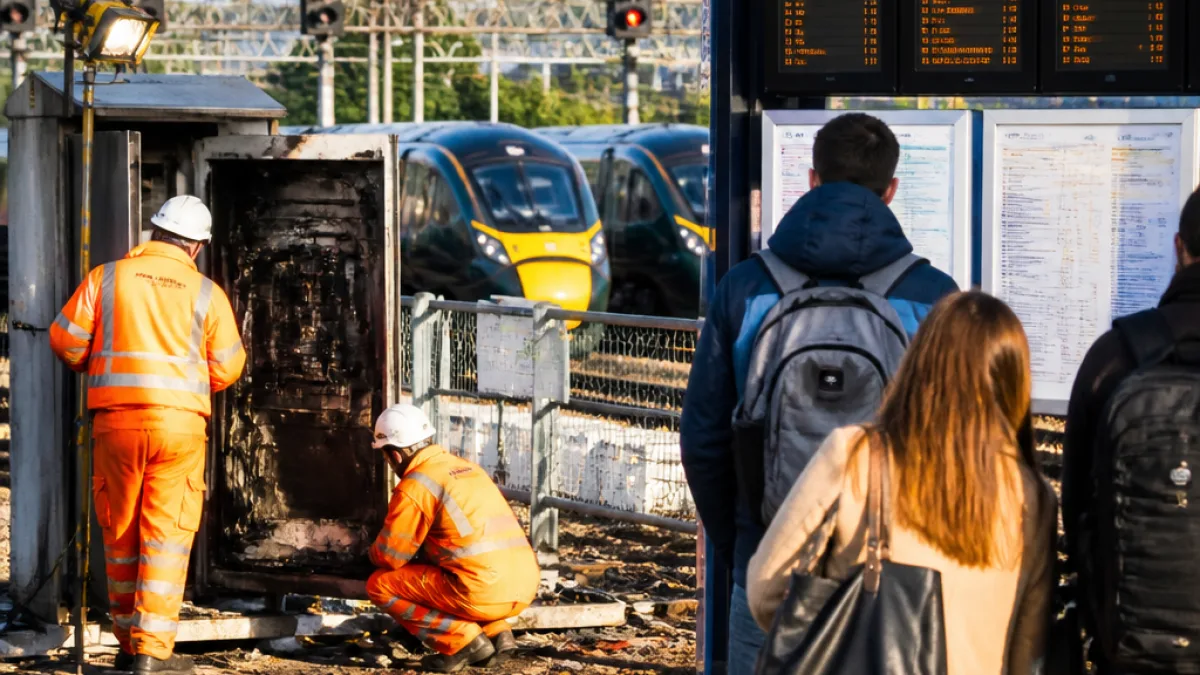
Rail passengers travelling between Swindon and London face continued disruption for at least another week after a lineside fire damaged power equipment on the Great Western Main Line. The incident, described by the train operator as vandalism, has reduced the number of trains able to run and led to revised timetables on local services.
Extent of the disruption
Great Western Railway (GWR) had initially told customers that normal services would resume by the end of Wednesday, 9 September. In a subsequent update the operator said the impact would persist until at least Tuesday, 15 September, as engineers work to repair the damaged power supply between Reading and London Paddington.
The damage followed an incident over the weekend between Reading and London Paddington; one suspect was arrested on suspicion of arson and later released on bail, according to reporting. The fallout affected journeys into London on Monday and Tuesday and has prompted a series of temporary changes to services.
What travellers should expect
GWR said that while engineering work proceeds, local trains on routes between London Paddington and Didcot Parkway/Newbury will be operating only between Reading and those destinations. Passengers heading to Paddington will therefore need to change trains at Reading.
- High-speed intercity services run normally, GWR added.
- Passengers travelling from Twyford, Maidenhead or Slough should use Elizabeth Line services at Paddington (Platforms A and B).
- Customers can use their existing GWR ticket on alternative routes at no extra cost, though the Elizabeth Line may also be affected by delays.
"Due to vandalism of railway equipment between Reading and London Paddington fewer trains are able to run," a GWR spokesperson said. "Train services running to and from these stations may be cancelled, delayed or revised."
Those affected by late arrivals can apply for Delay Repay compensation if they reach their destination at least 15 minutes late by keeping their ticket and submitting a claim via GWR's website.
Local consequences in Swindon
The prolonged reduction in service frequency carries particular implications for Swindon. Many residents rely on the mainline for commuting into central London and for business travel. Fewer trains and enforced changes at Reading will lengthen journeys and change connectivity patterns for the town's workers and small firms that depend on easy access to the capital.
Operators are urging passengers to consult the National Rail Enquiries real-time journey planner before setting off, while live departure boards and station staff are on hand to help those already at stations. For some travellers, alternative routes via Reading to GWR high-speed services may prove quicker.
Practical advice for passengers
Where possible, travellers are advised to consider flexible working arrangements or to delay non-essential trips until services are restored. The operator's recommendations include:
- Check journey planners and departure boards before travelling.
- Allow extra time for connections at Reading.
- Keep tickets safe to claim Delay Repay if eligible.
- Speak to station staff for assistance with revised journeys.
| Item | Detail |
|---|---|
| Initial expected return to normal | 9 September |
| New expected continuation date | 15 September |
| Area affected | Between Reading and London Paddington |
British Transport Police were called to the scene in the early evening following the incident; reporting states one person was arrested in connection with the suspected arson and subsequently bailed. GWR and policing sources say the disruption is being caused by damage to the line-side power equipment rather than track damage, allowing some services — especially longer-distance high-speed trains — to continue operating.
For Swindon residents who commute to London or travel frequently, the message is clear: plan ahead, expect changes and allow extra time for journeys until repair work is complete.