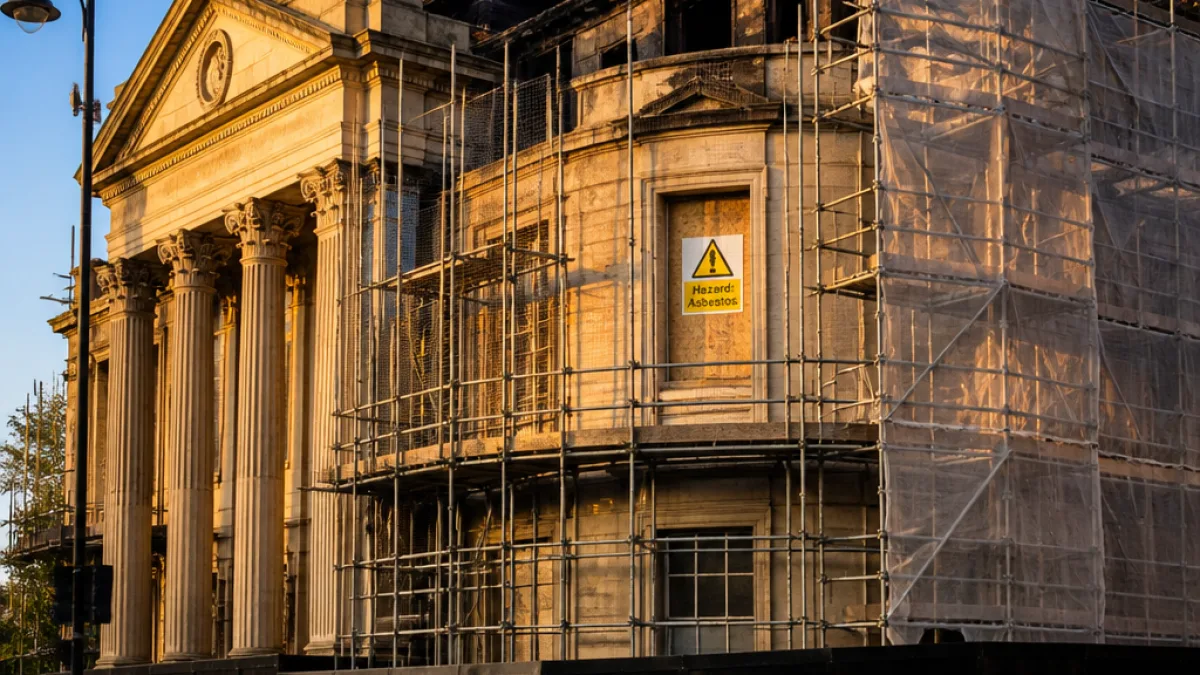
Plans to transform Bristol’s historic Guildhall into a luxury hotel look set to advance after developers submitted new applications to the city council addressing internal works, including the removal of asbestos from a former courtroom.
Long-running project hit by fire and delays
The project, originally approved in 2013, was severely disrupted after a major blaze in March 2020. More than 50 firefighters tackled the fire as the roof of the Grade II*-listed building on Broad Street and Small Street caved in.
Since then the scheme has been delayed repeatedly. The development, being marketed as Hotel Gotham on its website, is described by consultants as now expected to open “early next year”, reflecting a later timetable than initially envisaged.
Asbestos discovered during investigations
Fresh planning documents lodged with Bristol City Council make clear the current application is for listed building consent to deal with internal fabric rather than external alterations. Consultants say external works are already covered by existing permissions.
"Investigations of the plaster linings through service holes revealed that the upper walls were finished with an asbestos reinforced plaster, requiring removal before any work within the room could proceed to ensure the safety of workers and the public," the consultants said.
The consultants added that the replastering of the former courtroom will be internal and would "not impact on the street scene, or other buildings within the setting and do not require planning permission." However, because the works affect the internal fabric of a Grade II*-listed building they do require listed building consent.
- Location: Guildhall, Broad Street/Small Street, centre of Bristol
- Heritage status: Grade II* listed
- Fire: Devastating blaze in March 2020; roof collapse
- Proposal: 75-bedroom hotel with restaurant and rooftop terrace bar
- Current application: Listed building consent to remove asbestos and replaster former courtroom
What this means locally
The Guildhall sits in a sensitive conservation area at the heart of Bristol’s historic quarter. While the developers say the internal works will not alter the external appearance or the wider setting, the removal of asbestos and restoration of significant internal spaces are vital steps before building work can proceed safely.
For residents and local businesses the scheme promises a new hospitality offer in the city centre — 75 bedrooms, a restaurant and a rooftop terrace bar are cited in planning documents — but the project’s long history of delays and the impact of the 2020 fire mean there will be close scrutiny on how the restoration is carried out and how heritage features are conserved.
| Item | Detail |
|---|---|
| Heritage status | Grade II* |
| Bedrooms proposed | 75 |
| Fire response | More than 50 firefighters (March 2020) |
| Current application | Listed building consent to remove asbestos and replaster former courtroom |
The latest documents emphasise that previously unseen alterations and materials have been found during site surveys, a common challenge with historic buildings that have endured significant damage. Removing asbestos-reinforced plaster is being treated as necessary to ensure the safety of workers and the public before further restoration can proceed.
Members of the public and conservation bodies will be watching the council’s consideration of the listed building consent closely, weighing the benefits of a revived, high-end hotel offering against the need to protect and respect the Guildhall’s historic fabric.
Restoration and reuse of heritage buildings can bring economic activity and footfall back to city centres; yet the complexity of this site underlines the careful balancing act required when repairing fire-damaged, listed structures while meeting modern health and safety standards.