
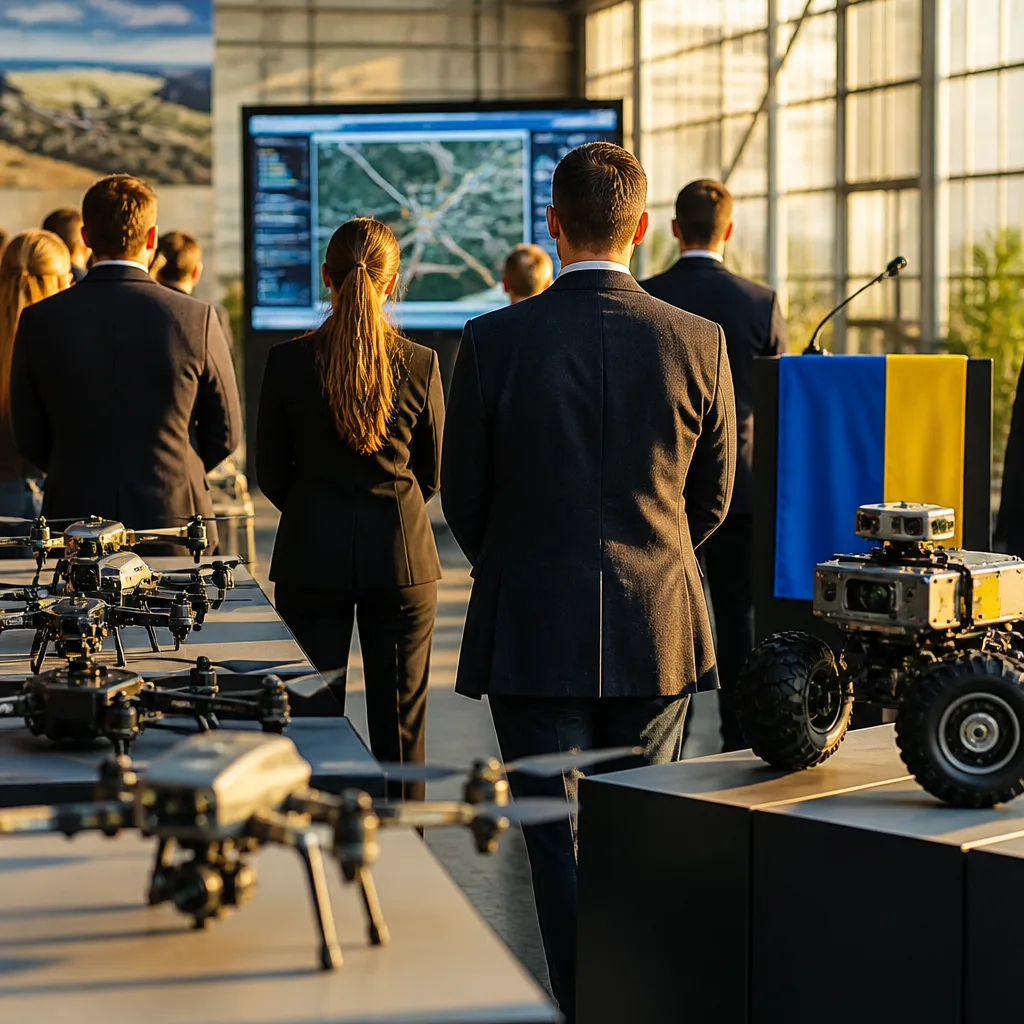
A Ukrainian defence technology start‑up led by former digital minister Mykhailo Fedorov has attracted backing from Alex Karp, chief executive of Palantir — the US firm best known for supplying software to military and intelligence agencies. The arrangement was announced in a video post and marks a notable example of Silicon Valley capital and expertise aligning with commercial efforts to scale wartime technology.
From battlefield to exportable products
According to the announcement, the venture intends to transform innovations that emerged on Ukraine’s frontlines into security products for Kyiv and partner nations. Public details about the new company remain limited: the organisers have not disclosed the firm’s name, its initial product roadmap or the precise nature of Mr Karp’s investment and operational role.
Statements from Fedorov’s office indicate that Mr Karp will act as the start‑up’s first lead investor. The initiative is being framed as a way to channel experience gained during the war into commercial offerings for allies, with suggested areas of interest including autonomous systems, drone countermeasures and AI‑guided weaponry.
“You and your colleagues are launching a company that I think will be defining for the world,”
The clip shared on social media quoted Mr Karp praising the venture’s potential to package combat experience as products for allied states. Beyond that endorsement, the broader financial terms and operational arrangements — including any involvement by Palantir itself beyond Karp’s personal backing — were not disclosed.
Why industry attention matters
The move comes as conflict in Ukraine accelerates experimentation with uncrewed systems, battlefield management tools and artificial intelligence. Officials and industry observers have noted a rapid pace of iteration on the frontlines; the new company aims to translate those iterations into scalable products for defence forces beyond Ukraine.
Key facts made public so far include:
- The start‑up is being launched by Mykhailo Fedorov, formerly Ukraine’s digital and then deputy prime minister.
- Alex Karp, Palantir’s CEO, is reported to be the first lead investor.
- The venture is said to target technologies such as autonomous robotics, drone interceptors and AI‑guided systems, though detailed product plans have not been revealed.
Those points leave several unanswered questions that will matter to policymakers and procurement officials: how intellectual property developed in wartime will be managed, whether Western export controls or procurement rules will apply, and how any commercialisation will sit alongside military aid and state contracts.
| Knowns | Unknowns |
|---|---|
| Founder: Mykhailo Fedorov | Company name and legal structure |
| Lead investor: Alex Karp (reported) | Financial terms and equity stakes |
| Intended focus areas: autonomous robots, drone interceptors, AI‑guided systems | Exact product roadmap and deployment timelines |
The announcement dovetails with a broader trend: start‑ups and spin‑outs seeking to monetise technologies that are proven under operational stress. That makes sense commercially, but it raises governance questions whenever defence tech moves from the crucible of conflict into markets and allied supply chains.
Implications for regulation and oversight
For governments and regulators, the development is likely to prompt scrutiny on several fronts. Export controls and end‑use verification will be relevant if items are sold to third countries. There are also ethical and legal considerations around the role of autonomous and AI‑enabled systems in combat. Finally, any involvement of senior figures from major defence contractors or government requires clarity about conflicts of interest and compliance with procurement rules.
At this stage, observers will be watching for follow‑up disclosures from Fedorov’s team and any formal announcements from Palantir about corporate participation. Until then, the venture remains a high‑profile but sparsely detailed attempt to bridge battlefield innovation and commercial defence markets — one that could reshape how wartime lessons are industrialised and exported.









