
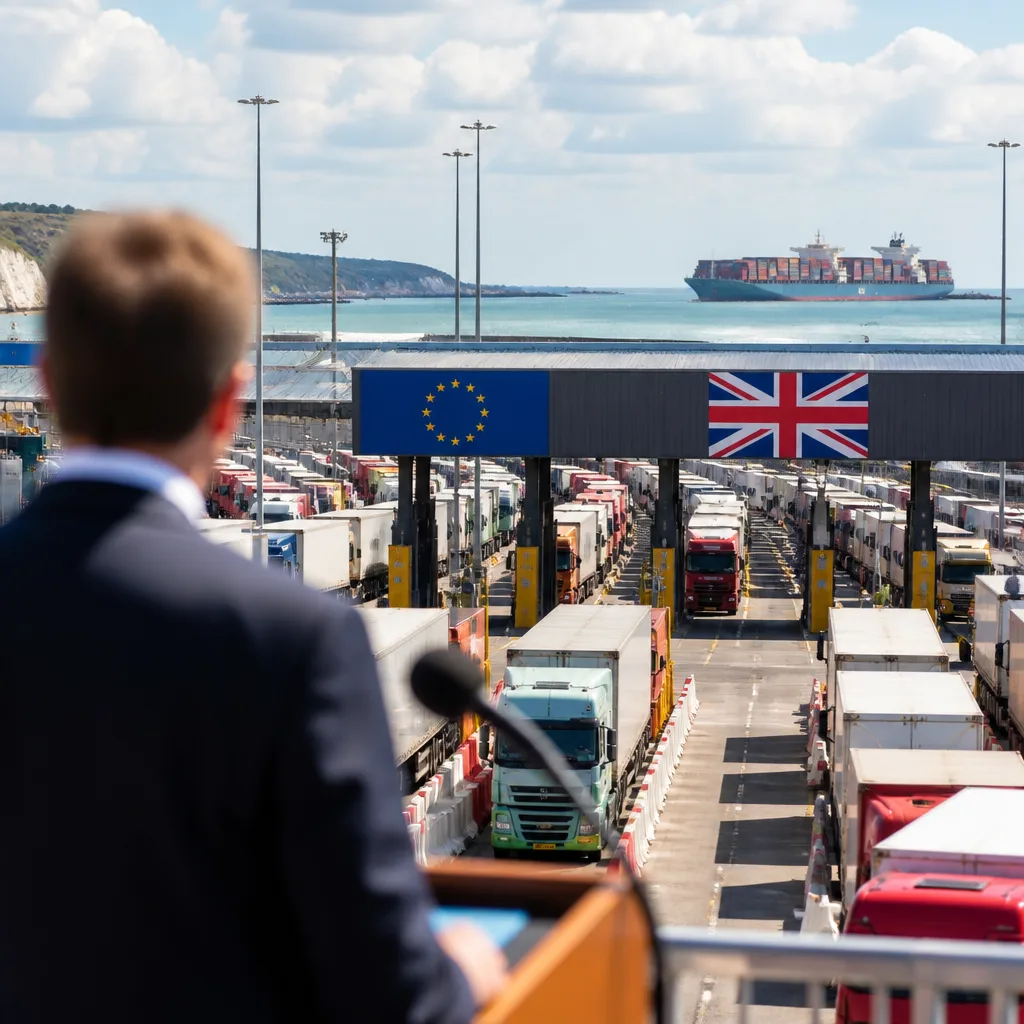
Britain should rejoin the European Union’s customs union to rebuild trade and investment after what the former chancellor described as an economy that has “fallen off a cliff” since Brexit, George Osborne has told the Independent.
Osborne, who served as chancellor in the government that held the 2016 referendum, described Brexit as “a mess” and said the country was now clearly poorer than it would have been had it retained closer ties with the EU. He argued that returning to the customs union would be the fastest, and politically more straightforward, route to repairing cross‑Channel commerce.
“Brexit has been a mess… Britain has basically gone off a cliff. It has had a huge impact on the British economy. It is clearly poorer than it would otherwise be,”
Osborne told the Independent rejoining the customs union should be a priority because its restoration does not require the UK to accept the free movement of people — a politically sensitive point that, he said, makes it less divisive than re‑joining the single market.
What Osborne proposes and why it matters
The customs union is a framework that eliminates tariffs and common external tariffs between members, simplifying trade in goods. Osborne said departure from that arrangement — a change that “was never part of the Brexit debate” — has had a “devastating impact on trade”. He contrasted this with the single market, which he noted would involve allowing free movement of people, something he judged difficult to sell to voters now.
Though he acknowledged political obstacles — pointing out that re‑entry would be complicated a decade on from the referendum — Osborne framed the move as a pragmatic way to revive trade with the continent and attract investment. He also used the argument advanced by Brexiteers about future trade with the United States to underscore political irony: promises of lucrative US trade deals, he said, “all looks pretty fanciful now”.
Economic consequences: wages, prices and jobs
Osborne’s diagnosis links directly to everyday economic measures. Reduced trade and friction at the border can raise costs for firms, which may be passed on as higher prices for households or squeezed corporate margins that limit wage growth. Rejoining a customs union could reduce these frictions and, in theory, lower costs and stabilise supply chains — outcomes that matter for inflation and real pay packets.
Employment effects are also central. Sectors dependent on tariff‑free, seamless trade with EU partners — manufacturers, parts suppliers and sectors reliant on just‑in‑time logistics — face increased complexity at present. Osborne’s proposal targets these areas by seeking a more predictable trading environment that might support jobs and investment decisions. But any change would require negotiation and political agreement, and the near‑term economic benefits would depend on how swiftly and comprehensively trade barriers were addressed.
Political reality and the path ahead
Rejoining the customs union would be a significant political step. Osborne conceded it would not be easy and that the UK’s post‑referendum political landscape complicates such moves. He suggested that regional political leaders might find it a pragmatic choice; saying, for example, “If I was Andy Burnham, I don’t see why you wouldn’t rejoin the customs union.”
The proposal revives a long‑running national debate about the trade‑off between sovereignty, migration control and the economic costs of being outside EU structures. Any shift back would require both domestic political consensus and negotiation with EU partners — a process with uncertain timing and outcomes.
- Immediate aim: Cut trade frictions and revive investment by restoring tariff‑free trade arrangements.
- Political advantage cited: Unlike the single market, customs union membership need not require accepting free movement of people.
- Key obstacle: The complexity of reversing decisions made in the decade since the referendum and securing agreement from Brussels and domestic stakeholders.
| Feature | Customs union (Osborne’s proposal) | Single market |
|---|---|---|
| Free movement of people | Not required | Required |
| Main economic effect | Reduce tariffs and customs checks on goods | Allows services access and regulatory alignment |
Osborne’s intervention will sharpen scrutiny from politicians, business groups and unions alike, each weighing immediate relief from trade costs against longer‑term questions of regulation and sovereignty. For households and firms, the essential question is whether any such shift could translate into lower prices, firmer investment and stronger pay growth — and how quickly.
What is indisputable from the intervention itself is the recognition that Britain’s post‑Brexit economic performance remains a live political and policy issue. Osborne’s prescription is clear: greater alignment with the EU on trade matters rather than distant promises of alternative deals. The debate now turns to whether that prescription is politically deliverable and economically sufficient to arrest the decline he describes.














