
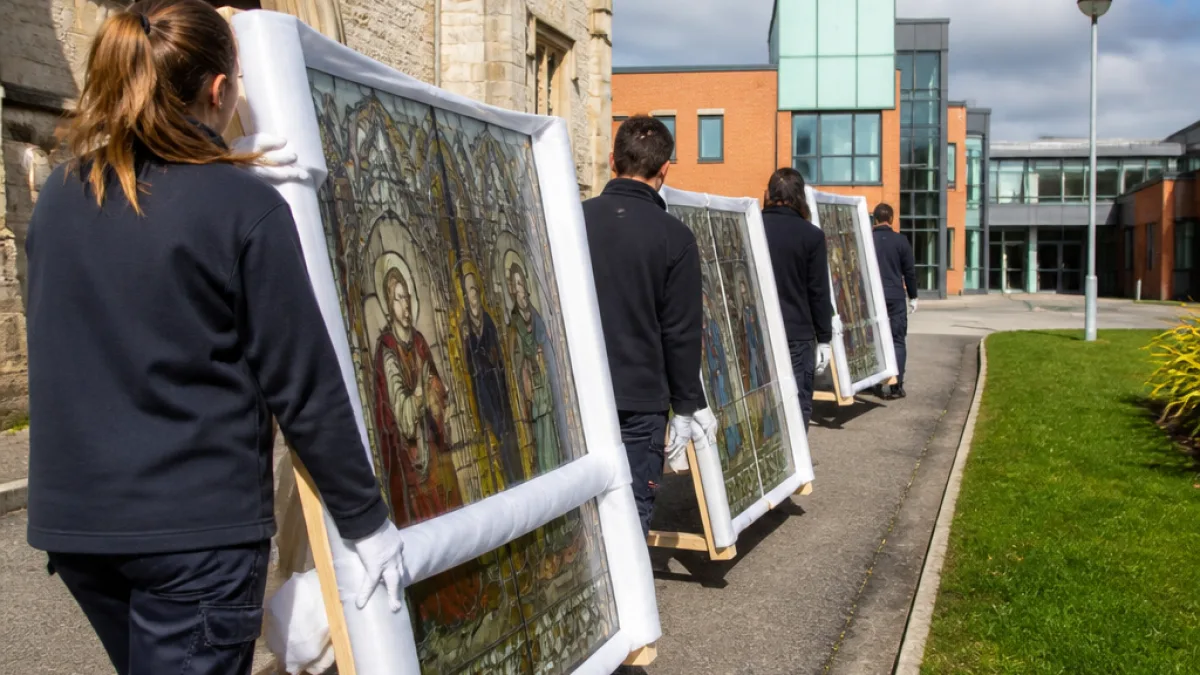
Historic Loreto windows to be moved into active school building
Plans are progressing to relocate a suite of historic stained glass windows from the Loreto convent site in Omagh into the new Strule Shared Education Campus, a move described by proposers as conservation-led and designed to retain the artworks within the daily life of a school community.
The windows, believed to have been manufactured by Mayer of Munich and installed between c.1890 and 1905, have provided a backdrop to worship and prayer for members of the Loreto Order and generations of pupils at the James Street site for more than 140 years.
| Item | Detail |
|---|---|
| Order arrival in Omagh | 1855 |
| James Street building constructed | 1856–1859 |
| Stained glass installation | c.1890–1905 |
| Planned relocation | Within approximately two years |
Conservation and community use cited as primary reasons
The design and planning report submitted with the proposal states the relocation is intended to safeguard the panels through specialist conservation and to ensure they remain central to the living heritage of the Loreto school community. The plan is to incorporate the windows into the interior of the new Loreto Grammar School at the Strule campus, either suspended behind areas of curtain-walling, backlit within a pastoral space, or sited in key shared areas.
"Removing the windows to relocate them to a new school building directly serves future sustainable development by ensuring a 'shared sense of belonging for the community'."
That document also highlights the role of religious observance to staff and pupils, saying maintaining the stained glass as part of that experience contributes significantly to wellbeing. The proposers argue that positioning the windows in an active, shared educational environment will allow them to be appreciated by a broader public "across the religious divide".
Practical and cultural considerations for Omagh
The relocation raises both practical and cultural questions for Omagh. Practically, conservation specialists will be required to remove and reinstall fragile glasswork, and the proposed timing — around two years — reflects the lead-in time for the new campus construction and preparatory conservation work. Culturally, the move is framed as keeping the panels in an educational and worship context rather than placing them in a museum, thereby preserving their intended function.
- Heritage protection: specialist conservation to safeguard fragile glass.
- Educational use: panels to be integrated into the new Loreto Grammar School interior.
- Community access: design aims to make the windows visible in shared campus spaces.
Local people and heritage bodies often weigh in on such projects where a balance must be found between conservation best practice and retaining the original context of ecclesiastical artworks. The proposal emphasises keeping the windows in a living, functional setting to promote appreciation from pupils of different backgrounds.
What this means for Omagh’s civic landscape
Relocating the stained glass to the Strule Shared Education Campus will preserve notable decorative work from the Victorian era within Omagh, while also signalling an intention that the new campus will be a place for shared use and cross-community engagement. Keeping the windows within an active school building means they will remain part of everyday life for the school community rather than being displayed purely as historic artefacts.
As the Strule campus project advances towards construction, attention will turn to the technical conservation plans and the exact locations within the building in which the panels will be installed. For residents of Omagh, the scheme represents both a practical heritage-saving initiative and a statement about how the town’s historic religious art can continue to form part of contemporary communal and educational life.












