
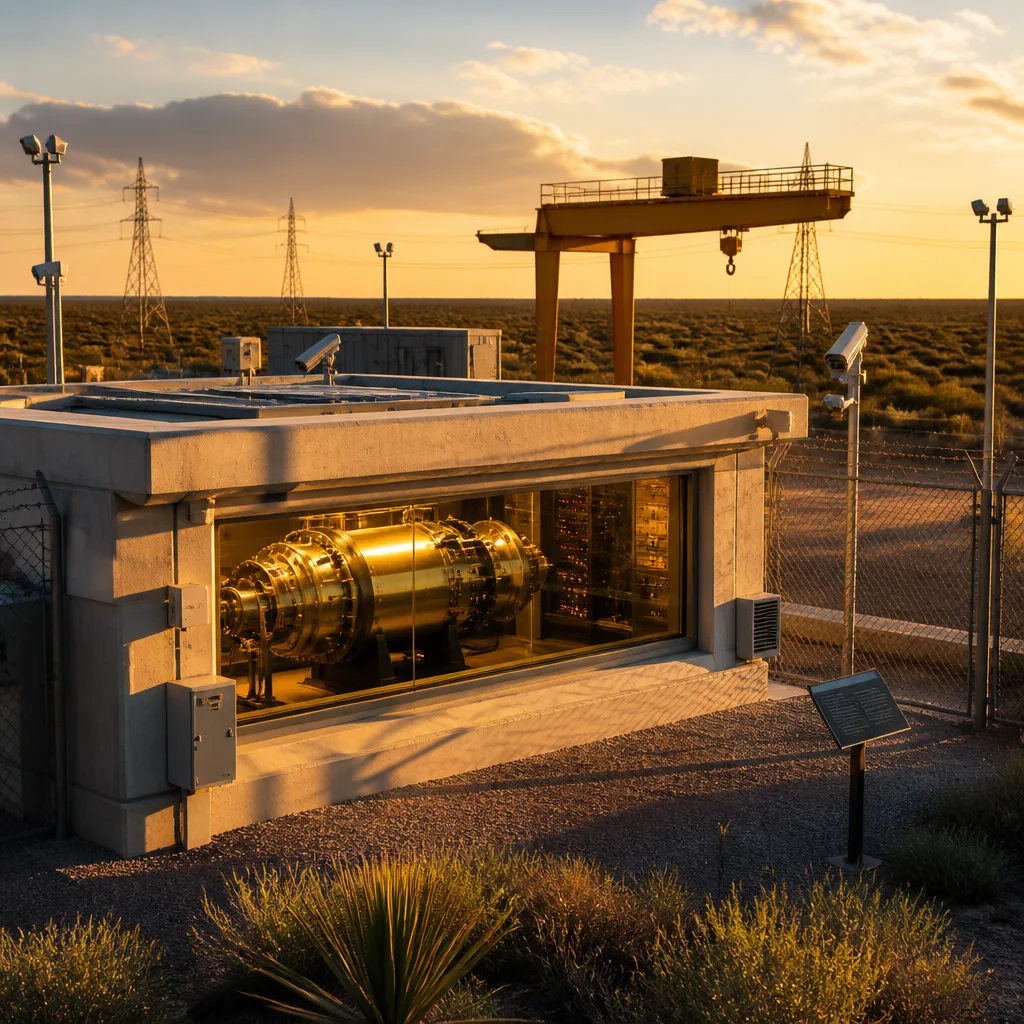
Oklo has announced that its small modular reactor (SMR) in Texas has reached “criticality”, marking a notable step in the long-running effort to make modular nuclear power commercially viable.
“criticality”
The company’s statement, reported by Bloomberg, says the reactor is now able to produce a sustained chain reaction. According to the reporting, this is the fifth reactor of its kind to attain that level of capability. The development does not mean SMRs are in commercial operation; research and development continue and further testing, regulatory approvals and scaling will be required before any broader electricity supply is possible.
Why the milestone matters
The central promise of SMRs is to deliver nuclear power with lower upfront cost, faster construction and greater flexibility than traditional large nuclear plants. The technology is intended to allow more modular manufacturing approaches, potentially speeding deployment and reducing the financial and engineering risks that have dogged some conventional projects.
Oklo’s report is significant because achieving a sustained reaction is a practical demonstration of reactor design and control systems working together under operating conditions. That said, the pathway from a criticality event to a commercially operating fleet is long: further technical validation, extended operation under regulatory oversight and demonstrations of reliability and safety in diverse conditions will all be required.
Investment and market signals
The development has already attracted attention from investors. Nuclear-focused exchange-traded funds (ETFs) may stand to benefit if SMR progress continues and the sector’s prospects improve.
- The VanEck Uranium and Nuclear ETF (NLR) held about 4.4% of its portfolio in Oklo at the time of the source report; the fund lists top holdings including Constellation Energy (about 8.67%), Cameco (7.95%) and Public Service Enterprise Group (6.45%).
- The Global X Uranium ETF (URA) was reported to allocate roughly 6.2% to Oklo.
For context, the VanEck fund’s five-year average annual return by net asset value was reported at 18.4%, although the fund had fallen by around 3.9% over the prior 12 months. These figures underline the volatility and sector concentration investors face when placing money behind nascent nuclear technologies.
| ETF | Oklo weighting | Noted performance metric |
|---|---|---|
| VanEck Uranium and Nuclear (NLR) | 4.4% | 5-year annualised return: 18.4%; 1-year: down ~3.9% |
| Global X Uranium (URA) | 6.2% | Performance not stated in source |
What remains uncertain
Reaching criticality is a technical achievement but not a guarantee of commercial success. SMRs must still demonstrate sustained, reliable operation, secure supply chains for manufacturing, and the ability to meet stringent regulatory and safety requirements before they can be deployed at scale. Moreover, integration into electricity markets — where pricing, grid rules and competition with renewables and storage play out — will shape commercial viability.
For investors and policymakers watching nuclear’s role in decarbonisation, Oklo’s milestone is an encouraging sign that the technology is advancing beyond paper designs. It should not, however, be read as evidence that SMRs are about to displace other low-carbon technologies overnight. The industry will need multiple further milestones — and transparent regulatory assessments — before that judgement can be made.
As development continues, observers should watch for extended operation reports, regulatory filings and independent assessments of safety and economics. Those documents will provide the clearer evidence needed to judge whether SMRs can translate technical promise into scalable, cost-effective clean power.









