
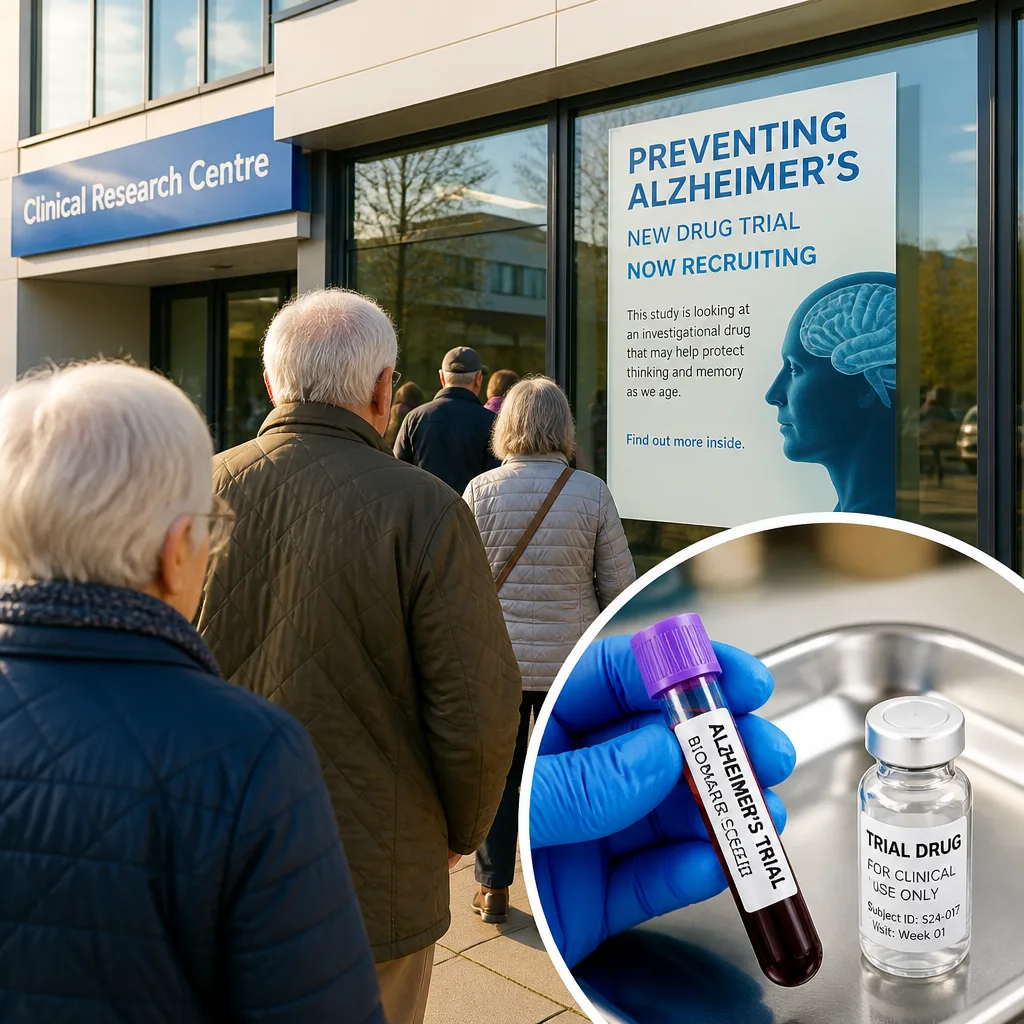
Surrey and Borders Partnership NHS Foundation Trust has become the first clinical site in Europe to join an international trial examining whether a new antibody, Trontinemab, can delay or prevent the onset of Alzheimer’s disease.
Trial aims and UK role
The study is recruiting up to 1,600 healthy adults aged 55 to 80 worldwide; the Surrey and north-east Hampshire trust will recruit participants from anywhere in the UK. It is the third site globally to offer the experimental treatment to people judged to be at high risk of developing Alzheimer’s.
Unlike many previous studies that focus on treating patients after symptoms appear, this trial targets people before they develop cognitive decline, testing whether early intervention can alter the course of disease.
How participants are identified
Recruitment will use blood tests to identify individuals who are most likely to benefit from the trial. The trial specifically targets people without symptoms but who show biological markers associated with a higher future risk of Alzheimer’s.
- Drug under study: Trontinemab (an antibody aimed at beta amyloid)
- Target group: Healthy adults aged 55–80 at increased risk
- Scale: 1,600 participants internationally
- UK recruitment: Open to volunteers from across the country
Scientific rationale
The drug acts against the protein fragments known as beta amyloid, which accumulate in the spaces between brain cells in Alzheimer’s disease. Researchers hope that removing or reducing these deposits before symptoms develop may slow or prevent the neurodegenerative cascade that leads to dementia.
"We are very excited for the potential to help millions of people affected by Alzheimer's disease," said Professor Ramin Nilforooshan, consultant psychiatrist and chief investigator for the trial.
Why this matters
Alzheimer’s disease is the most common form of dementia, accounting for an estimated 60–80% of dementia cases, according to NHS figures. The condition progresses gradually, affecting multiple brain functions and ultimately causing severe impairment.
Across the UK, nearly 982,000 people are estimated to be living with dementia, the Alzheimer's Society reports. A successful preventive treatment would therefore have profound implications for patients, families and health services.
| Item | Figure / detail |
|---|---|
| Age range for recruitment | 55–80 |
| Global participant target | 1,600 |
| UK site | Surrey and Borders Partnership NHS Foundation Trust (recruiting UK-wide) |
Implications for patients and the NHS
If early intervention proves effective, clinical practice could shift towards greater emphasis on identifying at-risk individuals and offering preventive therapies before symptoms emerge. That would require expanded screening, access to biomarker testing and substantial planning within the NHS to deliver such programmes at scale.
Researchers and clinicians caution that the trial is testing a hypothesis rather than offering an established cure. Results will determine whether the approach can safely and meaningfully change outcomes for people who would otherwise develop Alzheimer’s.
Surrey and Borders Partnership NHS Foundation Trust said it will recruit from across the UK, expanding access to people who wish to volunteer for the study. The move places the trust at the centre of a high-profile international effort to intervene earlier in the disease process than most previous trials.
Further details about how to take part and eligibility criteria are being handled by the trust and trial organisers as recruitment gets under way.















