
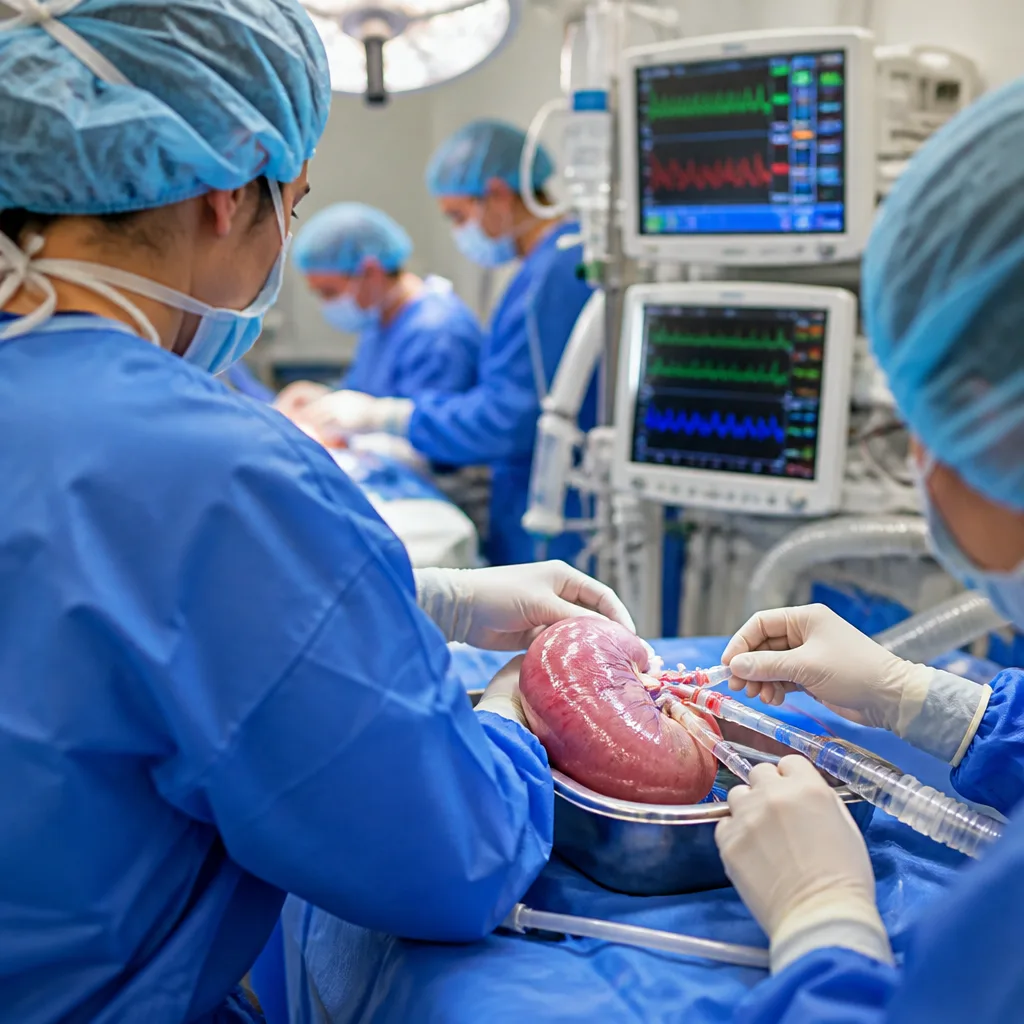
A man in the United States has lived for 271 days with a genetically modified pig kidney, enabling him to remain free of dialysis for nine months before receiving a human donor organ, doctors have reported.
Bridge to transplant
The procedure, undertaken in January 2025 on a 66-year-old patient with end-stage kidney disease, was described by the surgical team as a temporary "bridge" to a conventional human transplant. The case, reported by clinicians at Mass General Brigham in a paper published in The Lancet, is the longest recorded interval a living human has survived without dialysis following transplantation of a genetically edited pig kidney.
Lead author Dr Leonardo Riella, from the centre for transplantation sciences at Mass General Brigham, framed the experiment within the context of a persistent global shortage of human organs. He said xenotransplantation could initially serve to remove patients from dialysis while they wait for a human donor and, should long-term safety and durability be established, might become a permanent treatment option.
"The organ shortage is the greatest crisis we have right now in transplantation."
Previous attempts and outcomes
The report notes at least one other live human recipient of a pig kidney in 2024 at Massachusetts General Hospital. That patient survived 52 days before dying from cardiac complications deemed unrelated to the transplant. The new case is therefore significant both for the duration of dialysis independence and because it documents a subsequent, successful transition from the pig kidney to a human donor organ.
Clinicians emphasised that the porcine organ was genetically edited to reduce the risk of immune rejection and other cross-species complications. Details of the genetic modifications and the immunosuppressive regimen are described in the published paper, which also outlines monitoring and safety measures used during the trial period.
- Patient: 66-year-old man with end-stage renal disease
- Porcine kidney survival off dialysis: 271 days (nine months)
- Previous similar case: 52 days survival in 2024
Clinical and ethical considerations
Specialists in the UK and elsewhere have followed xenotransplantation developments closely. Dr Rommel Ravanan, chief medical officer for NHS Blood and Transplant and a consultant nephrologist, who contributed commentary in the source material, represents the perspective of transplant services that must weigh novel therapies against established standards of care, regulatory frameworks and public acceptability.
Key questions remain about long-term function, immune response, infection risk and how broadly such procedures might be offered. Regulatory authorities will also need to consider frameworks for clinical trials, patient selection and post-transplant surveillance, including the monitoring of animal-derived pathogens.
Potential impact
If reproducible and safe over longer follow-up, xenotransplantation could relieve pressure on transplant waiting lists and reduce reliance on long-term dialysis, which carries a heavy burden of morbidity and cost. However, the transition from experimental use as a temporary bridge to routine use as a definitive therapy depends on robust evidence from larger, controlled studies and oversight by national and international regulators.
| Case | Survival off dialysis |
|---|---|
| 2024 Massachusetts General Hospital case | 52 days |
| 2025 Mass General Brigham case | 271 days |
Clinicians involved caution that while the result is encouraging, it is not yet evidence that pig organs can routinely replace human kidneys. For patients, the immediate benefit in the reported case was removal from dialysis dependency and the potential for improved quality of life while awaiting a human transplant.
The scientific community and health services will be watching subsequent reports closely to assess reproducibility, safety signals and the ethical implications of scaling up xenotransplantation. For now, the case marks a noteworthy step in a field aiming to address one of modern medicine's most intractable supply problems.









