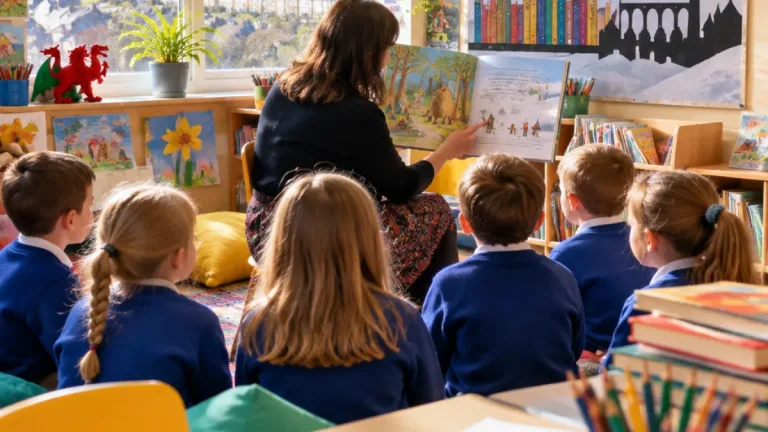
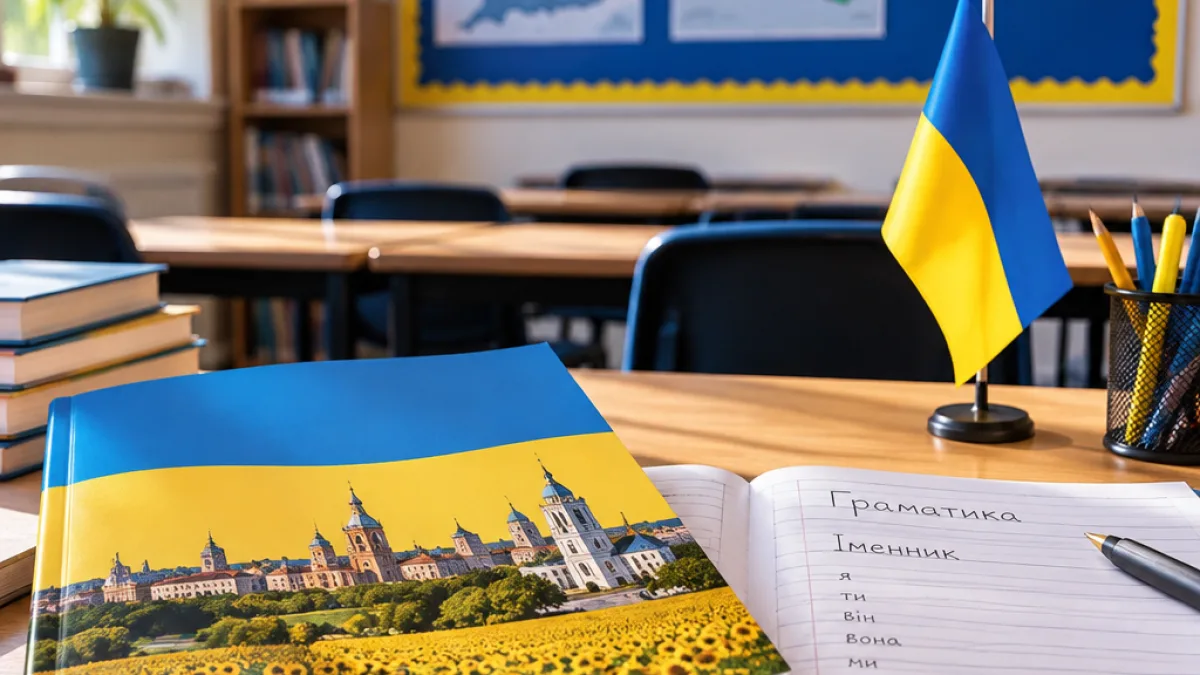
A new Ukrainian GCSE will give pupils in England, Wales and Northern Ireland the opportunity to study the language and gain a formal qualification, the Government has announced.
The qualification will be open to all pupils, but is expected to have particular importance for Ukrainian children and young people living in the UK. It is intended to help them retain a connection with their home language, culture and identity while building skills that may support later education and employment.
The announcement places language learning within the wider experience of Ukrainian families who have made their homes in the UK. For pupils who have arrived from Ukraine, or who have Ukrainian heritage, the GCSE provides a way for that part of their identity to be recognised through the education system. At the same time, its availability to all pupils means it is presented as a qualification with wider educational and cultural value, rather than one restricted to a particular community.
A qualification with cultural and practical aims
The Government said the new GCSE would enable pupils to develop their language skills and engage with Ukraine's culture and history. It also said the qualification could support future routes into further study and employment, giving students an opportunity to have their abilities formally recognised.
For Ukrainian pupils, the benefits described in the announcement extend beyond examination results. Maintaining proficiency in a home language can help preserve links between younger people, their families and their heritage. The policy also sends a message that those links have a place within schools in the UK, as pupils continue building their lives here.
As they build their lives here in the UK, it is right that Ukrainians and their children should have every opportunity to maintain that connection to their heritage and to be proud of who they are.
Education Secretary Lucy Powell said the qualification would allow pupils to celebrate Ukraine's language, culture and history while opening opportunities for future study and work. She also linked the GCSE to the broader relationship between the UK and Ukraine, describing education as part of the long-term ties being developed between the two countries.
Part of the UK's continuing support for Ukraine
The new GCSE is being presented as part of the UK's continuing support for the Ukrainian community and its wider commitment to Ukraine. The announcement follows the Government's statement that the UK will provide a further £10 billion in economic and military support, described as the country's largest package of financial backing for Ukraine.
| Area | What has been announced |
|---|---|
| Countries covered | England, Wales and Northern Ireland |
| Who can study it | The qualification will be available to all pupils |
| Stated aims | Language development, cultural connection and routes towards further study and employment |
| Wider context | UK support for Ukrainian families and stronger educational ties with Ukraine |
Lord Stewart Wood, Minister for Europe, described the qualification as a symbol of the relationship between the two countries. He said it would allow young Ukrainians in the UK to celebrate their language and heritage while gaining a qualification that recognised their skills.
The introduction of a Ukrainian GCSE is a powerful symbol of the deep and enduring bonds between our two countries.
The announcement does not set out in the supplied information when the first examinations will be taken, how schools will deliver the course or which examination arrangements will apply. Those practical details will matter to pupils, parents and teachers deciding how the qualification fits alongside existing GCSE choices.
For schools, the immediate significance is the prospect of adding Ukrainian to the range of languages that can be studied for a recognised qualification. For families, the policy offers a possible way to protect a valuable part of their children's heritage without separating that learning from mainstream educational progression. The Government's stated ambition is therefore both cultural and practical: to help pupils remain connected to Ukraine while ensuring their language skills can contribute to their futures in the UK and beyond.
- The GCSE will be available in England, Wales and Northern Ireland.
- It will be open to all pupils, with particular significance for Ukrainian children and young people in the UK.
- The stated goals include preserving language and identity while supporting future education and employment.