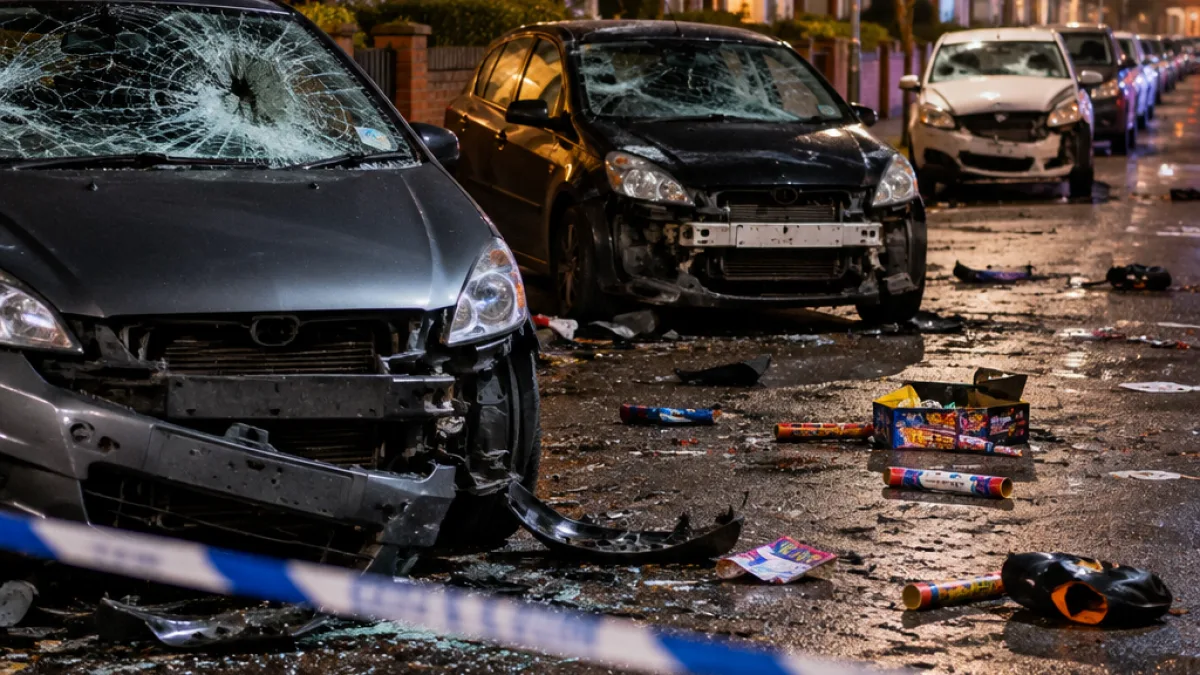
Merseyside councillors have called for the term “Mischief Night” to be abandoned, arguing that it understates serious offending after a baby was injured by a brick thrown at a bus and a group of youths were filmed damaging cars.
The incidents occurred on 30 October, the night before Halloween, when police and councils carried out a planned operation across the region. In Huyton, around 20 youths were filmed attacking vehicles, including smashing windscreens and kicking off bumpers.
Knowsley Green councillor Chantelle Lunt, whose St Gabriel’s ward includes the area where the cars were damaged, said language traditionally associated with pranks should not be used to describe such conduct. She said the behaviour amounted to criminal damage and was causing harm to communities.
“We need to stop calling this mischief night. It’s criminal damage. It’s harming communities.”
Liverpool council leader Liam Robinson also rejected the description, saying the events were well beyond what could reasonably be considered mischief. The comments reflect concern among local political leaders that a familiar label may make deliberate damage and intimidation appear less serious than they are.
Police operation across the region
Merseyside Police said it does not use the term “Mischief Night” for 30 October. The force reported a 10% fall in reports of crime and antisocial behaviour on the date compared with the previous year, while stressing that officers remained focused on preventing disorder and protecting residents.
The operation included 17 dispersal orders, a Section 60/60AA order in Garston, stop searches, the seizure of fireworks, the dispersal of young people and arrests. The force said the measures formed part of a co-ordinated response across Merseyside rather than an isolated intervention in one neighbourhood.
| Reported operation figures | Number or outcome |
|---|---|
| Change in reports of crime and antisocial behaviour | 10% reduction |
| Dispersal orders | 17 |
| Other measures | Stop searches, fireworks seizures, dispersals and arrests |
Police said it was the second consecutive year in which fewer reports had been recorded on 30 October. Officers have nevertheless described the type of behaviour historically associated with the date in strongly critical terms, underlining the distinction between a reduction in reports and the absence of serious incidents.
The force’s account includes the injury to a baby after a brick was thrown at a bus. The source material does not provide details of the child’s condition, identify a suspect or state whether anyone has been charged. No conclusion about criminal responsibility can therefore be drawn from the reported incidents.
Dispute over how disorder is described
Councillor Lunt contrasted present-day incidents with the less serious behaviour she recalled from her childhood, such as egg throwing and knocking on doors before running away. She said the events seen in 2026 represented a clear change in character, involving damage to property and intimidation of communities.
Her argument is that terminology matters when authorities and the public assess disorder. Calling the evening “Mischief Night” may suggest youthful pranks, whereas smashed vehicles, damaged property and objects thrown at buses can have direct consequences for victims, passengers and residents. The debate does not alter the legal status of any alleged offence, but it has become part of the response from local leaders and police.
Merseyside Police said its continuing priority was to protect communities from incidents occurring around the date. The operation’s reported results indicate a reduction in recorded reports, but the injury and property damage described by the authorities show why the night remains a significant policing concern. Any prosecutions or further action would depend on evidence gathered by investigators and decisions by the relevant authorities.