
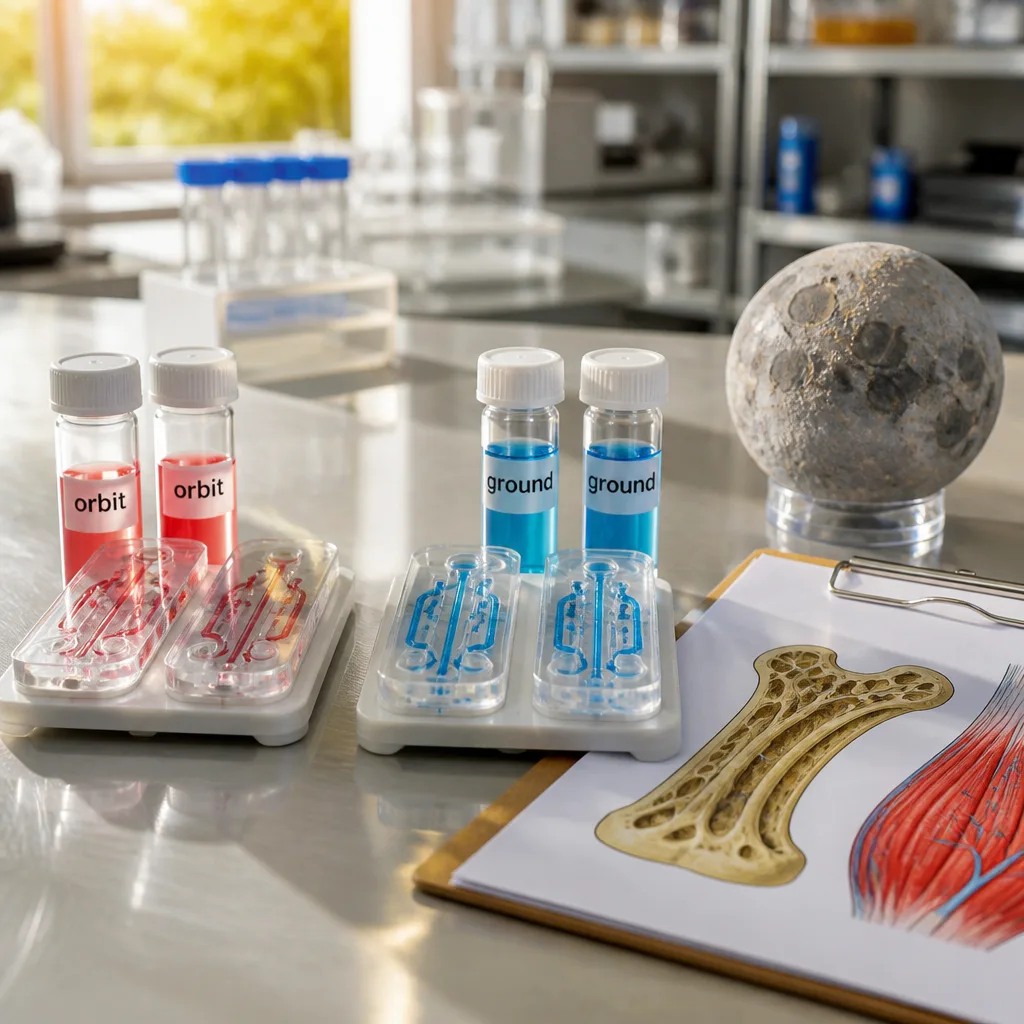
NASA says scientific experiments carried on the Artemis II mission are already feeding research that could translate into new medicines and everyday technologies. Samples flown around the Moon and experimental “organ chip” devices containing human cells are being compared to identical samples on Earth to isolate how microgravity and spaceflight change human biology, researchers told officials.
From tissue samples to drug leads
Dr Arun Sharma, director of the Cedars‑Sinai Centre for Space Medicine Research, described how paired samples — one set flown on the mission, the other kept on Earth — allow scientists to identify biological changes specifically triggered by space travel. Those changes, he said, could point to drug targets to protect astronauts on longer missions and, crucially, suggest therapies that have applications on Earth.
“We know that astronauts’ bones and muscles [atrophy] in space,”
Sharma added that a better understanding of those mechanisms could accelerate treatments for conditions such as osteoporosis and sarcopenia. His laboratory produces the organ chip devices that were flown on NASA missions; these microphysiological systems simulate human tissue and permit controlled studies outside whole‑organism trials.
Technology transfer is core to NASA's mission
Daniel Lockney, who leads NASA’s Technology Transfer Program, stressed that the agency has a long history of converting space engineering into civilian products. Since NASA’s creation in 1958, thousands of innovations have been applied across medicine, manufacturing, transport and consumer goods, he said.
The agency points to examples beginning in the Apollo era when partnerships to gather lunar samples prompted new tool designs. In collaboration with Black & Decker, NASA developed lightweight, portable tools to collect rock and dust on the Moon — developments that, agency historians note, contributed to the later appearance of cordless power tools and small domestic appliances.
Among consumer products often connected to that lineage is the handheld vacuum introduced in 1979 known as the Dustbuster; NASA records cite the operational need to collect lunar dust and samples as one of the driving design forces behind lightweight, portable cleaning technology.
Why engineers and patients should pay attention
The practical value of space‑derived research is twofold. First, controlled exposure to microgravity and other spaceflight stressors creates a unique environment to reveal biological vulnerabilities and protective mechanisms. Second, the engineering constraints of spacecraft — extreme weight limits, reliability under stress, and compact design — push innovations that later prove useful in consumer and clinical settings.
For health researchers, organ chips flown in space provide a repeatable platform to observe tissue‑level responses without immediate recourse to human trials, potentially shortening lead times to drug candidate identification. For industry, the history of spin‑outs from NASA illustrates how government‑driven research can seed commercial products and new markets.
- Artemis II experiments: Paired tissue samples and organ chips flown to study spaceflight effects on human biology.
- Medical implications: Improved understanding of muscle and bone atrophy could inform treatments for osteoporosis and sarcopenia.
- Technology transfer: NASA’s programme works with industry to convert aerospace innovations into civilian tools and products.
| Area | Example from NASA history |
|---|---|
| Tools | Lightweight, portable drills developed with Black & Decker |
| Consumer appliances | Handheld vacuum (Dustbuster) linked to lunar dust collection needs |
| Biomedical research | Organ chip devices flown to study tissue responses in space |
That transfer is not automatic. Lockney’s programme facilitates partnerships, licensing and the routing of agency innovations into the private sector, but commercial uptake depends on market demand, regulation and further development. Still, the argument from NASA and its partners is that the unique conditions of space — and the engineering discipline required to operate there — continue to produce useful knowledge and technologies.
As nations and commercial actors plan longer crewed missions, including potential stays beyond low Earth orbit, the research produced by missions such as Artemis II will be watched closely by pharmaceutical developers, medtech firms and manufacturers seeking durable, lightweight designs. If historical patterns hold, some of the most valuable outcomes may appear not in orbit but in hospitals, factories and homes on Earth.









