
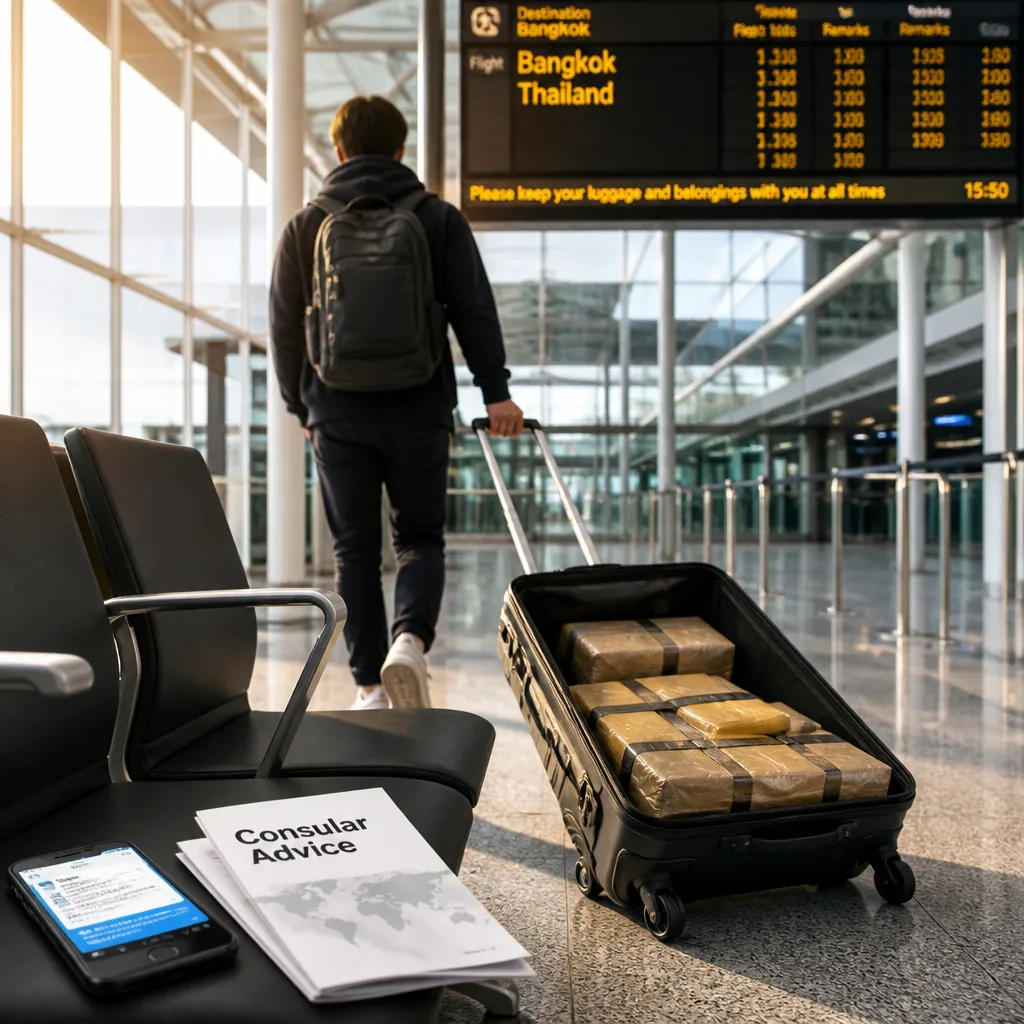
More than 340 British nationals were detained abroad on suspicion of smuggling drugs in 2025, a figure that marks a dramatic rise from just over 80 in 2023, according to newly published government statistics. The increase has been driven largely by cannabis-related offences linked to Thailand and other parts of South East Asia, and a significant proportion of those detained have been young people.
Young people targeted, government warns
The Foreign Office says that since 2024 around 60% of people detained on suspicion of carrying cannabis from Thailand were aged between 16 and 30. Ministers and consular officials are warning that criminal networks are recruiting young travellers — often via social media — and pressuring them to carry luggage that later turns out to contain large quantities of drugs.
Research commissioned by the Foreign Office found complacency among some younger travellers: about a third of those surveyed did not consider it risky to travel with luggage packed by someone else. The government's message is unequivocal: being offered free travel, quick cash or other incentives can mask severe danger.
"No holiday, payment or opportunity is worth risking your freedom, your future or your life,"
Foreign Office minister Stephen Doughty warned that detainees could face far harsher treatment overseas than under UK law, including lengthy imprisonment, corporal punishment or, in the most extreme cases, the death penalty. He said those detained were reporting "dire living conditions" and in some countries the prospect of decades behind bars.
How the crimes are carried out
A BBC investigation earlier in the year described Thailand-based gangs recruiting people to transport suitcases containing large quantities of cannabis. In several reported incidents travellers believed they were carrying clothes, cash or other innocuous items; some suitcases later were found to contain up to 71kg of cannabis.
- Arrests rose from just over 80 in 2023 to more than 340 in 2025.
- More than 200 British nationals have been detained on suspicion of smuggling cannabis from Thailand.
- Approximately 60% of those detained since 2024 were aged 16–30.
Domestic law classifies cannabis as a Class B drug. Possession can attract up to five years' imprisonment; supply and production can carry sentences of up to 14 years and unlimited fines. However, penalties overseas may be substantially more severe, and the Foreign Office stresses that consular assistance has limited ability to change judicial outcomes in foreign jurisdictions.
| Year | Arrests of British nationals abroad (suspected drug smuggling) |
|---|---|
| 2023 | Just over 80 |
| 2025 | More than 340 |
Human cost and official response
The Foreign Office has highlighted personal testimony from detainees to underline the stakes. One Briton described a "sense of mourning for the life" they once had; another warned: "It's your freedom you're risking, and once it's gone, it's not easy to get back." Such accounts have been used by ministers to urge young people to be vigilant and to seek consular guidance before travelling if they have concerns.
Officials say gangs often approach potential couriers on social media and through personal contacts, offering incentives such as paid travel or rapid earnings. The government-funded research suggests a gap between perceived and actual risk among younger travellers: many do not routinely question luggage prepared by others or unsolicited offers that seem too good to be true.
Ministers face choices about how to respond: options include stepped-up public awareness campaigns targeted at younger travellers, enhanced co‑ordination with overseas law enforcement and more robust travel advice. The figures will also raise questions about resources for consular services should the trend continue to climb.
For now, the Foreign Office message remains clear: accepting to carry luggage for others or succumbing to offers of quick money abroad can have catastrophic, long-lasting consequences.















