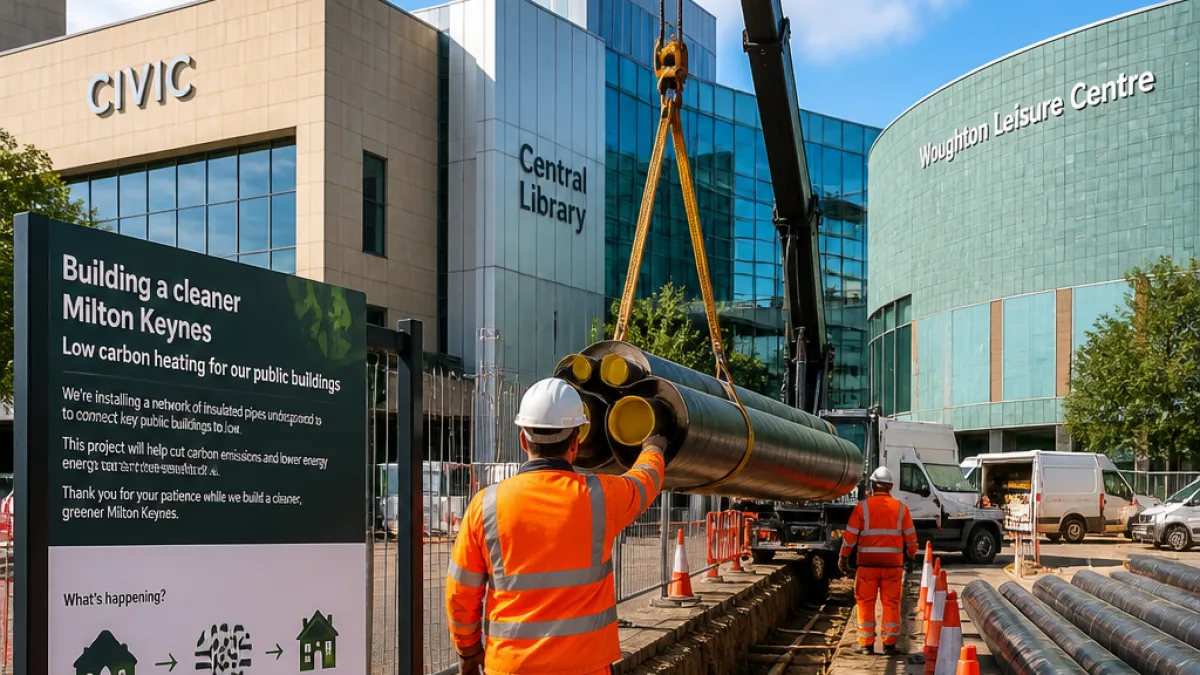
Council approves contract to prepare public buildings for low‑carbon heating
Milton Keynes has taken a concrete step towards lowering carbon emissions and reducing dependence on gas after the city council approved a contract that will prepare three public buildings for connection to a heat network.
The £4.35m funding, secured through the Government’s Public Sector Decarbonisation Scheme, will pay for work to ready the Civic building, Central Library and Woughton Leisure Centre so they can link into a low‑carbon district heating system operated by Fair Heat.
Council documents say the project will make better use of energy that would otherwise be wasted, cutting carbon emissions in the affected buildings and providing a degree of protection from future spikes in gas prices.
"This is a really exciting step forward for Milton Keynes. The funding secured by the city council is helping us make better use of energy that would otherwise be wasted, reducing carbon emissions while creating a more sustainable future for the city."
The comment was made by the cabinet member for planning and sustainability, who said the three facilities will become among a relatively small number of public buildings in the UK connected to a heat network. The council said the scheme will also lay groundwork for a wider network that could, in time, supply low‑carbon heating to homes and businesses across Milton Keynes.
- Contractor: Fair Heat
- Funding source: Government Public Sector Decarbonisation Scheme
- Buildings to be connected: Civic building, Central Library, Woughton Leisure Centre
- Funding amount: £4.35m
Local benefits and future prospects
Officials say the immediate aim is to reduce reliance on gas heating at the three public sites by using heat that would otherwise be lost. That should lower the carbon footprint of those buildings and help shield running costs from volatile gas markets.
Beyond the short‑term gains, the council is positioning this scheme as the initial phase of a broader strategy. By preparing public assets for connection now, the authority hopes to attract further investment and extend the network so it can serve additional municipal buildings, local businesses and potentially residential properties in the future.
| Building | Planned outcome |
|---|---|
| Civic building | Connection to low‑carbon heat network; reduced gas use |
| Central Library | Connection to low‑carbon heat network; reduced gas use |
| Woughton Leisure Centre | Connection to low‑carbon heat network; reduced gas use |
City leaders framed the work as supporting Milton Keynes’ broader net zero ambitions while delivering practical benefits to community facilities that are heavily used by residents.
For residents, the scheme could mean lower indirect exposure to energy price shocks affecting public services and a visible move towards greener local infrastructure. For businesses and developers, the establishment of a heat network can offer a future option for reliable, low‑carbon heat supply as the network expands.
Next steps for the council include oversight of Fair Heat’s preparatory works and developing plans to connect the prepared sites into the operating network. The council says the investment will help lay the foundations for a wider heat network that could eventually provide long‑term environmental and energy benefits across Milton Keynes.
As the work proceeds, questions for local people will include the timescale for connections, how running costs compare with conventional gas systems, and where the council looks to extend the network next. The council’s announcement leaves open the possibility of growth, but the initial priority is ensuring the three public buildings are fully ready to connect.