City Hall steps in as carnival marks milestone
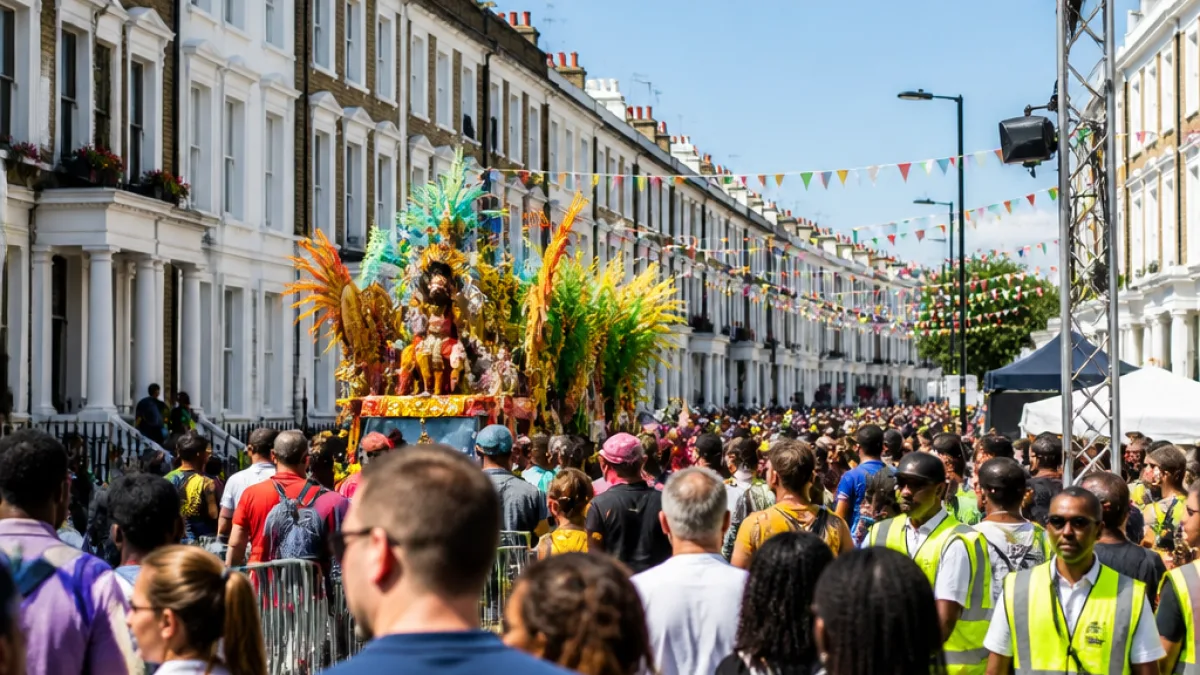
The Notting Hill Carnival returned this bank holiday weekend in full colour to mark its 60th anniversary, a milestone that drew throngs of Londoners and visitors to west London and prompted an unusually large intervention from City Hall.
In a piece reflecting on the weekend, the Mayor of London set out why he and his office had provided an extra £4.66m to support the event — more than triple the sum supplied the previous year — saying the funding was essential to help with safety and stewarding on the ground.
"For me, it represents London at its very best: people of different ages, backgrounds, colours and creeds coming together, sharing in the joy of one another’s traditions and cultures,"
The mayor’s statement underlined the carnival’s dual status as both a celebration of Caribbean culture and a major economic asset for the capital. Organisers and civic leaders have for years pointed to the scale of the event: it is widely recognised as the world’s second-largest street festival and is said to generate about £400m for London’s economy each year.
What the extra funding will be used for
City Hall said the additional money was earmarked primarily to increase visible safety arrangements. Specific measures highlighted include a doubling of steward numbers, additional signage and the temporary installation of CCTV cameras along carnival routes and gathering points.
- Doubling stewards to manage crowds and support safer movement through packed streets.
- More signs to give clearer information and wayfinding for attendees.
- Temporary CCTV to assist policing and incident response during the weekend.
Speaking to residents after the event, some welcomed the stepped-up support. At one street corner a local trader said the extra stewarding made a visible difference and helped maintain the flow of shoppers and visitors. "It felt like more organised than last year — people were calmer and knew where to go," they told me.
Roots and recognition
The carnival’s origins were rooted in resistance as much as celebration. The mayor’s reflections traced the festival back to the postwar Windrush generation, noting that Caribbean migrants arrived to help rebuild Britain but often found themselves unwelcome. Over decades the event has developed into a public expression of culture and community, one that organisers and supporters say challenges racism and helps build understanding between neighbours.
Costume-makers, steelpan bands and sound systems returned to the streets in a blaze of colour and sound, while food stalls showcased dishes such as pepperpot, Trinidadian roti and jerk chicken. For many residents and visitors the carnival remains a highlight of London’s cultural calendar — a weekend when the capital’s diversity is highly visible and fiercely celebrated.
Balancing celebration and safety
Despite the jubilant scenes, the mayor framed his intervention as pragmatic. The funding was presented as vital to ensure organisers could put in place the necessary public-safety arrangements for an event of this scale. That includes not only stewarding and surveillance but also the logistical work of crowd management that often goes unnoticed until problems arise.
For local businesses, the carnival is an economic boon as well as a cultural fixture. Traders and market operators benefit from the influx of visitors over the weekend, and the broader estimate of a £400m annual boost is frequently used by advocates to argue for continued public support and investment.
As the city reflects on six decades of Notting Hill Carnival, the challenge for political and civic leaders will be to sustain the event’s community-led spirit while ensuring it remains safe and financially viable for organisers. The mayor’s extra funding for this year is a clear signal that City Hall regards the carnival as both a cherished cultural institution and a civic responsibility.